Wednesday, August 9, 2017

Reuters News - Trump appears to grant China banks sanctions reprieve after U.N. deal

David BrunnstromMatt Spetalnick and Michelle Nichols
WASHINGTON/UNITED NATIONS (Reuters) - The Trump administration appears to be granting Chinese banks dealing with North Korea a temporary reprieve from threatened U.S. sanctions to give Beijing time to show it is serious about enforcing new U.N. steps against Pyongyang, U.S. officials said.
The White House has also held off on much-anticipated trade action against China after Beijing backed U.N. Security Council sanctions passed on Saturday, although it is unclear how long President Donald Trump will delay this given domestic pressures to make good on campaign promises to crack down on unfair trade practices.
Washington has made clear it is reluctant, for the moment, to take steps that would antagonize China when its cooperation is needed to tighten the screws on its ally and neighbor North Korea over its nuclear and missile programs.
U.S. officials and U.N. diplomats say the threat of unilateral U.S. "secondary sanctions" against Chinese firms with North Korean ties and trade pressure from Washington helped persuade China to drop opposition to the new U.N. sanctions.
"It played an important role to get China on board," one diplomat said, speaking on condition of anonymity.
The 15 Security Council members voted unanimously on Saturday to impose the toughest U.N. sanctions yet on North Korea after it tested two intercontinental ballistic missiles (ICBMs) in July. The measures are designed to choke off a third of North Korea's $3 billion annual export revenue.
China, North Korea's main trading partner, has pledged to enforce the new sanctions but some critics are skeptical given what is widely seen as Beijing's lax policing of existing restrictions.
Influential Chinese state-run tabloid the Global Times, published by the ruling Communist Party's official People's Daily, said in a Wednesday editorial that sanctions would not stop Pyongyang's determination on its weapons' programs.
"The U.S. asks China for help when it cannot solve its problems with North Korea. Some U.S. elites even want to urge China to claim full responsibility for the issue or they will threaten to retaliate," it said.
"Moreover, those U.S. elites may not have considered the leverage China has over the U.S. What if China restricts the usage of iPhones and the number of Chinese students to the U.S., or imports fewer US agricultural products?"
Adding to the sense of urgency, Trump warned on Tuesday Pyongyang "will be met with fire and fury" if it threatened the United States. Earlier Pyongyang said it was ready to give Washington a "severe lesson" with its strategic nuclear force in response to any U.S. military action.

WATCHING CLOSELY

U.S. officials said they would be watching China's enforcement closely. The administration holds in reserve a list of Chinese banks and other firms the Treasury Department has been preparing to sanction for their alleged ties to North Korea’s military programs."Right now, our focus is on carrying out the existing sanctions and ensuring compliance with the new U.N. Security Council resolution," a senior White House official told Reuters on Tuesday, adding there was "nothing imminent to announce" on secondary sanctions.
The Trump administration has also been preparing to launch a high-profile investigation of China for intellectual property violations. An announcement was initially planned for last Friday but was postponed, apparently after China softened its resistance to new U.N. sanctions, diplomats said.
U.S. officials said Washington’s patience with China would be limited, however, and it was important to show some progress on North Korea.
"This course of action cannot be sustained indefinitely," one U.S. official said. "With his approval ratings falling even with his base, Trump is trapped between the realities of dealing with China and his campaign promises to get tough on trade."
At the same time, U.S. officials acknowledge that even if the sanctions are properly enforced, there is no guarantee they will be any more effective than previous rounds, which have failed to halt steady progress in North Korea's nuclear and missile programs.
According to a new U.S. intelligence assessment reported by the Washington Post on Tuesday, North Korea has successfully produced a miniaturized nuclear warhead that can fit inside its missiles, crossing a key threshold. But U.S. intelligence officials told Reuters there was still no reliable evidence that North Korea had fully mastered the process.
Reporting by David Brunnstrom and Matt Spetalnick in Washington and Michelle Nichols at the United Nations in New York; Additional reporting by John Walcott, and Ben Blanchard in Beijing; Editing by Michael Perry; Editing by James Dalgleish

Tuesday, August 8, 2017

BBC News - Entente still cordiale for French in UK

French in London
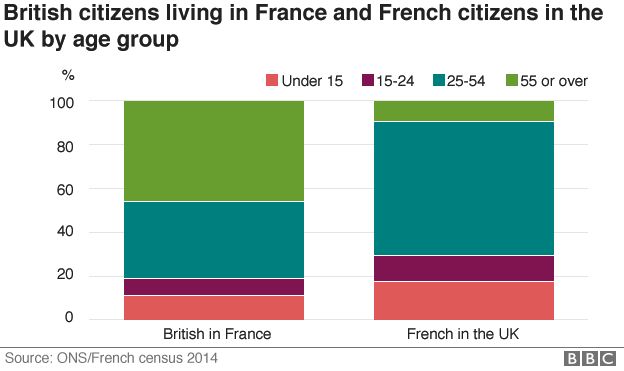
A special report by the Office for National Statistics has found there were an estimated 148,800 British citizens living in France in 2016.
Most of these live in Nouvelle-Aquitaine, which includes the Dordogne.
In the UK, there were 154,800 French citizens estimated to be resident in 2013 to 2015, the majority of them working.
About half of British citizens in France were working - the majority of those aged under 50 years old.
The ONS says the Brexit vote has increased the need for data about the people who may be most likely to be affected by the UK's decision to leave the EU and this report is the third in that series.
It said that "unfortunately", information on the occupations and industries of British citizens in France was not available, although it did establish that most of those aged 50 and over were neither working nor looking for work.
Among the 25-to-54-year-old age group, living close to Paris is most common. Its Ile-de-France region is home to 10,400 British citizens in this age group.

Choosing Spain

The ONS report backs up two commonly held beliefs, that the British like to retire to the Dordogne and that most of the French that come here to live and work are bankers.
Chart showing British in France and French in Britain
The financial sector employs 29% of the French who are working, with the next highest employment sector, 25%, working in public administration, education and health.
The number living here in the UK is far lower than the 300,000 figure that has been generally estimated.
A spokesperson for the French Embassy said it estimated that approximately one out of two French citizens were not registered in the UK, and stressed this was not a requirement.
However, the spokesperson added: "Whatever the numbers, the report confirms the important role that French citizens play in the UK and vice versa, the role that British citizens play in France, hence the need to find a solution for their future status in the framework of Article 50 negotiations between the UK and the European Commission."
The ONS report highlighted the dominance of Spain as a destination for those UK citizens wanting to live abroad.
A previous special report earlier this summer found the population of British citizens resident in Spain was 296,600 in 2016, twice the number choosing France.
But although the numbers of French and British are closely aligned, Spain appears to have no such mutual admiration for the UK, with the ONS saying there were 116,000 Spanish citizens resident in the UK in 2013 to 2015.
Chart showing where French citizens in the UK work

Monday, August 7, 2017

Reuters News - UK ready to pay up to 40 billion euros to leave EU: Sunday Telegraph

LONDON (Reuters) - Britain is prepared to pay up to 40 billion euros ($47 billion) as part of a deal to leave the European Union, the Sunday Telegraph newspaper reported, citing three unnamed sources familiar with Britain's negotiating strategy.
The European Union has floated a figure of 60 billion euros and wants significant progress on settling Britain's liabilities before talks can start on complex issues such as future trading arrangements.
The government department responsible for Brexit talks declined to comment on the Sunday Telegraph article. So far, Britain has given no official indication of how much it would be willing to pay.
The newspaper said British officials were likely to offer to pay 10 billion euros a year for three years after leaving the EU in March 2019, then finalise the total alongside detailed trade talks.
Payments would only be made as part of a deal that included a trade agreement, the newspaper added.
"We know (the EU's) position is 60 billion euros, but the actual bottom line is 50 billion euros. Ours is closer to 30 billion euros but the actual landing zone is 40 billion euros, even if the public and politicians are not all there yet," the newspaper quoted one "senior Whitehall source" as saying.
Whitehall is the London district where British civil servants and ministers are based.
A second Whitehall source said Britain's bottom line was "30 billion euros to 40 billion euros" and a third source said Prime Minister Theresa May was willing to pay "north of 30 billion euros", the Sunday Telegraph reported.
David Davis, the British minister in charge of Brexit talks, said on July 20 that Britain would honour its obligations to the EU but declined to confirm that Brexit would require net payments.
British foreign secretary Boris Johnson, a leading Brexit advocate, said last month the EU could "go whistle" if it made "extortionate" demands for payment.
Last week the Bank of England said Brexit uncertainty was weighing on the economy. Finance minister Philip Hammond wants to avoid unsettling businesses further.
If Britain cannot conclude an exit deal, trade relations would be governed by World Trade Organization rules, which would allow both parties to impose tariffs and customs checks and leave many other issues unsettled.
The EU has also wants agreement by October on rights of EU citizens already in Britain, and on border controls between the Irish Republic and the British province of Northern Ireland, before trade and other issues are discussed.
Reporting by David Milliken; Editing by Bernard Orr and David Gregorio

Friday, August 4, 2017

BBC News - Ben Broadbent: Rate rise may be higher than market expects

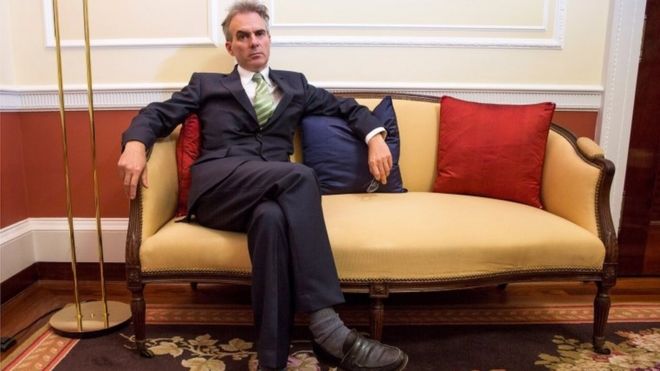
Ben Broadbent
UK interest rates may have to go up by more than the market expects in the future, Bank of England deputy governor Ben Broadbent has told the BBC.
He said the drop in sterling following the Brexit vote had fuelled inflation.
Mr Broadbent said there was a "trade off between stabilising inflation and keeping the economy going".
But he said the UK was "a little bit" better placed to cope with an interest rate rise.
Mr Broadbent said the Bank's Monetary Policy Committee (MPC) believed there would need to be more rate rises than those expected by the financial markets.
"The MPC said given the other assumptions in its forecast it thought probably there would need to be rate rises, and indeed more rate rises than those priced into the interest rate curve in future than the financial markets expect.
"I do think the time is likely to come when rates will go up generally."
On Thursday, the Bank kept interest rates unchanged and cut its economic growth forecasts.
The Bank voted 6-2 to keep interest rates on hold at 0.25%, a level they have been at since August last year.

Pockets of debt

Mr Broadbent said there should not be undue concern following a rate raise.
"One shouldn't overdo this. If and when it happens there will be a lot of talk about the first rate rise since 'x'. But it's just a rate rise and we got perfectly used to rate rises of this size in the past."
He said the objective of the MPC was not "the path of interest rates but the stability of inflation in the medium term and subject to that the stability of the economy".
The Bank is concerned that uncertainties about Brexit appear to be putting companies off new investment, despite an increase in profits for exporters following the fall in the value of the pound since last year's referendum.
Mr Broadbent said he understood the difficulties of ordinary consumers, who are being squeezed by a combination of rising inflation and wages that are failing to keep pace with price increases.
The deputy governor said there were some areas of household debt that had been growing quite a lot, namely borrowing on credit cards and the buying of cars through Personal Contract Purchases.
But he said the Bank's monetary policy makers were not too worried about the debts of British households because consumer credit, relative to incomes, remained much lower than its level before the financial crisis.
He said: "The level of consumer credit is less compared to incomes than it was during the (financial) crisis". He also pointed out that interest rates were lower now than they were then.
"It is absolutely right that the prudential side of the Bank ... should be concerned about pockets of debt that are growing very, very quickly.
"The MPC does not think this is a first-order macro issue for the economy."

Thursday, August 3, 2017

Bloomberg News - Standard Bank Starts Prime Broker to Gain From Hedge Fund Growth

Standard Bank Group Ltd., Africa’s largest lender by assets, plans to start a prime brokerage next month to benefit from regulatory changes in South Africa it expects will boost the hedge fund industry.
The Johannesburg-based company anticipates having five hedge fund clients by the end of the year, said Andy Hall, head of global markets at Standard Bank. The lender will compete against Peregrine Holdings Ltd. and units of FirstRand Ltd., Deutsche Bank AG, Investec Plc and Barclays Africa Group Ltd.
“There’s still a big bite to eat in the significant growth we expect in hedge funds,” he said in an interview on Tuesday in Johannesburg. The lender is also being encouraged by guidelines recommending asset managers hire more than one prime broker, Hall said.
The business forms a small but important part of Standard Bank’s efforts to improve cost efficiencies and add clients within its global markets unit, which accounted for about 20 percent of the lender’s earnings before one-time items in 2016. The global markets division oversees the company’s trading activities on the continent in commodities, foreign exchange and credit, as well as structuring and exchange traded funds.
Standard Bank is counting on using its estimated 60 percent share of the South African securities-lending market to bolster the prime brokerage even as lenders including Credit Suisse Group AG retreat from the business globally because of profitability concerns. Nedbank Group Ltd., a unit of London-based insurer Old Mutual Plc, scrapped plans to start a prime brokerage in 2015 after efforts stalled and few clients signed up
Prime brokers typically conduct equity trades, cover margins and lend shares used in betting whether a stock price will fall or gain.

‘Friendly Clients’

South Africa’s financial-services regulator in 2015 introduced rules that enhanced oversight and improved transparency for hedge funds, placing them in the same category as mutual funds. That has allowed the industry, which oversees about 70 billion rand ($5.3 billion), to compete for a wider investment pool that Cape Town-based Novare Investments Pty Ltd. estimates has 3 trillion rand in assets. Hedge fund assets have almost doubled since 2013, according to a 2016 survey by Novare.
Standard Bank has been testing the service with “friendly clients” for the past few months after hiring two new executives to lead it, Andrew Cairns and Francois Henrion, who was previously at Barclays Africa’s prime-services unit. The business plugged into the global market team’s existing infrastructure that also does derivatives clearance, research, custodian business and broking execution, Hall said.
The unit will focus on the domestic hedge fund market with predominantly South African holdings, Henrion said in the same interview, declining to name any clients. Standard Bank is in talks with several hedge fund startups and well-established funds to secure business, he said.
“We don’t expect it to move the dial on revenue, but it’s a fundamental step toward reaching efficiency goals,” Henrion said. “We’re comfortable to partner with smaller funds to take them to the next level.”

Wednesday, August 2, 2017

BBC News - Eurozone economic growth gathering pace

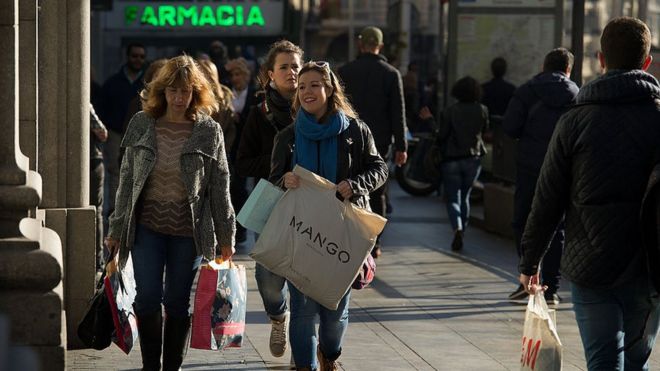
Shoppers in Spain
The eurozone notched up growth of 0.6% in the second quarter of the year, official Eurostat figures showed.
The figure puts annual growth in the 19-country bloc at 2.1% since a year ago.
First-quarter growth was revised down slightly from 0.6% to 0.5%.
Other figures released on Monday showed unemployment in the zone was at its lowest since 2009, building on the picture of improving economic health across the area.
On Friday, figures showed Spain's economy, one of the worst-hit by the financial crisis, grew by 0.9% in the second quarter, suggesting the country's economy had finally grown back to the size it was before 2008.
The International Monetary Fund last week said the outlook for several eurozone economies was brighter than initially thought, with countries including France, Germany, Italy and Spain seeing growth forecasts revised up.
The European Central Bank is planning to tighten up monetary policy after years of pumping up activity through low interest rates and bond-buying.
It intends to begin the process in the autumn, although inflation remains low at 1.3%, well under the 2% target for the eurozone.
Low inflation is often one of the side effects of weak economic activity.

Tuesday, August 1, 2017

BBC News - Brexit: UK will not cut taxes, says Philip Hammond

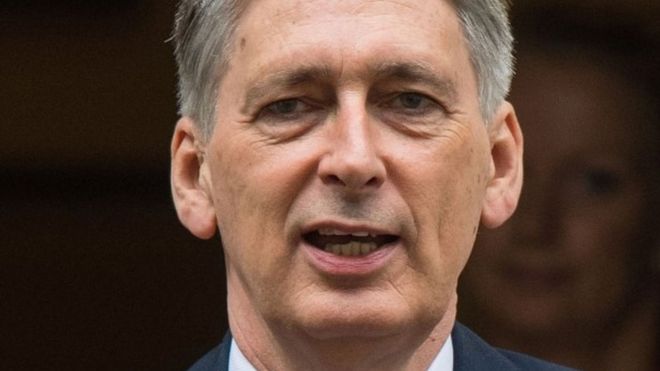
Philip Hammond
The UK will not cut tax and regulations after Brexit in a bid to undercut EU rivals, Philip Hammond has suggested.
The chancellor told French newspaper Le Monde that tax raised as a percentage of the British economy "puts us right in the middle" of European countries.
"We don't want that to change, even after we've left the EU," he added.
It has been viewed as a softer tone from Mr Hammond, who in January said the UK would do "whatever we have to do" post-Brexit to stay competitive.
BBC political correspondent Chris Mason says that having lost their majority at this year's general election, the Conservatives would struggle to persuade the Commons to support slashing taxes and regulation.
In his latest interview, Mr Hammond told Le Monde: "I often hear it said that the UK is considering participating in unfair competition in regulation and tax.
"That is neither our plan nor our vision for the future.
"I would expect us to remain a country with a social, economic and cultural model that is recognisably European."
Our correspondent said those words "appeared to be at odds with some of his own comments earlier this year".
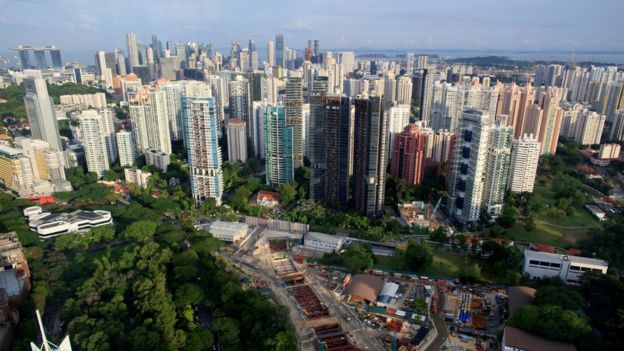
Singapore skyline
Cutting taxes and business regulations would make the UK more like Singapore
During an interview in January, Mr Hammond was asked by Welt am Sonntag whether the UK could become a tax haven after leaving the EU.
He said he was "optimistic" about securing a good trade deal with the EU but if this did not happen "you can be sure we will do whatever we have to do".
"If we have no access to the European market, if we are closed off, if Britain were to leave the European Union without an agreement on market access, then we could suffer from economic damage at least in the short-term," he said at the time.
"In this case, we could be forced to change our economic model and we will have to change our model to regain competitiveness."

'Risky strategy'

Those comments were seized upon by Labour leader Jeremy Corbyn, who said it sounded like "a recipe for some kind of trade war with Europe".
He told the BBC it seemed "an extremely risky strategy".
In his latest interview, Mr Hammond also said the UK wanted EU workers be part of the British economy and carry on with their family life in the country, and the same for British expats working in Europe.
He said the bill for Brexit was not a question about money, but how the UK leaves the EU without causing problems for businesses and people.
Breaking up the City of London would benefit New York not Frankfurt or Paris, he added.