Tuesday, September 19, 2017

BBC News - Sir James Dyson expects no Brexit deal

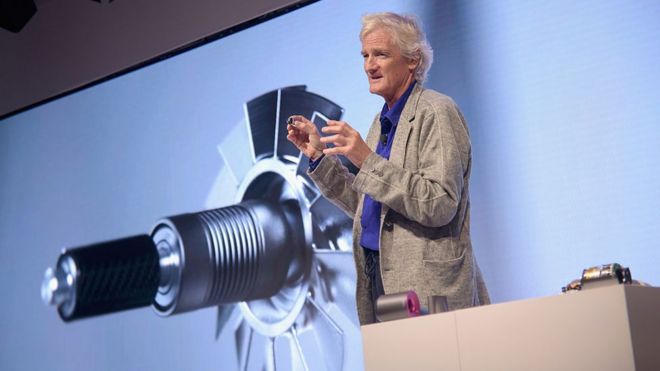
Sir James Dyson
Leave campaigner Sir James Dyson expects the UK to leave the EU with no deal, and trade to default to World Trade Organization rules and tariffs.
Sir James, who founded the engineering firm Dyson, told the BBC such an arrangement would "hurt the Europeans more than the British".
However, former Bank of England chief Lord King said he was "not impressed" with preparations for failed talks.
It is "very important" the UK has a fall-back position, he said.
"I don't think the negotiations are going in the way that we might hope," he told the BBC's Newsnight programme.
"I think you need a separate team that is responsible for ensuring that if negotiations do break down... then we are capable of saying if you don't want an agreement, we are capable of leaving and trading with you under, for example, WTO terms. It's not a first preference, but we can do it."

'No single market'

Sir James told the BBC's Today programme that Dyson, which became famous through its innovative vacuum cleaners, already pays the WTO tariff into Europe "and it hasn't hurt us at all - we're one of the fastest growing companies in Europe".
He said UK business did not need a transitional period to separate from the European single market, saying he thought the term "single market" was "quite wrong".
"It's a series of different markets with different languages, with different marketing required and different laws.... it's actually a very highly complex and broken up market," he said.
Sir James added that "business is about uncertainty".
"There's always uncertainty in business, about exchange rates, conditions in markets, natural disasters...
"I think uncertainty is an opportunity, and the opportunity here is actually that the rest of the world is growing at a far greater rate than Europe, so the opportunity is to export to the rest of the world and to capitalise on that," he said.

'No illusions'

However, the chairman of the John Lewis Partnership, Sir Charlie Mayfield, told the Today programme that the pound and business confidence had been hit by the Brexit vote.
"We should be under no illusions, Brexit is having an effect on the economy, no question. It's the same for everybody, and the main effects are sterling and confidence.
"Uncertainty is one of the consequences of this, and of course businesses never like uncertainty, because it makes it hard to plan for the future.
He called for "a serious parliamentary debate, to figure out what kind of Brexit we're going to have in the best interests of the country and the economy."

'Dyson degree'

Sir James' comments came as 33 undergraduates began studying at the Dyson Institute of Engineering and Technology.
The student engineers have begun a four-year degree, during which they will be mentored by Dyson's scientists and engineers who will teach alongside academics from Warwick University.
Universities Minister Jo Johnson challenged Sir James 18 months ago to help train engineers in the UK.
Sir James said: "It is a great opportunity, and I think a great step forward in the way that higher education is provided.
"We're paying these people, they're getting about 40 days a year more academic time than you'd get at university, plus the fact that they're working with some of the best scientists and engineers in the world."

Monday, September 18, 2017

Reuters News - Asia stocks hit decade high, dollar holds nerve for Fed meeting

SYDNEY (Reuters) - Asian shares hit decade highs on Monday and the dollar gained on the yen early in a week in which the U.S. Federal Reserve is likely to wrestle with its bloated balance sheet as part of a long reversal of super-cheap money worldwide.

European and U.S. stocks looked set to echo those gains, with Eurostoxx 50 futures STXEc1 up 0.46 percent and the FTSE FFIc1 0.43 percent, while E-Mini futures for the S&P 500 ESc1 rose 0.25 percent.
There was relief the weekend passed with no new provocation by North Korea, though Pyongyang’s nuclear ambitions will be center stage when U.S. President Donald Trump addresses world leaders at the United Nations on Tuesday.
Some details of Trump’s tax reform plans may also emerge this week, while elections in Germany and New Zealand will add extra political uncertainty to the mix.
MSCI’s broadest index of Asia-Pacific shares outside Japan .MIAPJ0000PUS rose 0.9 percent to reach heights not visited since late 2007.
Samsung Electronics (005930.KS) led the gains to reach an all-time top as global demand for hi-tech gadgets remains strong, while healthcare and financial stocks also drew buyers.
Australia's index added 0.5 percent while Japan's Nikkei .N225 was closed for a holiday.
For markets, the main event will be the Fed’s meeting on Tuesday and Wednesday, where it is likely to take another step toward policy normalization amid what is rapidly becoming a global trend.
Canada has already hiked twice in recent months and the Bank of England shocked many last week by flagging its own coming increases.
Yet investors are far from convinced the Fed will move on rates again this year, with December put at less than a 50 percent probability in the futures market <0#FF:>.
“It is fair to say that in our recent travels most of the investors we have spoken to question not just a December hike, but whether the Fed will hike at all again this cycle,” said Tom Porcelli, chief U.S. economist at RBC Capital Markets.
“When you press investors on the why, the standard reply is the lack of inflationary pressures.”
Porcelli, however, argued the market was underestimating the risk of tightening and predicted not only a hike in December but four more over 2018.
Yields on U.S. 10-year Treasuries US10YT=RR did jump a hefty 14 basis points last week, and still trailed the UK where yields on 10-year paper GB10YT=RR surged 30 basis points.

STERLING RESURGENT

The seismic shift in rates saw sterling hit its highest since the Brexit vote and notch its best week in almost nine years against a currency basket. [GBP/]
On Monday, the pound was a shade softer at $1.3585 GBP= but not far from the peak of $1.3615. The euro was steady at $1.1945 EUR=, sandwiched between support at $1.1836 and resistance at $1.2092.
The dollar held firm on the yen at 111.20 JPY=, with the Bank of Japan widely expected to maintain its massive asset buying campaign at a meeting on Thursday.
Political uncertainty also made a surprise appearance after sources said Japanese Prime Minister Shinzo Abe was considering calling a snap election for as early as next month to take advantage of his improved approval ratings and disarray in the main opposition party.
Against a basket of currencies, the dollar was idling at 91.869 .DXY and still uncomfortably close to the recent 2-1/2 year trough of 91.011.
The modest bounce in the dollar combined with all the talk of monetary tightening put gold on the defensive. The precious metal was off 0.1 percent at $1,317.78 an ounce XAU=.
Oil prices were hovering near five-month highs helped by a fall in the number of U.S. rigs drilling for new production and as refineries continued to restart after getting knocked out by Hurricane Harvey. [O/R]
Brent crude LCOc1 was up 7 cents at $55.69 a barrel, following gains of 3.3 percent last week. U.S. crude CLc1 firmed 7 cents to $49.97 a barrel.
Reporting by Wayne Cole; Editing by Richard Borsuk and Kim Coghill
Our Standards:The Thomson Reuters Trust Principles.

Friday, September 15, 2017

BBC News - Pound hits highest since Brexit vote on rate rise speech

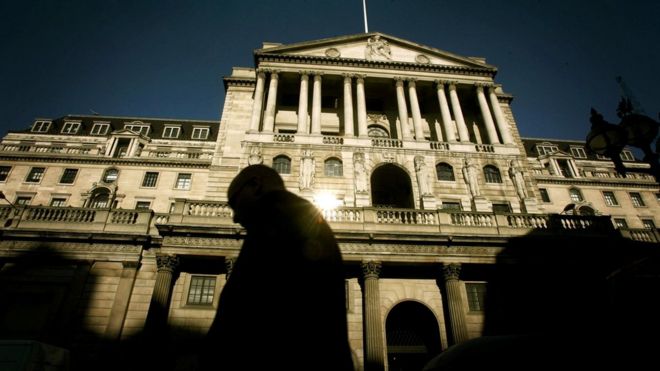
Bank of England

The pound has hit its highest level against the dollar since the Brexit vote after a senior Bank of England official fuelled speculation it could raise rates in the coming months.
Gertjan Vlieghe, who has previously argued against a rate rise, said the "moment is approaching" when interest rates might need to go up.
The Bank kept rates at 0.25% this week, but hinted at a rise in the future.
Sterling rose more than 1% against the dollar to hit $1.3610.
That was its highest level since 24 June, the day after the Brexit vote.

The pound also gained more than 1% against the euro to rise above 1.13 euros.
Analysts have suggested the Bank could now lift interest rates back to 0.5%, the level they were before the EU referendum, as soon as November.
Mr Vlieghe, a member of the Bank's interest rate-setting committee, said in a speech on Friday: "Until recently, I thought the appropriate response of monetary policy was to be patient, given modest growth and subdued underlying inflationary pressure.
"But the evolution of the data is increasingly suggesting that we are approaching the moment when Bank Rate may need to rise."
Mr Vlieghe, who was the first Bank member to vote for a rate cut after the Brexit vote, said there was now growing evidence the UK economy was picking up.

'Concerted effort'

He pointed to unemployment falling to record lows, as well as signs that households are spending more and that wages are rising in the private sector.
"If these data trends of reducing slack, rising pay pressure, strengthening household spending and robust global growth continue, the appropriate time for a rise in Bank Rate might be as early as in the coming months," Mr Vlieghe said.
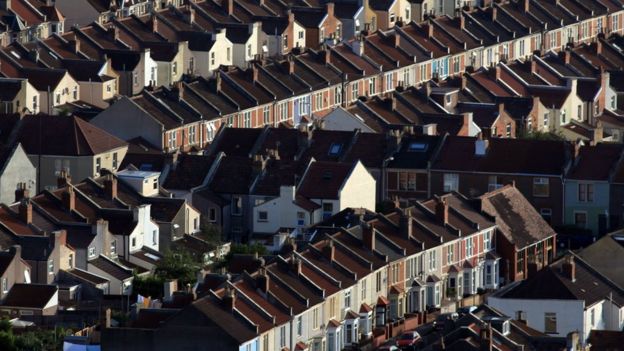
Rows of housesImage copyrightGETTY IMAGES
Image captionHigher interest rates benefit savers but could raise mortgage costs for homeowners
Markets which track investors' expectations for the Bank rate now give a 63% likelihood of a rise in November, the highest since the Brexit vote. At the start of the week the futures markets gave only a 20% chance.
The return on government bonds, often influenced by interest rate expectations, also hit 15-month highs on Friday.
The yield on five-year UK bonds rose 7 basis points to hit 0.772%, the highest since 23 June, 2016, the day Britain voted to leave the European Union.
Howard Archer, chief economic adviser to the EY Item Club, said: "Vlieghe's comments will support belief that the Bank of England could well raise interest rates before the end of 2017 with a move as soon as November very much in play."
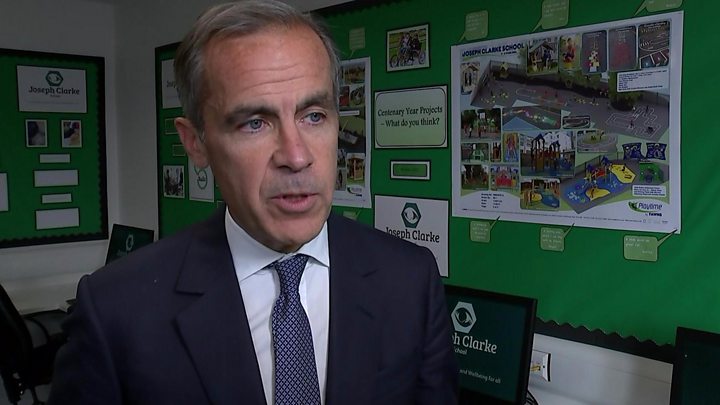
Media captionMark Carney suggests interest rates may change in the coming months
Mr Archer cautioned that the Bank of England had "talked up the likelihood of an interest rate hike then failed to follow through" in the past.
"But there does seem to be a more concerted effort this time around and more unanimity within the Monetary Policy Committee of the case for a hike," he said.
The Bank said on Thursday that higher inflation and a pick up in growth could lead to a rate rise soon.
Growing speculation of a rate rise lifts the pound against other currencies because higher interest rates would make sterling more attractive to investors.
The Bank dropped heavy hints in 2014, and again last year before the EU referendum, that it could raise rates, only to later change course.

Thursday, September 14, 2017

Reuters News - Trump says rich might pay more in taxes, talks with Democrats

WASHINGTON (Reuters) - President Donald Trump said on Wednesday that taxes on rich Americans might rise, as he pursues a tax code overhaul and reaches out to both Democrats and Republicans in a push to win support for a plan still far from complete.
Trump met with the two top congressional Democrats over dinner at the White House in a search for common ground that could make it easier to get a tax-cut package through Congress.
Both sides said the meeting, which covered an array of legislative issues, was productive.
Earlier, Treasury Secretary Steven Mnuchin said tax reductions would be paid for by faster economic growth.
The White House and the Republican-led Congress have yet to put forth a detailed tax plan, despite months of high-level talks that had until recent days excluded Democrats.
House of Representatives Speaker Paul Ryan said an outline of a plan would be unveiled during the work week beginning Sept. 25, with congressional tax-writing committees crafting detailed legislation in the subsequent weeks.
Mnuchin told Fox News Channel the Trump administration would use its own economic assumptions to gauge the impact of its tax cuts on the federal budget deficit and the $20 trillion national debt, a key issue in Washington’s intensifying tax debate.
“It will be revenue neutral under our growth assumptions,” Mnuchin said. “So, we can pay for these tax cuts with economic growth.”
The administration believes tax cuts will lead to much faster growth than do congressional analysts or most private forecasters, a likely fault line in the debate ahead.
As for taxing the rich, Trump said during a meeting with a bipartisan group of lawmakers - his second in as many days - that the wealthy “will not be gaining at all with this plan. ... If they have to go higher, they’ll go higher, frankly.”

Wednesday, September 13, 2017

BBC News - UK inflation rate rises to 2.9%

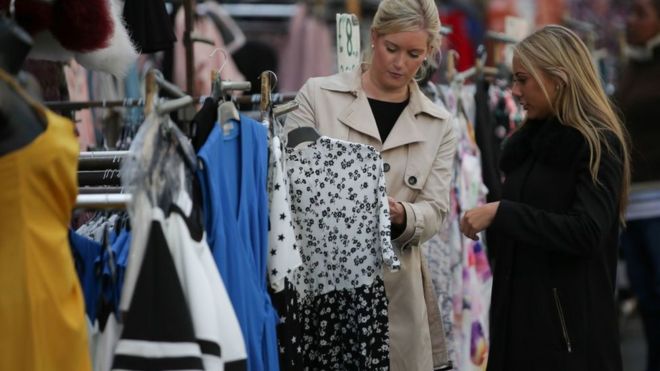
UK shoppers
The UK's inflation rate climbed to its joint highest in more than five years in August as the price of petrol and clothing rose.
UK inflation measured by the Consumer Prices Index rose to 2.9% in August, up from 2.6% in July, figures show.
The fall in the value of sterling since the EU referendum continued to be a major impetus for rising prices, the Office for National Statistics said.
But a rebound in the price of oil also had an impact, pushing up fuel prices.
The bigger-than-expected rise in inflation comes ahead of the Bank of England's next announcement on interest rates on Thursday.
However, economists said the Bank was still highly unlikely to raise rates at the meeting.

Rising clothing costs

According to the ONS, the prices of most goods climbed during August, largely because of rising import costs for retailers.
However, clothing and footwear prices had the biggest impact, climbing 4.6% year-on-year, their highest level since records began.
Petrol also pushed the overall cost of living higher, increasing 1.8p a litre to 115.7p during the month, while diesel gained 2p to 117.6p.
The TUC's general secretary, Frances O'Grady, said the "cost of living squeeze" was continuing, with rising inflation outpacing wages.
"The government needs to get a grip and get pay rising across the economy," she said.
The most recent wages data showed average weekly earnings rising at an annual pace of 2.1%. New figures on pay are due to be released on Wednesday.
Ian Stewart, chief economist at Deloitte, said: "It is pretty remarkable that, with inflation near 3% and unemployment at the lowest level in over 40 years, we are not seeing much wage inflation."
August's inflation rate is far above the Bank of England's target of 2%. The Bank has said it expects inflation to reach 3% in October, but start to ease early in 2018.
Paul Hollingsworth, UK economist at Capital Economics, said the latest figures were likely to provide "further ammunition" to those members of the Bank's rate-setting Monetary Policy Committee who favour an earlier rise in interest rates.
"However, we don't think the rise in CPI inflation has much further to run," he added.
"Indeed, we expect it to peak at 3.1% in October, before dropping back next year as the impact of the pound's fall starts to fade."
Samuel Tombs, chief UK economist at Pantheon Macroeconomics, added: "We still think the chances of a rate rise this year are remote.
"Domestically-generated inflation is subdued, inflation expectations have remained well-anchored and GDP growth is too weak to warrant higher rates."
The ONS's preferred measure of inflation CPIH - which includes owner-occupiers' housing costs - rose to 2.7% last month from 2.6% in July.
The Retail Prices Index (RPI) measure of inflation rose to 3.9% in August from 3.6%.

Tuesday, September 12, 2017

Reuters News - World stocks build on record highs as Irma weakens

LONDON (Reuters) - World stocks climbed to record highs on Tuesday as an easing in tensions over North Korea and signs that Hurricane Irma was causing less damage than feared in the United States boosted risk appetite.
The MSCI All Country World Index .MIWD00000PUS edged up 0.2 percent, building on Monday’s 0.9 percent gain -- its fourth-biggest so far this year.
The pan-European STOXX 600 index jumped to a one-month peak as insurers .SXIP made further headway and basic resources .SXPP and financials .SX7P joined in the rally.
MSCI World’s insurer index .MIWO0ISGUS gained 0.3 percent, as insured property losses from Hurricane Irma’s are expected to be smaller than initially forecast.
“Whilst the damage is bad, it’s not quite as bad as many people expected,” said James Butterfill, head of research and investment strategy at ETF Securities. He said government spending in the aftermath of natural disasters often boosts riskier assets such as stocks over the long term.
U.S. President Donald Trump signed a bill on Friday that included $15.25 billion in hurricane-related aid.