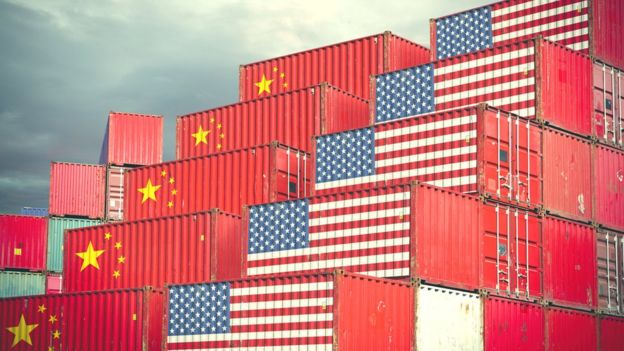
China said talks with the US "laid the foundations" to resolve a damaging trade dispute between the world's two largest economies.
The negotiations in Beijing this week were "extensive, deep and detailed," China's commerce ministry said.
The US highlighted China's pledge to purchase more agriculture and other goods, without providing specifics.
Neither side has said when the two countries will meet again for further negotiations.
The midlevel talks in Beijing concluded on Wednesday. They weren't expected to produce a final deal but optimism about progress had buoyed global stock markets this week.
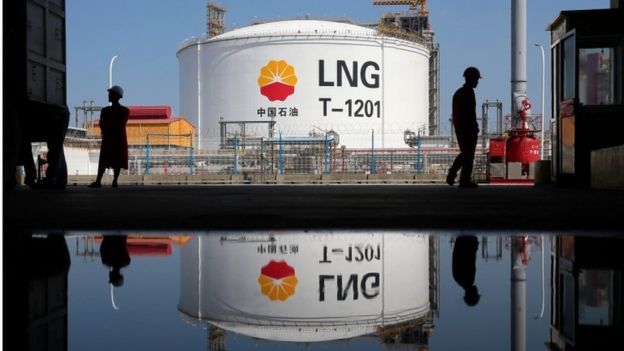
A statement from the US Trade Representative said the talks "focused on China's pledge to purchase a substantial amount of agricultural, energy, manufactured, and other products and services from the United States".
China's commerce ministry said the discussions "established a foundation for the resolution of each others' concerns".
They agreed to maintain close contact, the statement said.
The discussions marked the first formal talks since the US President Donald Trump and his Chinese counterpart Xi Jinping agreed not to impose new tariffs at the G20 summit in December.
The truce came after both sides imposed several rounds of tariffs in 2018.
The US imposed tariffs on more than $250bn (£195.6bn) worth of Chinese goods, with the threat of more to come.
The Chinese responded by slapping tariffs of $110bn worth of US goods.
President Trump has said if no deal is reached before the truce expires on March 2, he will increase duties on $200bn worth of Chinese goods from 10% to 25% .
by Andrew Walker Image copyrightBILL CLARK/GETTY IMAGESImage captionThe predicted slowdown is focused on rich countries, particularly the US
The World Bank is warning of increasing risks, or what it calls "darkening skies", for the world economy.
In its annual assessment of global prospects the Bank predicts continued, though somewhat slower, growth this year and next.
The Bank's forecast for the global economy is expansion this year of 2.9% and 2.8% in 2020.
But overhanging the broadly favourable outlook are rising concerns that could mean economic performance falls short.
There is certainly some good news in this report. While the global economy is slowing down it's likely to be what the Bank's economists call a "soft landing". The slowdown started in the middle of last year and it has so far been "orderly".
The predicted slowdown is focused on the rich countries, particularly the US, although it will continue to expand more rapidly than either the Eurozone or Japan according to the Bank's forecasts.
The US slowdown is the result of the fading impact of President Trump's tax cuts and by 2021 its growth will have almost halved - to 1.6% compared with 2.9% last year.
Change of gear
On the other hand, growth in emerging markets and developing economies is likely to gather pace somewhat despite the continued cooling down in China - a process which began at the start of the decade.
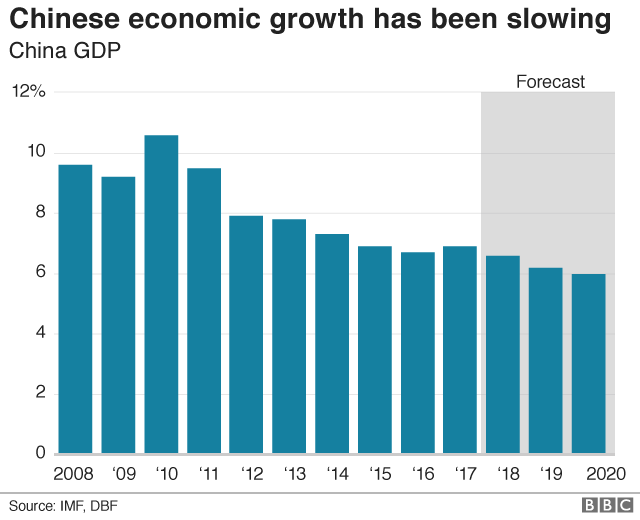
By 2021 growth in China is expected to be 6%, which is still pretty strong, but it is a marked change of gear for an economy that expanded by an average of 10% annually between 1980 and 2010.
Franziska Ohnsorge, a World Bank economist and lead author of the report said in a BBC interview: "In China it's policy engineered, a very deliberate slowdown towards more stable long term growth."
That is what the Bank thinks is the likely performance of the world economy over the next few years. But there are risks that could mean that it doesn't work out so well.
That is reflected in the title of this year's report: "Darkening Skies".
Some of the clouds are familiar ones.
International commerce is already weakening, and conflict over trade especially between the US and China is one of the major risks.
These are the two largest national economies on the planet. The Bank has calculated that 2.5% of global trade is affected by the new tariffs - trade taxes - that were imposed last year, and it would be double that if the further tariffs that have been discussed were implemented.
Image copyrightGETTY IMAGES
The risk of rising protection remains high, the report says. It could depress economic activity in these two giant economies. Slower growth in China is particularly an issue for developing countries that export industrial commodities, energy and metals, as China is such a big buyer of these products.
Franziska Ohnsorge says between them the US and China account for 20% of global trade and 40% of global GDP. If their economies are both hit she says, "it's something that's felt all around [the world]".
The Bank does not expect a recession in either of these economies, though some commentators are now suggesting the US could be heading for one next year. But if it were to happen the risk of a global recession would increase sharply. In the past, the report says, the risk of a global recession in any one year was 7%. But if the US has a downturn, the probability goes up to 50%.
Brexit risk
Financial markets are also a risk. The chances of disorderly developments have increased. If interest rates are increased again in the US, or if the dollar gains sharply, it could have an impact on emerging and developing economies.
Brexit appears in the Bank's assessment as a possible risk for countries that are especially reliant on selling to Europe. If the UK's exit takes place with no agreement there is a chance of significant economic damage to both the UK and the EU which could then affect countries in Eastern Europe and North Africa which are closely integrated with Europe.
And even in the Bank's central, relatively optimistic, picture there are some depressing prospects for parts of the developing world - which is the group the World Bank exists to help.
For about a third of countries concerned growth in per capita terms won't be enough to restart what the report calls "the catch-up" with the developed world, the narrowing of the gap between living standards.
And in Sub-Saharan Africa per capita growth is likely to be less than 1%, insufficient to drive significant progress in alleviating poverty.
By Jenny Leonard, Jennifer Jacobs, Saleha Mohsin, and Shawn Donnan
President Donald Trump is increasingly eager to strike a deal with China soon in an effort to perk up financial markets that have slumped on concerns over the trade war, according to people familiar with internal White House deliberations.
Talks between mid-level U.S. and Chinese officials in Beijing concluded on Wednesday, and a Chinese foreign ministry spokesman said a positive result from the meetings will be good for the global economy. The negotiations had been extended for a day, which added to optimism fueled by tweets from Trump that the two sides are making progress toward an agreement.
Stocks gained from Europe to Asia, and U.S. futures rose, on fresh hope for a breakthrough in the showdown between the world’s two largest economies. China’s yuan rose to the strongest level in more than a month.
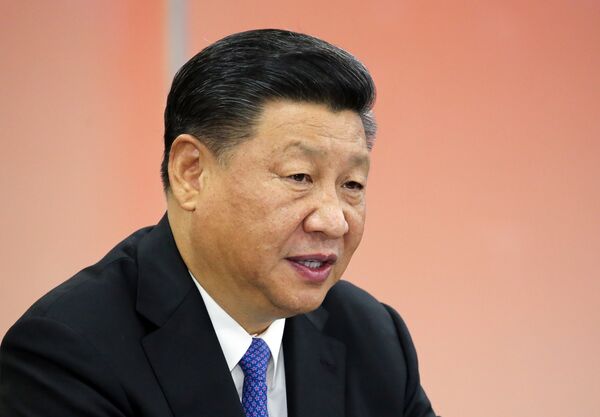
Xi Jinping
Photographer: Andrey Rudakov/Bloomberg
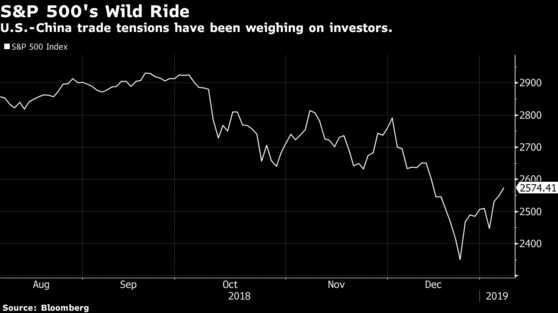
Inside the White House, some key economic advisers are campaigning for a quick resolution to the trade conflict to help soothe battered markets. The S&P 500 Index has fallen about 8 percent since Trump and Chinese President Xi Jinping agreed on a 90-day truce at a Dec. 1 meeting in Argentina.
“Talks with China are going very well!,” Trump tweeted on Tuesday, the latest in a series of upbeat messages from him on the negotiations since he met with Xi and the December market turmoil.
According to people familiar with the matter, Trump’s willingness to cut a deal with Beijing is driven in large part by his desire for markets to rally. He publicly said he’s eager to make a deal that benefits both sides while also stressing that China’s slowing economy and falling stock market signal the country is more desperate than the U.S. for a speedy outcome.
Still, talks have repeatedly yielded no breakthroughs since they started in May, and Beijing has repeatedly said it won’t cave to U.S. demands.
March Deadline
The press office of the U.S. Trade Representative declined to comment.
The two countries have until March 1 before U.S. tariffs on some $200 billion in Chinese goods are set to rise to 25 percent from 10 percent.
The president has focused on the stock market as it’s fallen over the past month as a gauge of success or failure, expressing frustration at the volatility, the people said.
China hawks in the administration have grown increasingly concerned about how the market turbulence has been affecting the president’s mood on trade. In public statements aides like Wilbur Ross, the commerce secretary, and Peter Navarro, a White House trade adviser, have played down the impact of the trade wars on markets, the U.S. economy and companies.
In private, some administration officials have confessed frustration in recent weeks with the market declines, appearing bemused by investors’ concerns over the China trade wars and how to address them.
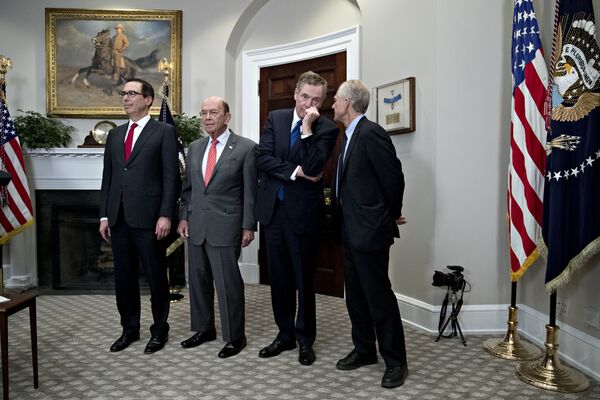
From left, Steven Mnuchin, Wilbur Ross, Robert Lighthizer and Peter Navarro.
Photographer: Andrew Harrer/Bloomberg
Trade Abuses
But hawks have also been pressing the president to keep his focus on what they see as a long-term fight to address a vast list of Chinese trade abuses and make sure lasting changes in policy are both secured and can be enforced.
USTR’s Robert Lighthizer, who Trump appointed to lead the China talks, is pressing for the U.S. to take a harder line in the negotiations. He is pushing to address concerns of China’s alleged theft of intellectual property and market-access barriers, as well as to demand structural economic reforms.
Treasury officials have made the case that market volatility is in part due to the tightening of U.S. monetary policy, and a result of the trade war with China. Advocates of a quick deal with Beijing, including Treasury Secretary Steven Mnuchin and White House economic adviser Larry Kudlow, have used the markets jitters as a cudgel to press their case, the people said.
“We’re on our way to a deal. There is no question that the Chinese want the deal, they need the deal. Their economy is slowing much more than I think public data is showing right now,” Leland Miller, chief executive officer of China Beige Book, said on Bloomberg TV Tuesday. “There’s many in the White House who would like a longer fight, but for now the president has set the tone, and he says he wants a deal. So we’re on our way.”
— With assistance by Sharon Chen, Divya Balji, and James Mayger
WASHINGTON (Reuters) - The United States imposed sanctions on Tuesday that target a Venezuelan currency exchange network scheme that siphoned billions of dollars to corrupt insiders of the Venezuelan government, the U.S. Treasury Department said.
It said the seven individuals targeted by the move include a former Venezuelan treasurer, Claudia Patricia Diaz Guillen, and Raul Antonio Gorrin Belisario, who bribed the Venezuelan Treasury in order to conduct illegal foreign exchange operations.
“Venezuelan regime insiders have plundered billions of dollars from Venezuela while the Venezuelan people suffer. Treasury is targeting this currency exchange network which was another illicit scheme that the Venezuelan regime had long used to steal from its people,” Secretary of the Treasury Steven Mnuchin said in a statement.
The U.S. Treasury said the former Venezuelan officials and other individuals used favorable foreign exchange transactions through brokerage firms controlled by Gorrin and among a few that were approved by the South American country’s treasury. The individuals concealed their profits in U.S. and European bank accounts and investments, it said.
The U.S. Treasury statement cited 23 groups as being part of the scheme, including Globovision Tele in Caracas and Miami, Magus Holdings in Miami, Tindaya Properties in New York, Planet 2 Reaching Inc and Posh 8 Dynamic Inc, both of Delaware.
Reporting by Doina Chiacu; Editing by Chizu Nomiyama and David Gregorio
A string of other companies have issued warnings recently over China's slowdown and the impact of the trade war with the US.
Among those are carmakers such as General Motors, Ford and Fiat Chrysler. Luxury vehicle maker Jaguar Land Rover has also warned of slowing Chinese sales.
This week, Robin Li, chief executive of Chinese search engine Baidu, used an infamous phrase from Game of Thrones to warn employees that "winter is coming" as the local economy cools.
However, not all Western brands are struggling in China.
In September, Nike said sales in Greater China shot up 24%. Lululemon, another activewear maker, also reported strong sales growth in China last year.
Image copyrightREUTERSImage captionThe US trade war is not helping business
What shape is China's economy in?
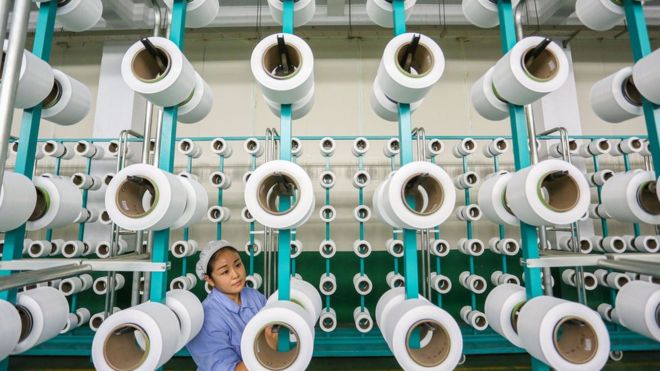
China's economic growth has been slowing in recent years and is now running at 6.5% annually, still a breakneck pace compared with anything in the developed world but about half the rate the country had been racking up for more than 20 years.
And the latest batch of economic news suggest this slowdown is deepening, not helped by the trade war with the US.
Data out this week showed manufacturing activity contracted for the first time in 19 months. New orders have fallen and retail sales eased. Firms have reported softer demand despite some discounting.
Louis Kuijs, head of Asia economics at Oxford Economics, sees GDP growth "bottoming out" around the second quarter of this year, and expects an annual growth rate of 6.1%.
But he does not see it deteriorating much further: "While China's economy is slowing down, it is not tanking and Apple's profit warning is not a good proxy for the health of the overall economy or even overall consumer spending."
Long-term challenges
The Chinese economy also has deeper problems that need addressing.
George Magnus, research associate at Oxford University's China Centre, points to serious and growing worries over the lack of regulation that sets doing business in China apart from that of the rest of the world.
These include China's complex and shady "shadow banking" problem of unregulated lenders, its cyber espionage activities and lax protection of intellectual property rights.
The authorities are not standing idle. They are spending more on infrastructure to spur demand and have been cutting interest rates.
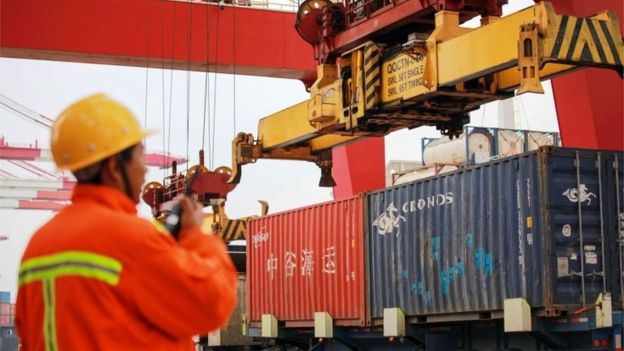
Image copyrightREUTERSImage captionChina buys a hefty percentage of global natural resources
Why does China's slowdown matter?
Serious turbulence in China now would matter a great deal more than it would have 10 or 20 years ago.
And Chinese industry is closely integrated into international supply chains.
The rapid growth over the past 25 years has propelled China to second place in the league table of the world's biggest economies.
Mr Magnus says that China's economy is now so large it pretty much determines the global price of a huge range of products.
Half of all the world's steel, copper, coal and cement goes to China, as well as about half of the world's pork output and a third of its rice.
So if it isn't buying, the price is likely to fall.
DBS Bank strategists Taimur Baig and Nathan Chow say the key issue for the global economy is "the depth of China's economic malaise".
"A steadily slowing China imparts a major drag to the world economy in any case. Add to this fears of the decline being disorderly, all other risks pale in comparison."
However, Mr Magnus says fears shouldn't be overstated: "I don't think anyone is thinking at the moment that China's economy is about to fall off a precipice, it's just that everything has come off considerably from elevated levels it has been at for the last decade or more."
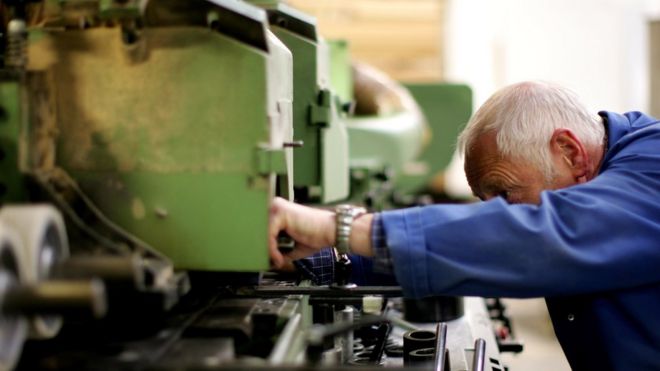
Image copyrightGETTY IMAGESImage captionFinding workers with the right skills is becoming increasingly difficult, according to the British Chambers of Commerce
UK firms are being squeezed by labour shortages, rising prices and a slowdown in sales.
More companies than ever before are finding it hard to recruit staff according to the British Chambers of Commerce (BCC).
It warned that higher costs meant more manufacturers were expecting to raise prices.
The proportion of services firms saying sales were improving had dropped to a two year low.
Four fifths of employers in manufacturing, and almost as many in the service sector, reported difficulties in finding the right workers.
Dr Adam Marshall, Director General of the BCC, said these findings suggested the government should listen more closely to business when it came to drawing up its migration policies.
"Business concerns about the government's recent blueprint for future immigration rules must be taken seriously - and companies must be able to access skills at all levels without heavy costs or bureaucracy," he said.
'Persistent Brexit uncertainty'
The BCC said that the lack of clarity over the process of leaving the European Union had led to stagnating growth and business confidence in the UK.
Suren Thiru, Head of Economics at the BCC, said the UK economy was facing "persistent Brexit uncertainty and rising cost pressures".
He added that subdued household spending levels and tightening cash flow was making it hard for businesses, particularly in the services industries to grow.
However he said that upward pressure on prices from higher wage settlements remained relatively muted.
The BCC's survey covers 6,000 firms, employing over one million people across the UK.
by David Morgan WASHINGTON (Reuters) - Congress was set to reconvene on Wednesday with no signs of a workable plan to end a 12-day-old partial shutdown of about a quarter of the U.S. government, and President Donald Trump not budging on his demand for $5 billion in border wall funding.
Both the Senate and House of Representatives, returning from a short New Year’s Day break, will meet briefly, marking the last day of the Republican-controlled 2017-2018 Congress, one that was marked by deep partisan division.
Separately, Trump has invited the top Democratic and Republican leaders in Congress to the White House on Wednesday for what congressional sources described as a border security briefing.
On Thursday, when Democrats take over the House in the 2019-2020 Congress, they plan to approve a two-part spending package meant to end the shutdown. But its prospects are grim in the Republican-led Senate, which previously approved similar measures on the floor or in committee but has since fallen in line with Trump’s demands to fund a wall on the U.S.-Mexico border.
The legislation sets the stage for the first major battle of the new Congress between House Democrats led by Nancy Pelosi and Republican Senate Majority Leader Mitch McConnell.
Trump, a Republican, triggered the shutdown, which started on Dec. 22, by insisting that $5 billion for funding of the border wall be part of any spending measure.
 GETTY IMAGES