Thursday, February 7, 2019

Reuters News - Long, strange trip: How U.S. ethanol reaches China tariff-free

by Chris Prentise, A. Ananthalakshmi
NEW YORK/KUALA LUMPUR (Reuters) - In June, the High Seas tanker ship loaded up on ethanol in Texas and set off for Asia.

Two months later - after a circuitous journey that included a ship-to-ship transfer and a stop in Malaysia - its cargo arrived in China, according to shipping data analyzed by Reuters and interviews with Malaysian and Chinese port officials.
At the time, the roundabout route puzzled global ethanol traders and ship brokers, who called it a convoluted and costly way to get U.S. fuel to China. (MAP: tmsnrt.rs/2HP1ywa )
But the journey reflects a broader shift in global ethanol flows since U.S. President Donald Trump ignited a trade war with China last spring.
Although China slapped retaliatory tariffs up to 70 percent on U.S. ethanol shipments, the fuel can still legally enter China tariff-free if it arrives blended with at least 40 percent Asian-produced fuel, according to trade rules established between China and the Association of Southeast Asian Nations (ASEAN), the regional economic and political body.
In a striking example of how global commodity markets respond to government policies blocking free trade, some 88,000 tonnes of U.S. ethanol landed on Malaysian shores through November of last year - all since June, shortly after China hiked its tax on U.S. shipments. The surge follows years of negligible imports of U.S. ethanol to Malaysia.
In turn, Malaysia has exported 69,000 tonnes of ethanol to China, the first time the nation has been an exporter of the fuel in at least three years, according to Chinese import data.
Blending U.S. and Asian ethanol for the Chinese market undermines the intent of Beijing’s tariffs and helps struggling American ethanol producers by keeping a path open to a major export market that would otherwise be closed.
“Global commodity markets are incredibly creative in finding ways to ensure willing sellers are able to meet the demands of willing buyers,” Geoff Cooper, head of the Renewable Fuels Association, said in a statement to Reuters. The group represents U.S. ethanol producers.
In at least two cases examined by Reuters, including that of the High Seas, blending of U.S. ethanol cargoes with other products appeared to have occurred in Malaysia before the cargoes were shipped on to China, according to a Reuters analysis of shipping records and interviews with port officials. 
Chinese merchants including the state-backed oil company Unipec notified Chinese authorities about the unusual activity last summer - which represented competition they had not anticipated under the tariff scheme, according to two industry sources.
Unipec’s parent company Sinopec did not respond to requests for comment. A spokesman for China’s General Administration of Customs declined to comment.
Norazman Ayob, deputy secretary general of the Malaysian trade ministry, confirmed that Malaysia exported ethanol to China this year. The ministry was unable to confirm whether it had been mixed with U.S. fuel, he said, but noted such blending would be legal under the ASEAN-China pact.
Malaysia has no track record of significant domestic ethanol production, so it is unclear where the ethanol blended with the U.S. product originates.
Additional U.S. ethanol has flowed in unusual volumes to other destinations since Trump’s trade war began, including other ASEAN member nations the Philippines and Indonesia, according to shipping and trade data, though Reuters could not confirm its final destination.

ETHANOL ON THE HIGH SEAS

The High Seas cargo ship was among the first to engage in the rising U.S.-to-Malaysia ethanol trade, according to shipping data from financial information provider Refinitiv and bills of lading from the ports.
It loaded 25,000 tonnes of ethanol in Texas City on June 23 and then another 10,000 tonnes in Beaumont on June 27.
Some of the ethanol was produced by Green Plains Inc, one of America’s top ethanol producers. Green Plains spokesman Jim Stark confirmed the loading of the company’s product in Beaumont but said it could not confirm the cargo’s ultimate destination.
At the time it left Texas, the shipment was owned by units of SOCAR Trading SA, the marketing arm of the State Oil Company of Azerbaijan Republic, according to the bills of lading.
The shipment was initially destined for the Philippines.
But after it crossed through the Panama Canal and reached the waters near Singapore in mid-August, the High Seas transferred its cargo to the QUDS, another tanker, according to the Refinitiv data.
Vincent Mohy, general counsel for SOCAR, said that the firm sold all of the U.S. ethanol at the time of the transfer to the QUDS and that it made clear to the buyer the fuel originated in the United States. Mohy declined to name the buyer.  
The QUDS landed in the Malaysian port of Kuantan days later and took on another 12,074 tonnes of ethanol before heading to the Chinese port of Zhoushan and emptying its hold by the end of the month, according to the shipping data, a Chinese port official and two Malaysian port officials.
According to one of the Kuantan port officials and a source in the Malaysian government, the cargo on the QUDS was sold by Malaysia’s Rich Greenergy Sdn Bhd to China’s Zhanjiang Industry Petrochemical Company Limited.
Kelvin Shum, Rich Greenergy’s CEO, declined to comment, saying he had signed a non-disclosure agreement about the deal. Efforts to reach Zhanjiang were not successful.
The convoluted voyage was replicated in at least one other case, that of the Maritime Tuntiga. That ship also carried Texas ethanol into Southeast Asia this summer, transferring its cargo into another vessel – the Taibah – near Singapore.
Like the QUDS, the Taibah moved on to the port of Kuantan in Malaysia, picked up about 12,000 tonnes more ethanol, and then moved on to Zhoushan, according to the shipping data and the Kuantan port officials.
 (Additional reporting by Dominique Patton, Meng Meng, and Hallie Gu in Beijing and Michael Hirtzer in Chicago; Editing; by Richard Valdmanis and Brian Thevenot)

Wednesday, February 6, 2019

Bloomberg News - Arab Spring's Lone Democracy Teeters as Economy Refuses to Heal

By Jihen Laghmari and Samer Al-Atrush
Tunisia’s finance chief is unusually cheerful. Looking at the numbers, it’s hard to see why.
On nearly every economic indicator that matters, the North African nation is worse off than before the 2011 overthrow of its dictator, Zine El Abidine Ben Ali: Inflation is higher, growth lower, the deficit wider, and unemployment at chronic levels still dogs a youthful population.
“Indicators in themselves are meaningless if you don’t put them in their dynamic context,” Finance Minister Mohamed Ridha Chalghoum insisted in an interview last week at his ministry in the capital, Tunis.
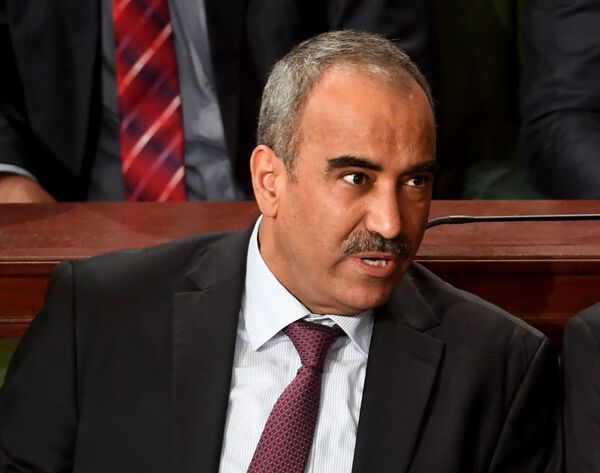
TUNISIA-POLITICS-GOUVERNMENT
Mohamed Ridha Chalghoum
Photographer: FETHI BELAID/AFP/Getty Images

While conceding that the outlook was rosier back in 2010, he pleaded special circumstances when considering Tunisia’s woeful economic figures: “You can’t treat them like you would numbers in a country going through a normal situation.”
In truth, Tunisia’s circumstances are anything but normal. From the southern mining heartland to the streets of the capital, where schools shut for weeks on end, the protests that accompanied the revolution have never stopped. As the country prepares for elections this year, the struggle for Tunisia’s economic survival will dictate its future path.

Hope Ignited

How Tunisia manages popular discontent has consequences for a chronically unstable part of the world with no good example of functioning democracy. It was a Tunisian street vendor, beset by economic despair and police repression, who set himself alight in late 2010, touching off uprisings that toppled dictators from Egypt to Yemen and raised hopes of a brighter future among young populations.
It hasn’t turned out that way. In Yemen, Syria and Libya, protests gave way to civil wars that have sucked in foreign powers and killed and displaced millions. In Egypt, the freedoms won in those early days of protest have been rolled back. Only Tunisia still stands, through its difficulties, as proof that a peaceful transition from dictatorship is possible in a region that knows little else.
“If it doesn’t work here, it won’t work anywhere,” said Michael Ayari, the International Crisis Group’s senior analyst for Tunisia.
Tunisians on all sides of the political divide see 2019 as a potentially decisive year. The elections in October are raising pressure on the government to offer economic giveaways at odds with a four-year $2.9 billion International Monetary Fund program launched in 2016.

Income Divide

The economic divide that is compounding voter anger is on evidence in the capital, where the country’s elite sip French and local wines in a chic fish restaurant while dining on Tunisian delicacies alongside foreign bankers and diplomats.
Across town, in a run-down former French police station, the head of the nation’s powerful UGTT labor union tears into the government in 10-minute diatribes for its failure to convert democratic advances into prosperity. On a table outside his office, the latest edition of the union’s newspaper depicts Tunisia’s Prime Minister Youssef Chahed as a puppet, his strings held by IMF Managing Director Christine Lagarde.
“All the numbers for this government are very weak and there is a regression that is unprecedented in Tunisian history,” said the union’s president, Noureddine Taboubi. “If there are political reforms, our role would be to bring people and different points together, but we won’t just sit there and watch as Tunisia falls day after day.”
That’s a warning worth heeding from a group whose more than 700,000 members, social clout and willingness to strike make it both an anomaly in the Arab world and a determining factor in Tunisia’s economic and political future. The union shared the Nobel Peace Prize for bringing Tunisia back from the brink of civil war in 2013.

Imported Biscuits

The UGTT and Chahed’s government are at loggerheads over a wage increase that Taboubi says is justified by soaring inflation and a 40 percent depreciation in the dinar. He rejects accusations the demands are unreasonable, saying the government is to blame for running up a trade deficit. “You opened your borders to Turkey and other countries for goods we have no need to import,” he said. “We import chocolates and biscuits and I don’t know what.”
While it has managed to avoid the violence that engulfed Libya or Syria, Tunisia’s transition to democracy has been marked by a fight against terrorism and political feuding -- between Islamists and secularists, unions and government, the old guard and the new -- that has thwarted efforts to cut spending and revive the economy.
The country has had eight governments since 2011 -- more than two years in office, Yousef Chahed is now the longest-serving post-revolutionary premier. He has the backing of Ennahda, Tunisia’s main Islamist party and a force at the ballot box, but has split with President Beji Caid Essebsi and formed his own party.
“The problem in Tunisia is politics have advanced but the economy has not,” said Rashid Ghannouchi, head of the Ennahda party. Tunisians “expect better,” yet at the same time, voters are not so disaffected as to want to turn back the revolution. “The Tunisian is angry but not to the extent of ‘I’m prepared to turn the page and return’,” he said.

Saudi Loan

Finance Minister Chalghoum remains outwardly undeterred at the challenge. He outlined a vision for the economy that combines good luck in the form of lower oil prices with hard work, investment in sectors like textiles, vehicle components and chemicals, along with austerity under the IMF program. The government will reduce its budget deficit to 2.4 percent of GDP by 2021 from 6.1 percent in 2016. Then it’ll tackle the trade deficit with improved tax collection, a broader tax base, better tourism incomes and by reviving production that’s been depressed since the revolution.
The IMF money is in the coffers, along with a $500 million loan from Saudi Arabia. If necessary, he’ll possibly issue another eurobond this year to fill the gaps. Despite all the evidence to the contrary, says he’s under no major pressure.
“Even if I’m broke, I’m happy,” Chalghoum said. “The idea of democracy is now understood by all Tunisians, and that is a very positive thing that you cannot buy.”
— With assistance by Lin Noueihed

Tuesday, February 5, 2019

Reuters News - Asian stocks extend gains on firm Wall Street; dollar steady

TOKYO (Reuters) - Asian stocks extended gains on Tuesday as overnight strength on Wall Street and the Federal Reserve’s cautious turn underpinned appetite for riskier assets, while the dollar held firm on last week’s upbeat U.S. data.

European shares were expected to open higher, with financial spread-betters seeing Britain’s FTSE, France’s CAC, Germany’s DAX to tick up between 0.3 and 0.5 percent each.
MSCI’s broadest index of Asia-Pacific shares outside Japan advanced 0.5 percent and hovered near its four-month high marked on Friday.
Japan’s Nikkei average marked its highest level in seven weeks at one point but finished the day down 0.2 percent.
Australian shares jumped 2 percent, with long-battered financials surging on short-covering after a special government-appointed inquiry excoriated Australia’s financial sector for misconduct but left the structure of the country’s powerful banks in place.
Elsewhere in Asia, trade was light, with markets in greater China, Taiwan, South Korea, Singapore and Indonesia all closed for the Lunar New Year.
On Wall Street, the S&P 500 gained on Monday, with technology and industrials becoming the biggest winners as investors braced for another big week of fourth-quarter corporate earnings reports. [.N]
The Cboe Volatility Index, Wall Street’s so-called “fear gauge,” dropped to 15.60, its lowest level in four months, on Monday.
MSCI’s gauge of stocks across the globe reached a two-month high. It has risen more than 13 percent from its near two-year low in late December, helped by the Fed’s change of tack.
Fed Chairman Jerome Powell has signalled its three-year tightening drive may be coming to an end amid a suddenly cloudy outlook for the U.S. economy due to global growth concerns and the U.S.-China trade dispute.
The Fed said in a statement that Powell had told President Donald Trump and Treasury Secretary Steven Mnuchin late on Monday that “the path of policy will depend entirely on incoming economic information.”
Data announced on Friday showed U.S. job growth surged in January while a key gauge of U.S. manufacturing sector showed surprising resilience after December’s shocking fall, allaying fears the U.S. economy might be losing momentum quickly.
Hiroshi Nakamura, senior manager of investment planning at Mitsui Life Insurance, said financial markets’ positive reaction to the U.S. data is diminishing with time, but hopes for a U.S.-China trade deal “will continue to support markets until the two sides come to formal decisions”.
The dollar held on to recent gains against its major peers as investors continued to lap-up Friday’s strong payrolls number and a manufacturing survey.
The dollar’s index against six major currencies was little changed at 95.847, having gained 0.27 percent in the previous day.
The euro was also steady at $1.1431, off three-week high of $1.15405 set on Thursday.
The greenback stood flat at 109.91 yen, having risen to 110.165 overnight, its highest level in five weeks.
The British pound barely moved and was at $1.3040.
On Monday, sterling quickly erased brief gains following a newspaper report that goods shipped to Britain from the European Union could be waved through without checks in the event of a “no-deal” Brexit.
The Australian dollar gained 0.5 percent to $0.7260, erasing earlier losses, after the Reserve Bank of Australia left policy unchanged at its first meeting this year but sounded less dovish than the markets had wagered on.
Earlier on Tuesday, the Aussie fell as much as 0.5 percent after a slump in retail sales reinforced concerns about slowing growth in Australia.
Traders’ focus quickly shifted to U.S. President Donald Trump’s delayed State of the Union address, due at 2100 ET Tuesday/0200 GMT Wednesday, as well as U.S. ISM’s non-manufacturing figures, also due later in the day.
“If President Trump persists in his long-promised wall along the U.S.-Mexico border in the upcoming address, it would cap the dollar’s rally,” said Kengo Suzuki, chief FX strategist at Mizuho Securities.
Trump told a White House event over the weekend that he might declare an emergency because it did not appear Democrats in Congress were moving toward a deal to provide wall money. Such a step likely would prompt a court challenge from Democrats.
In commodity markets, oil prices inched up, buoyed by expectations of tightening global supply amid U.S. sanctions on Venezuela and production cuts led by OPEC.
U.S. West Texas Intermediate (WTI) crude futures rose 0.5 percent to $54.82 a barrel, after hitting a 2-1/2-month high of $55.75 in the previous session, while Brent crude futures were last up 0.3 percent at $62.73.
Gold prices held near one-week lows hit in the previous session, pressured by a firmer dollar and as investor appetite for riskier assets picked up.
Graphic: Aussie big four's market cap in the past 12 months - tmsnrt.rs/2HRR6UC
Reporting by Hideyuki Sano & Tomo Uetake; Editing by Richard Borsuk, Shri Navaratnam & Kim Coghill

Monday, February 4, 2019

BBC News - Venezuela crisis: Why US sanctions will hurt

By Daniel Gallas
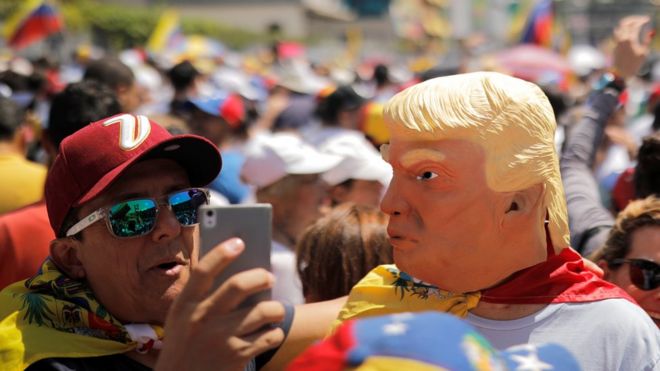
A man wearing a mask caricaturing US President Donald Trump poses for a selfie during a rally against Venezuelan President Nicolas Maduro's government in Caracas, February 2, 2019Image copyrightREUTERS
The United States announced sanctions this week that are intended to produce the most damage possible to the government of President Nicolás Maduro: the oil sector and its state company, PDVSA.
Up until now White House executive orders were only targeting government officials and certain sectors of the economy. Now new sanctions will finally hurt the one sector that is responsible for more than 90% of the government's revenues.
Many outstanding contracts are still expected to be honoured in the coming days, but new deals with PDVSA are being subjected to restrictions. From April sanctions are expected to kick in.
A new phase in the Venezuela crisis started last month when Washington recognised opposition leader Juan Guaidó - who is the leader of the National Assembly - as the rightful head of state.
Venezuela's Congress, which has been stripped of most of its powers by the government, says Mr Maduro is a "usurper". Washington has embarked on an open campaign with Mr Guaidó to oust Mr Maduro.

What is Washington trying to do?

The White House is trying to do a difficult thing: to make oil revenues directly reach ordinary Venezuelans and bypass the government of Mr Maduro, which owns most of the oil industry through PDVSA.
Sanctions are meant to oust Mr Maduro and lead to new elections in Venezuela.
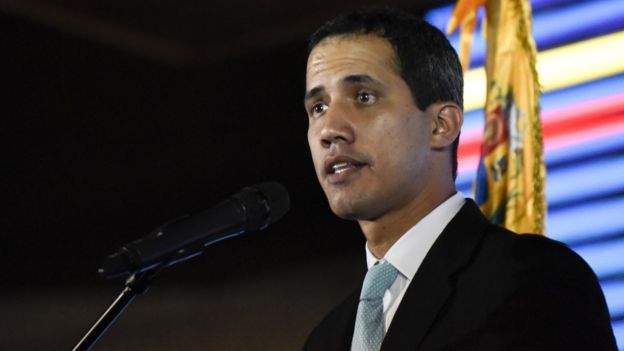
Opposition leader and self-declared interim president of Venezuela Juan Guaidó, 31 January 2019Image copyrightGETTY IMAGES
Image captionThe opposition led by Juan Guaidó is trying to set up a parallel government
US National Security Adviser John Bolton says the US wants oil revenue to reach Mr Guaidó, giving his National Assembly some economic power to combat Mr Maduro.
One of the ways of doing so is through PDVSA-owned refineries based in Texas, through a subsidiary called Citgo. Mr Bolton has already met Citgo executives and there is an effort to change its management with executives appointed by Mr Guaidó's National Assembly.
In effect the opposition is trying to set up a parallel government to Mr Maduro's with its own cabinet.

Will these sanctions hurt Maduro?

Mr Bolton said the sanctions would block $7bn (£5.4bn) in PDVSA's assets and more than $11bn in lost export proceeds over the next year.
At this stage, with Venezuela's oil output on a downward spiral and the country facing severe shortages, sanctions have the power to be "calamitous for Venezuelan finances", says Helima Croft from RBS Capital Markets.
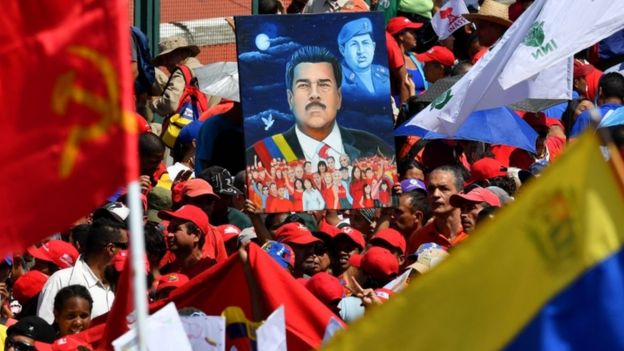
Supporters of Venezuelan President Nicolas Maduro gather to mark the 20th anniversary of the rise of power of the late Hugo Chavez, the leftist firebrand who installed a socialist government, in Caracas on February 2, 2019Image copyrightAFP
Image captionPresident Nicolás Maduro still has significant support
But some analysts believe Mr Maduro still has a few options.
"The oil that Venezuela currently exports to the US will be diverted to other countries and sold at lower prices. For countries like China and India, the news was akin to Black Monday. They will be able to pick up these oil volumes at great discounts," writes Venezuelan-born analyst Paola Rodriguez-Masiu, from Rystad Energy.
She adds that the impact of sanctions will be substantially lower than the ones predicted by Washington.
Venezuela exports to the US about 450,000 barrels of oil per day, a little under half of its total output. This is the amount of new oil that will flood the markets. Venezuela's market share in the US will be up for grabs, favouring Saudi, Mexican and Iraqi oil companies.
Mrs Rodriguez-Masiu says that so far, oil markets have largely shrugged off this new oversupply as investors have been pricing in Venezuela's crisis for a long time.

Who is supporting Maduro?

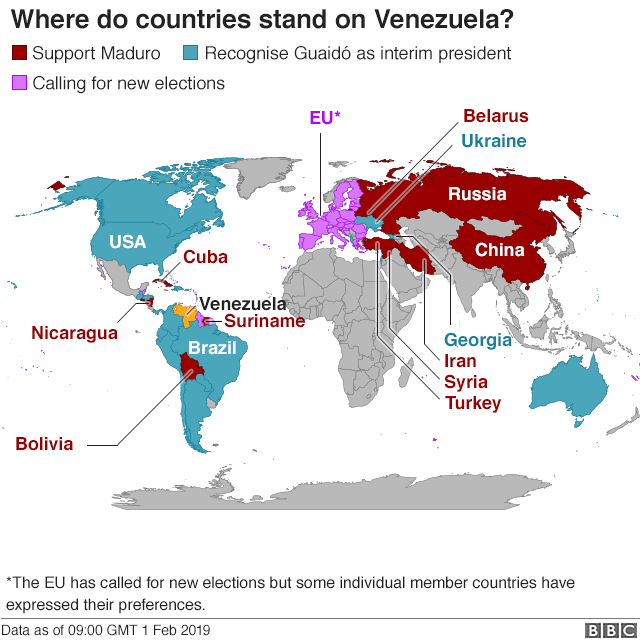
China and Turkey are some of the government's main allies but Russia is today seen as the key player.
Moscow has repeatedly provided financial lifelines to Caracas at times when the country was about to face serious defaults.
But it hasn't acted purely out of friendship alone.
Russia's oil company Rosneft (which itself has been subject to US sanctions since 2014 because of the Ukraine crisis) already has a 49% stake in Citgo. It also has some collateral on Citgo, which means it could seize control of the refineries in Texas were Venezuela's government to run into trouble.
Washington has its own grievances with Russia and it is not happy about the prospects of Rosneft gaining a foothold in refineries in Texas.
Map shows where countries stand on Venezuela presidency
Presentational white space

Will these sanctions hurt Venezuelans?

It is unclear whether the US can successfully redivert resources from Mr Maduro to Mr Guaidó.
Idriss Jazairy, a special UN rapporteur who reports to the Human Rights Council, says the people of Venezuela are the ones who will ultimately bear the brunt of sanctions.
"Sanctions which can lead to starvation and medical shortages are not the answer to the crisis in Venezuela," he said.
"Precipitating an economic and humanitarian crisis is not a foundation for the peaceful settlement of disputes."
Mr Bolton said on Friday that the US would send humanitarian aid, medicine, surgical supplies and nutritional supplements for the people of Venezuela. But it is unclear whether it can successfully circumvent the Maduro government.

How long will these sanctions last?

These sanctions could last for quite a while, and they depend largely on a political solution to the stand-off between the opposition and Mr Maduro.
In the past, the US had been hesitant about imposing sanctions on Venezuela's oil industry because it knows this has the potential to seriously affect living standards of ordinary people, which are already low.
Now Washington is in uncharted territory, because it still has to work out in detail how to make oil revenues and humanitarian aid reach Mr Guaidó and the National Assembly.
The end goal is to force Mr Maduro out of power either through a negotiated solution or by giving incentives for a military coup.
With Mr Guaidó leading the charge with protests in Venezuela and a wide range of international support - which includes the European Union and regional players like Brazil, Argentina and Colombia - Washington hopes it won't be long before it achieves its goals.
But these sanctions could be a dangerous gamble.
In the past, US action in Venezuela helped Mr Maduro - and President Hugo Chávez before him - to rally Venezuelans behind a common enemy, giving them a temporary boost in popularity. That could be the case now.
Also, the worsening of living standards now would be directly blamed by Mr Maduro on the US. Furthermore, these actions serve the argument that Mr Maduro has been making: that Mr Guaidó is a mere puppet of the Americans.

Friday, February 1, 2019

BBC News - China hails 'important progress' in US trade talks

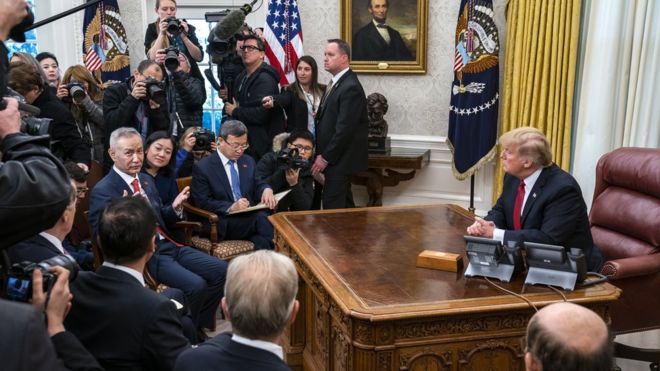
Vice Premier Liu He and President Donald Trump
Vice Premier Liu He and President Donald Trump talk to the press about trade
China's trade delegation says it made "important progress" in the latest round of talks with the US, China's state media reports.
At the end of a two-day meeting in Washington, no deal was reached but China pledged to buy more US soybeans.
US President Donald Trump touted the promise as proof that the two sides were making progress.
They are pushing to reach a deal by 1 March to avert an escalation in tariffs.
At a press conference with Vice Premier Liu He on Thursday, President Trump said he hoped to meet Chinese President Xi Jinping to hash out a final agreement by the looming deadline.
"We have made tremendous progress," President Trump said.
"That doesn't mean you're going to have a deal but there's a tremendous relationship and a warm feeling."
China also agreed to increase imports of "US agricultural products, energy products, industrial manufactured goods and service products" during the talks, Xinhua reported.

Is this progress?

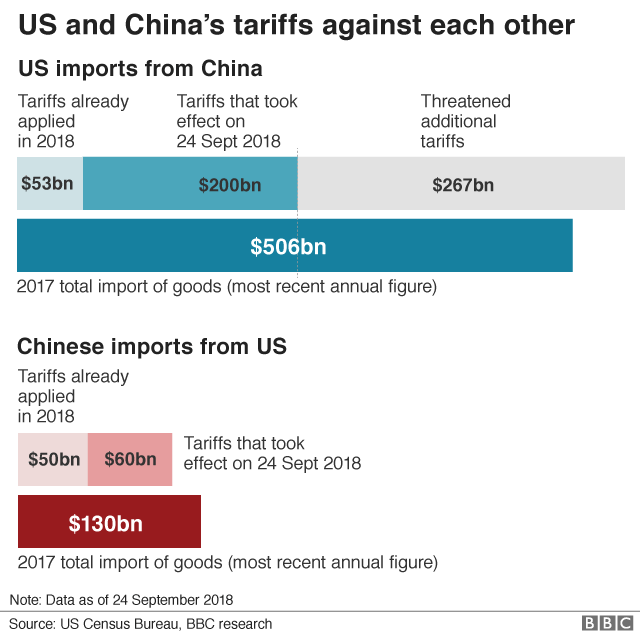
The two sides are racing to come up with a trade deal by 1 March, or the US has said it will increase tariff rates on $200bn (£152bn) worth of Chinese goods from 10% to 25%.
US trade negotiators agreed to visit China for more discussions in mid-February, Chinese state media reported.
In December, the two countries agreed to 90 days of negotiations, in an effort to defuse their escalating trade war, which had led to new tariffs on billions of dollars worth of goods.
US and China's tariffs against each other

Soybean pledge

Shortly after the truce took effect, China - by far the world's biggest importer of soybeans - bought 1.13 million tonnes of the crop from the US.
The White House said on Thursday the country had agreed to purchase an additional 5 million tonnes of soybeans.
Soybeans have been at the forefront of negotiations as US farmers have suffered from the sudden loss of their largest customer.
The country imported more than 30 million tonnes of soybeans from the US in 2017 - a figure that dropped sharply last year amid the trade war.
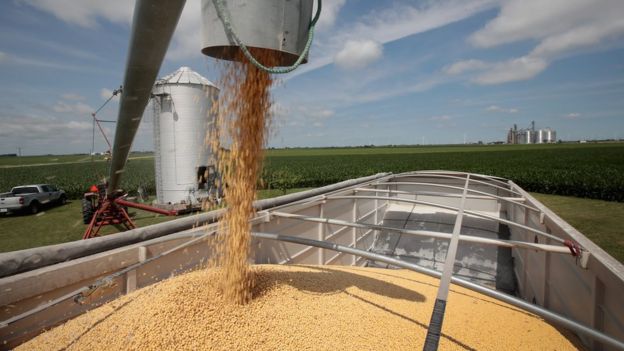
Machinery on a US farm spits out soy beans into the back of a truck.Image copyrightGETTY IMAGES
Chinese businesses, meanwhile, have been trying to find new sources to replace crops from the US, which was the country's second biggest supplier after Brazil in 2017.

Analysis: What China wants

Robin Brant, BBC News, Shanghai
China's state media has painted these talks as "progress" based on the offer of measures or reforms that China wants to see, or needs.
These are not concessions, but steps that are in line with reform and opening up already planned by President Xi.
What politicians call the retail takeaway - in this case it literally is one - of buying more soybeans from American farmers went down well with President Trump.
That's the idea. China would probably like a deal with the President Trump. Just the President.
A deal that the lead US negotiator, Trade Representative Robert Lighthizer, will sign off on is likely to involve verifiable, structural changes to the economy.
China is far less likely to concede that.
China would rather simply buy more soybeans and other goods or services to help President Trump fulfil his campaign pledge to deal with the trade imbalance between the two countries.

What happens next?

Mr Lighthizer said he was focused on securing a enforceable deal. He warned that many issues remained unresolved.
The US pressed for changes on intellectual property laws and rules that limit the operations of foreign companies in China, both of which have been key sticking points in negotiations.
The two sides "attached great importance to the issues of intellectual property protection and technology transfer and agreed to further strengthen cooperation", according to Xinhua.
"We've made progress," Mr Lighthizer said.
"At this point, it's impossible for me to predict success but we are in a place that, if things work, it could happen."