Wednesday, April 10, 2019

BBC News - World economy facing delicate moment, IMF says

By Andrew Walker
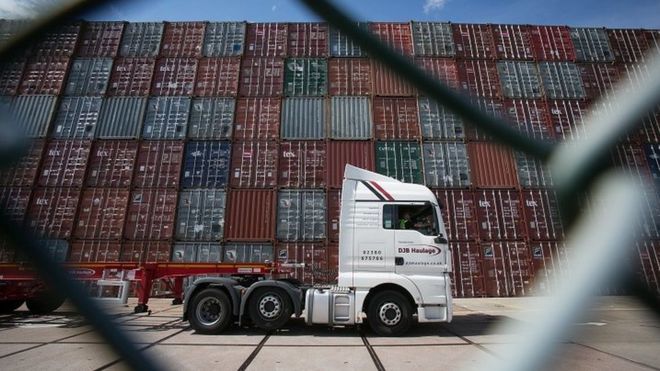
Truck in front of containersImage copyrightGETTY IMAGES
The global economy is at what the International Monetary Fund's chief economist calls a "delicate moment".
Gita Gopinath says that while she does not predict a global recession, "there are are many downside risks".
The IMF has released its regular assessment of the World Economic Outlook, which forecasts global growth of 3.3% this year and 3.6% in 2020.
That would be slower growth than last year - and for 2019, a downgrade compared with the previous forecast.
The downward revision of 0.2 percentage points for global growth is spread widely.
Developed economies affected include the US, the UK and the eurozone.
The UK economy is predicted to grow by 1.2% in 2019, down 0.3% from the IMF forecast in January. Growth in 2020 has also been revised down.
The revisions are especially marked for Germany and Italy, which is already in recession.
The IMF expects weaker performance in Latin America, as well as in the Middle East and North Africa.
For China, there are small revisions, upward for this year and downward for next. The slowdown there, which began at the start of the decade, is expected to continue.

'Precarious' recovery

The weakness in the forecast reflects a slowdown in the latter part of 2018, which the IMF expects to continue in the first half of this year.
After that, growth should pick up more pace, with the additional momentum continuing into next year.
But Ms Gopinath describes that recovery as "precarious".
She says it depends on a recovery in a number of developing economies that are stressed, notably Turkey and Argentina.

Hong Kong island aerial viewImage copyrightGETTY IMAGES
Ms Gopinath also expects a partial recovery in the eurozone.
The US, however, is likely to slow further, growing by slightly less than 2% next year as the impact of President Donald Trump's tax cuts fades.
There is no sign in her blog, or in the IMF's report, of any sympathy for President Trump's view that the main thing holding back the US economy is the Federal Reserve's increases in interest rates over the last two years.

Flare of disruption?

The risks that Ms Gopinath warns about include some familiar ones.
The first she mentions is the possibility that global trade tensions could flare up again and spread into new areas.
She refers to cars in particular, an area where President Trump is considering new tariffs on imported goods.
That, she suggests, could lead to "large disruptions to global supply chains". She says the escalation of US-China trade tensions contributed to last year's slowdown.
She also mentions risks associated with Brexit. The forecasts for the UK are based on the expectation of an orderly departure - with a deal - from the EU later this year. A no-deal Brexit would be more costly.
Other risks include the possibility of a deterioration in financial markets, leading to higher borrowing costs, including for governments. That raises the possibility of what she calls sovereign/bank doom loops.
That was a particular problem in the euro-area financial crisis, when financial problems for governments and banks reinforced one another.

Monday, April 8, 2019

Reuters News - SoftBank-backed Grab seeks another $2 billion funding in expansion drive

SINGAPORE (Reuters) - Grab is looking to raise another $2 billion this year to ramp up expansion, its CEO Anthony Tan told Reuters, just weeks after announcing over $4.5 billion of funding in what has become Southeast Asia’s largest round of private financing.

The mega funding comes as Grab rolls out an aggressive strategy to expand its bouquet of services, from transport to food delivery and payments, as it races Indonesia’s Go-Jek to become an app-for-everything in Southeast Asia, home to about 650 million people.
Grab, which is backed by Japan’s SoftBank, expects to invest a significant portion of the funds in Indonesia, it said in a statement later. Reuters reported the funding target earlier on Monday.
“We basically received a very strong vote of confidence. And Masa shared that SoftBank is very happy with Grab and that SoftBank will provide unlimited support to power our growth,” Tan said, referring to SoftBank founder and CEO Masayoshi Son.
SoftBank did not respond to a request for comment.
Funding, to be raised from strategic investors, including SoftBank, will be a mix of debt and equity, Tan said.
Grab’s ongoing massive financing round started soon after it bought the Southeast Asian operations of U.S. peer Uber in March last year.

The Singapore-headquartered firm, like its regional rival Go-Jek, has been raising billions of dollars to bring ride-hailing, food delivery, e-commerce and banking to a populous region with a growing number of consumers that use smartphones to commute, shop and make payments.
Both firms started out in ride-hailing and have since amassed millions of users with cut-rate prices.
Backers for Go-Jek include Temasek Holdings, Tencent and Alphabet Inc’s Google.
Grab counts Toyota, Microsoft, China’s Didi Chuxing and Hyundai among its backers.
People with direct knowledge of the matter said Grab has raised about $8 billion since its launch almost 7 years ago.
Last month, Grab’s president Ming Maa, a former SoftBank executive, said the ride-hailing firm was considering raising more funds in its ongoing financing round, in which the SoftBank Vision Fund has invested $1.5 billion.
Tan said: “With the amount of funding we have raised, and the support from strategic investors like SoftBank, we are so well-funded to execute on our expansion and investment plans, so there is really no need to IPO.”
Grab wants to make at least six investments or acquisitions this year, and plans to add 1,000 tech staff globally, Tan said.
In Singapore, it will double staff to 3,000 when its $134-million headquarters is complete by end-2020.
SoftBank’s support will help Grab “grow very aggressively this year across our verticals - transport, mobility, food and payments”, Tan told Reuters in an interview.
Reporting by Aradhana Aravindan and Anshuman Daga; Additional reporting by Sam Nussey in TOKYO; Editing by Christopher Cushing and Himani Sarkar

Friday, April 5, 2019

BBC News - House prices 'subdued' amid Brexit impasse

By Kevin Peachey
For sale and sold signsImage copyrightPA
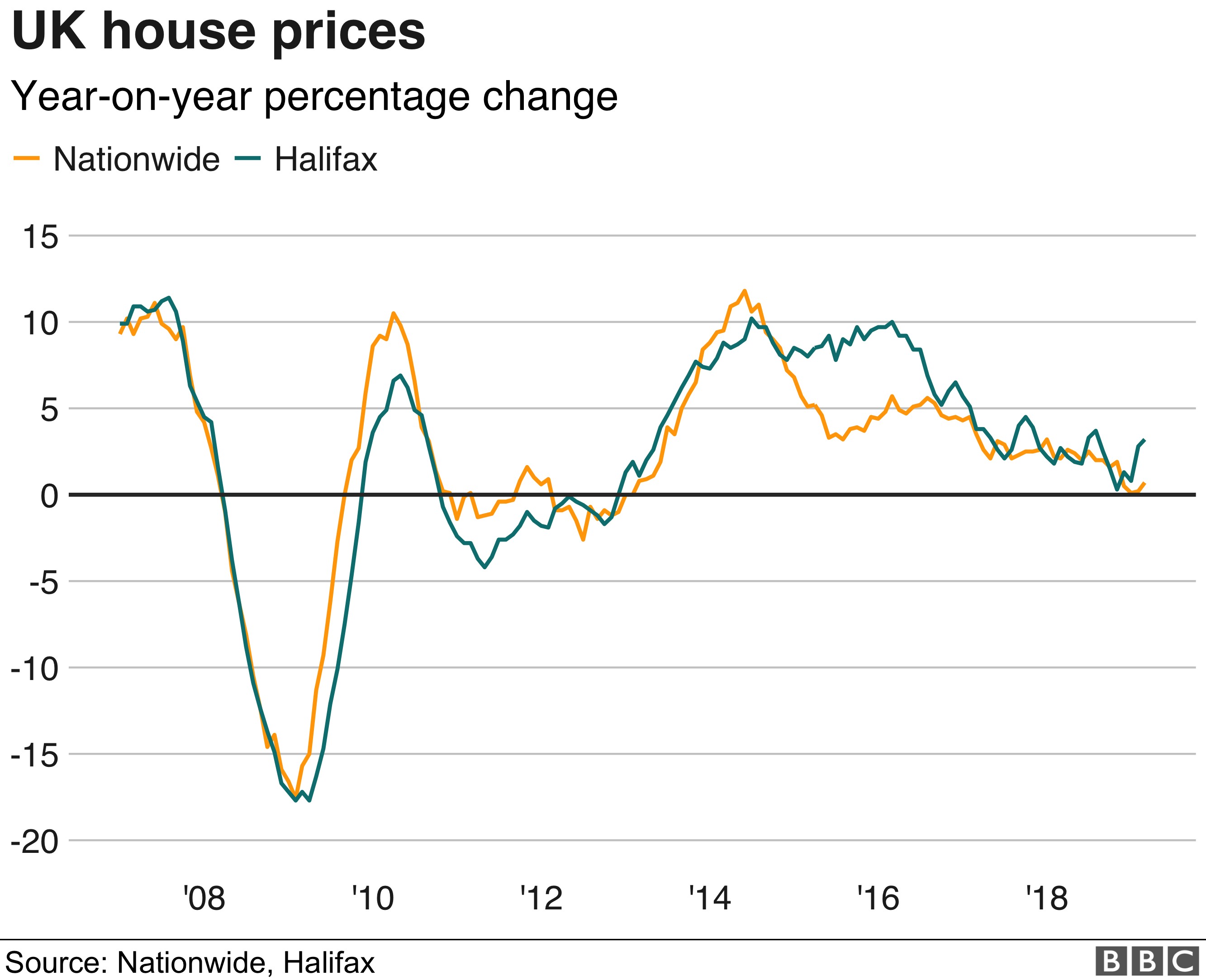
UK house price growth will continue to be "subdued" during Brexit uncertainty - particularly in London, according to the Halifax.
The UK's biggest mortgage lender said that property prices had fallen by 1.6% in March compared with the previous month.
However, prices were 3.2% higher in the first three months of the year compared with the same period in 2018.
It said the price of the average home was £233,181.
A lack of activity from both buyers and sellers meant that prices were unlikely to fall sharply, the Halifax said. However, this meant it was still difficult for many potential first-time buyers to raise a deposit.
"These conflicting challenges, when combined with the ongoing uncertainty around Brexit, have had an impact across the country but most notably in London, meaning that we continue to expect subdued price growth for the time being," said Russell Galley, managing director of the Halifax.
UK house prices
Tomer Aboody, director of property lender MT Finance, said: "For the past couple of years March was flagged up as the date when we would get Brexit [but] people have been too busy watching the political shenanigans on television to go out and view houses.
"The Brexit saga is such a debacle and until it gets sorted, one way or another, few people are going to do anything."
A week ago, rival lender the Nationwide said that UK house price in March were up 0.7% compared with the same month a year earlier, although property values in England had fallen over the same period.

Thursday, April 4, 2019

Reuters News - Water is now Gold for desperate Venezuelans

Living with a scarcity of water is becoming the norm for many Venezuelans.
Families interviewed by Reuters say they have spent months without receiving any water from the tap after power blackouts cut off supply and pipes failed due to a lack of maintenance. Faced with uncertainty of when it might return, and whether it would be enough, they are conserving as much as water as they can take from rivers or buy at shops. They are bathing, washing clothes and dishes, and cooking with just a few liters a day.
From the poorest slums, to the wealthiest neighborhoods, the shortage of water cuts across Venezuelan society as families endure the country's deepest ever economic crisis
A 5 liter (1.32 gallons) bottle costs about $2 at a Caracas supermarket, out of reach for many low-income people in Venezuela, where the monthly minimum wage is only around $6 each month.
"We try to save water scrubbing ourselves standing in bowls," said Yudith Contreras, a 49-year-old lawyer, in her apartment where little water has arrived over the past two years. She has taken to getting water from streams that run down the Avila mountain above Caracas.
Contreras, who is from one of the families interviewed by Reuters in a ten-story housing complex in downtown Caracas, said her family recycles the water by using it to flush the toilet. In her kitchen and bathroom, she keeps containers of water, which she carries up the nine floors to her apartment as the elevator does not work.
"You have to save water because we don't know how long this situation will go on for," she said.
Some residents of the building, a few blocks from the presidential Miraflores Palace, have already exhausted their water supplies. "Today I finished all that I had stored," said David Riveros, a retired bus driver living on the first floor.
President Nicolas Maduro's government blames the scarcity of water on a long drought and also accuses opponents of sabotaging its supply. The country's opposition, led by Juan Guaido, who in January invoked the constitution to assume the interim presidency after declaring Maduro's re-election a fraud, says the problem is due to little maintenance done over many years on Venezuela's power and water networks.
Earlier this month, Venezuela was plunged deeper into chaos after a near week-long power blackout cut off the already scant water supply to most residents. Since then, Maduro has promised to place enormous water tanks on the roofs of houses and apartment blocks to alleviate the problem.
Since the nationwide blackout, the worst in decades, lines of people queuing to fill up water flowing from the Avila have multiplied, despite warnings that the water was not fit for consumption and could contain bacteria and parasites.
Yuneisy Flores, a 31-year-old homemaker whose family live on the fourth floor, washes her dishes in cartons and strains the water to remove the leftovers of food. She then uses the liquid to flush the toilet. She bathes her 3-year-old daughter in a sink to recycle the water.
In her home, three tanks and several other containers collect water when it comes intermittently. Flores, her husband, and their two little children bathe in one of the tanks, which holds some 18 liters.
"It's hard, too hard, you can die without water," she said. "We weren't aware of this before. Water now is gold."

Wednesday, April 3, 2019

BBC News - Factories rush to stockpile for Brexit

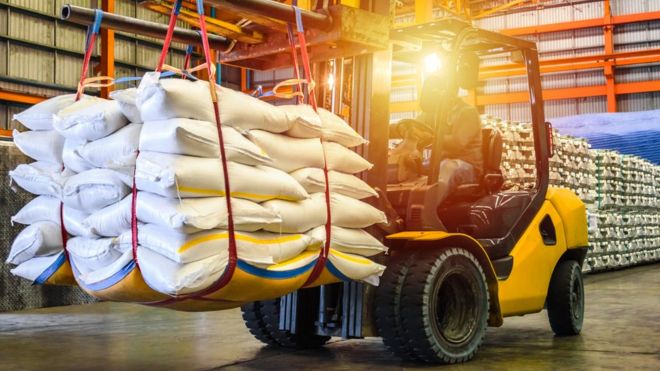
Forklift truck with bags of sugarImage copyrightGETTY IMAGES
UK factories stockpiled goods for Brexit at an unexpectedly high rate last month, boosting manufacturing growth to a 13-month high, according to a closely watched survey.
The research, by IHS Markit/CIPS, found that the rate of increase in stocks hit a survey record high for the third month in a row.
The Purchasing Managers' Index (PMI) for the manufacturing sector rose to 55.1 in March, from 52.1 in February.
A figure above 50 indicates expansion.
The PMI has remained above that benchmark for 32 months in a row.
However, Rob Dobson, director at IHS Markit, warned that the boost to the UK economy could prove short-lived.
He said: "Manufacturers are already reporting concerns that future trends could be constrained as inventory positions across the economy are unwound.
"The survey is also picking up signs that EU companies are switching away from sourcing inputs from UK firms as Brexit approaches.
"It looks as if the impact of Brexit preparations, and any missed opportunities and investments during this sustained period of uncertainty, will reverberate through the manufacturing sector for some time to come."
Samuel Tombs, chief UK economist at Pantheon Macroeconomics, said the rise in the manufacturing PMI in March largely reflected producers rushing to complete work before the Brexit deadline, rather than a strengthening of underlying demand.
He added: "We continue to doubt that precautionary stockpiling for a no-deal Brexit will boost GDP, because manufacturers primarily are buying imports and are tying up cash that otherwise might have been used for investment.
"All told, then, the PMI should not instil any confidence about the near-term outlook for the manufacturing sector."

Eurozone woes

A comparable PMI survey for the eurozone suggested that operating conditions for manufacturers in the 19-nation bloc deteriorated in March at the fastest pace for nearly six years.
The IHS Markit eurozone manufacturing PMI fell to 47.5 last month, down from 49.3 in February and the lowest reading since April 2013.
It was also the second month in a row that the figure has been below 50, indicating contraction.
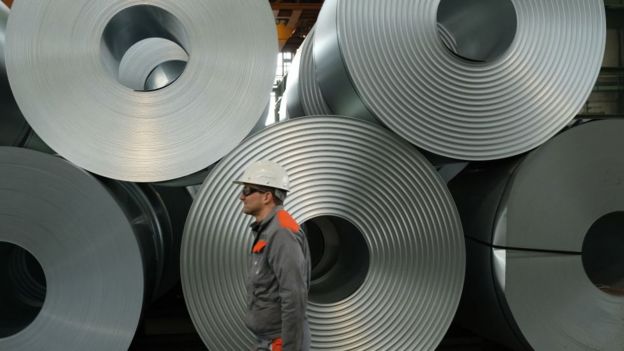
German steel productionImage copyrightGETTY IMAGES
Image captionEurozone manufacturers are becoming more risk averse, the survey suggested
The downturn has hit the eurozone's three biggest economies. Germany - the bloc's largest economy - had a PMI reading of 44.1, the lowest for more than six-and-a-half years.
Italy's PMI of 47.4 was a near six-year low, while France's manufacturing sector also contracted, having seen some growth the month before.
"The March PMI data indicate that the eurozone's manufacturing sector is in its steepest downturn since the height of the region's debt crisis in 2012," said Chris Williamson, chief business economist at IHS Markit.
"Concerns over trade wars, tariffs, rising political uncertainty, Brexit and - perhaps most importantly - deteriorating forecasts for the economic environment both at home and in export markets, were widely reported to have dampened business activity and confidence.
"Cost cutting has become more evident as firms grow more risk averse, notably with respect to hiring. Job losses were reported in both Germany and Italy, where the downturn in demand is doing the most damage."

Tuesday, April 2, 2019

BBC News - Brexit: UK risks 'trashing relationship' with Europe, says Siemens boss

Jürgen MaierImage copyrightREUTERS
Britain is at risk of "trashing its fabulous relationship" with the rest of Europe because of its failure to secure a Brexit deal, a top businessman says.
Jurgen Maier, the UK chief executive of Siemens, told the BBC's Today programme: "We are at a point of crisis right at this moment in time.
"We need to find a way forward so we can re-establish that trust to give us the confidence to invest here again."
Confidence in Britain would return once the situation was resolved, he added.
Mr Maier said: "If I was going to go to my board today and say here is another factory that I want to open for a major infrastructure project in the UK, I can tell you that with this turmoil right now, we would not be putting that over the line.
"I'm saying to our parliament, 'enough is enough' and this is the week where a decision needs to be made.
"I remember this country being the sick man of Europe in 1974 and it has taken us 45 years to create a Britain which is a trusting, reliable trading partner.
"My company, like many others, has invested hundreds of millions in this country over that period."
Mr Maier said, however, that once Britain knew its future, he was "100% sure" that investment in the country would follow.
On Monday, Mr Maier sent an open letter to MPs, urging them to make a quick decision on the UK's future regarding Brexit.
In it, he said: "Brexit is exhausting our business and wrecking the country's tremendous reputation as an economic powerhouse."
He added that people's livelihoods were at stake and that "sound business investments could be in tatters by the end of the week if you fail".
Mr Maier finished his letter by saying: "This is your last chance to come together to build a new consensus for Britain and then allow us to move on from Brexit, to the many other issues that need so desperately sorting in our country like our industrial strategy and skills agenda."

Monday, April 1, 2019

Reuters News - Asian stocks rally as China's factory bounce lifts confidence

TOKYO (Reuters) - Asian stocks powered higher on Monday as positive Chinese factory gauges and signs of progress in Sino-U.S. trade talks boosted sentiment, although another defeat for British Prime Minister Theresa May’s Brexit deal added to sterling’s woes.

Spreadbetters expected European stocks to open higher, with Britain’s FTSE gaining 0.4 percent, Germany’s DAX adding 0.8 percent and France’s CAC rising 0.9 percent.
MSCI’s broadest index of Asia-Pacific shares outside Japan added 1 percent and the Shanghai Composite Index rallied 2.4 percent.
Australian stocks climbed 0.6 percent, South Korea’s KOSPI gained 1.3 percent and Japan’s Nikkei advanced 1.4 percent.
The markets took heart after China’s official purchasing managers’ index (PMI) released on Sunday showed factory activity unexpectedly grew for the first time in four months in March.
A private business survey, the Caixin/Markit PMI, released on Monday also showed the manufacturing sector in the world’s second biggest economy returning to growth.
If sustained, the improvement in business conditions could indicate that manufacturing is on a path to recovery, easing fears that China could slip into a sharper economic downturn.
“Our view is the impact of policy easing is gradually kicking in, pushing up sequential growth indicators such as PMI first,” wrote China economists at Bank of America Merrill Lynch.
“In particular, the larger-than-expected tax and fee cuts and improving financial conditions have likely helped boost business sentiment in the manufacturing space.”
Stocks in Asia also took their cues from Wall Street, with the S&P 500 posting its best quarterly gain in a decade on Friday amid trade optimism. [.N]
The United States and China said they made progress in trade talks that concluded on Friday in Beijing, with Washington saying the negotiations were “candid and constructive” as the world’s two largest economies try to resolve their drawn out trade war.
“The ongoing U.S.-China trade conflict has provided a steady stream of conflicting signals for the markets. But as a whole the negotiations appear to be headed towards a conclusion,” said Soichiro Monji, senior strategist at Sumitomo Mitsui DS Asset Management.
“Hopes that the United States and China would reach an agreement on trade as early as this month are enabling stocks to begin the quarter on a positive tone.”
In the currency market, the dollar index against a basket of six major currencies stood at 97.147 after going as high as 97.341 on Friday, its strongest since March 11.
The greenback had benefited from the flagging pound, which was on track to post its fourth day of losses in the wake of the ongoing Brexit saga.
Sterling took its latest knock after British lawmakers rejected Prime Minister May’s Brexit deal for a third time on Friday, sounding its probable death knell and leaving the country’s withdrawal from the European Union deeper in turmoil.
The pound crawled up 0.15 percent to $1.3055 having posted three sessions of losses.
The Australian dollar advanced 0.35 percent to $0.7122. The Aussie is sensitive to shifts in the economic outlook for China, the country’s main trading partner.
The euro rose 0.2 percent to $1.1239 while the dollar gained 0.2 percent to 111.035 yen.
Safe-haven government bonds retreated as risk aversion in the broader markets eased.
The benchmark 10-year U.S. Treasury yield edged up to a six-day high of 2.444 percent, pulling away from a 15-month low of 2.340 percent brushed on March 25.
The Treasury 10-year yield had sunk as the Federal Reserve halted its drive to hike rates and as risk aversion, driven by concerns about a global economic slowdown, gripped financial markets towards the end of March.
The slide had pushed the 10-year yield below the three-month rate for the first time since 2007 late last month.
This phenomenon - when the spread between short- and long- dated yields turns negative - is known as a curve inversion and has preceded every U.S. recession over the past 50 years.
The 3-month/10-year yield spread has since pulled back from negative territory and stood around 3 basis points.
Crude oil prices added to Friday’s gains, with U.S. West Texas Intermediate (WTI) futures gaining 0.6 percent to $60.52 per barrel.
Oil prices posted their biggest quarterly rise in a decade during January-March, as U.S. sanctions against Iran and Venezuela as well as OPEC-led supply cuts overshadowed concerns over a slowing global economy. [O/R]
Editing by Sam Holmes