Wednesday, April 24, 2019

BBC News - Government borrowing lowest for 17 years

MoneyImage copyrightGETTY IMAGES
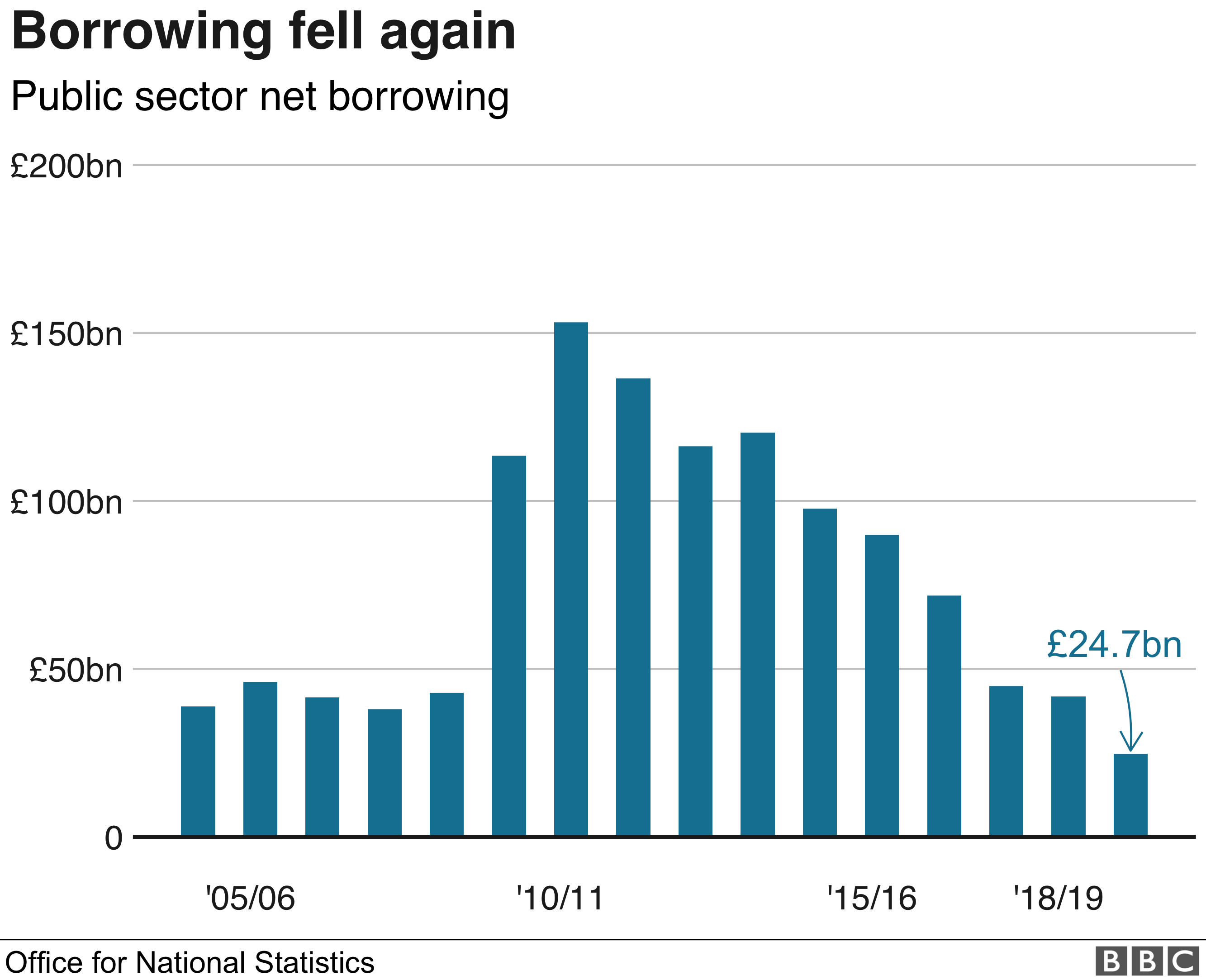
Government borrowing last year fell to its lowest annual level in 17 years, official figures show.
Borrowing for the 2018-19 financial year was £24.7bn, £17.2bn less than in the previous financial year, the Office for National Statistics said.
Despite the drop, the amount was still higher than the Office for Budget Responsibility's forecast last month.
Economists believe the reduction should give the government freedom to ease the austerity measures of the last decade.
The figures showed tax receipts continued to grow strongly in March, but higher government spending accounted for the wider-than-expected deficit, mostly down to the purchases of goods and services.
The Chancellor of Exchequer, Philip Hammond wants to reduce borrowing to the equivalent of 2% of UK economic output. Borrowing last year was equivalent to 1.2%, giving the chancellor some extra spending room.

Scrap austerity?

Mr Hammond, speaking to the Treasury Select Committee on Wednesday reiterated that by the financial year 2020-21 the government would have around of £27bn to use on a range of options.
But he added: "Until we have resolved the Brexit issue I don't think it makes sense to to plump for one option or another."
Samuel Tombs, UK economist of Pantheon Macroeconomics, said: "The chancellor still should be able to scrap the further austerity measures planned for 2020-21 in the Budget later this year and meet his target."
borrowing
John McDonnell MP, Shadow Chancellor said: "So much for the deficit being eliminated - something the Tories told us they would achieve by 2015. Four years on and the Government has added another £1.7 billion to the deficit in March alone.
"Nine hard years of austerity have held down growth, and shifted deficits onto the shoulders of local councillors, NHS managers, and head teachers.

Tuesday, April 23, 2019

Reuters News - Congress deadline looms for release of Trump tax returns

by David Morgan
WASHINGTON (Reuters) - The U.S. Treasury and Internal Revenue Service faced a final deadline on Tuesday for handing over President Donald Trump’s tax returns to Democrats in Congress, in a showdown that could mire the administration and lawmakers in a lengthy legal fight.

Representative Richard Neal, Democratic chairman of the House of Representatives Ways and Means Committee, requested six years of Trump’s individual and business returns on April 3 and has set a final deadline of 5 p.m. EDT (2100 GMT) on Tuesday, informing IRS Commissioner Charles Rettig in a letter that failure to comply would be viewed as a denial.
Acting White House Chief of Staff Mick Mulvaney has vowed that Trump’s tax returns would “never” be handed over to Democrats. But Treasury Secretary Steven Mnuchin said he intends to “follow the law” while pledging to keep the IRS from being “weaponized” for political gain.
As Ways and Means chairman, Neal is the only lawmaker in the House of Representatives authorized to request taxpayer information under a federal law that says the Treasury secretary “shall furnish” the data. Democrats say they are confident of succeeding in any legal fight over Trump’s returns.
“The law is on our side. The law is clearer than crystal. They have no choice: they must abide by (it),” Representative Bill Pascrell, who has been leading the Democratic push for Trump’s tax records, said in a statement to Reuters.
Democrats want Trump’s returns as part of their investigations of possible conflicts of interest posed by his continued ownership of extensive business interests, even as he serves the public as president.
Republicans have condemned the request as a political “fishing expedition” by Democrats.
Despite the law’s clarity, Democrats have long acknowledged that the effort would likely result in a legal battle that could ultimately be settled by the U.S. Supreme Court.
“If the IRS does not comply with the request, it is likely that Chairman Neal will subpoena the returns,” Representative Judy Chu, a Democratic member of the Ways and Means Committee, told Reuters.
“If they do not comply with that (subpoena), a legal battle will begin to defend the right of oversight in Congress,” she said.
Trump broke with a decades-old precedent by refusing to release his tax returns as a presidential candidate in 2016 or since being elected, saying he could not do so while his taxes were being audited.
But his former personal lawyer, Michael Cohen, told a House panel in February that he does not believe Trump’s taxes are under audit. Cohen said the president feared that releasing his returns could lead to an audit and IRS tax penalties.
Reporting by David Morgan; Editing by Bill Berkrot

Monday, April 22, 2019

BBC News - Retail sales boosted by mild weather in March

ShoppersImage copyrightGETTY IMAGES
Retail sales unexpectedly jumped in March as mild weather enticed shoppers to UK stores.
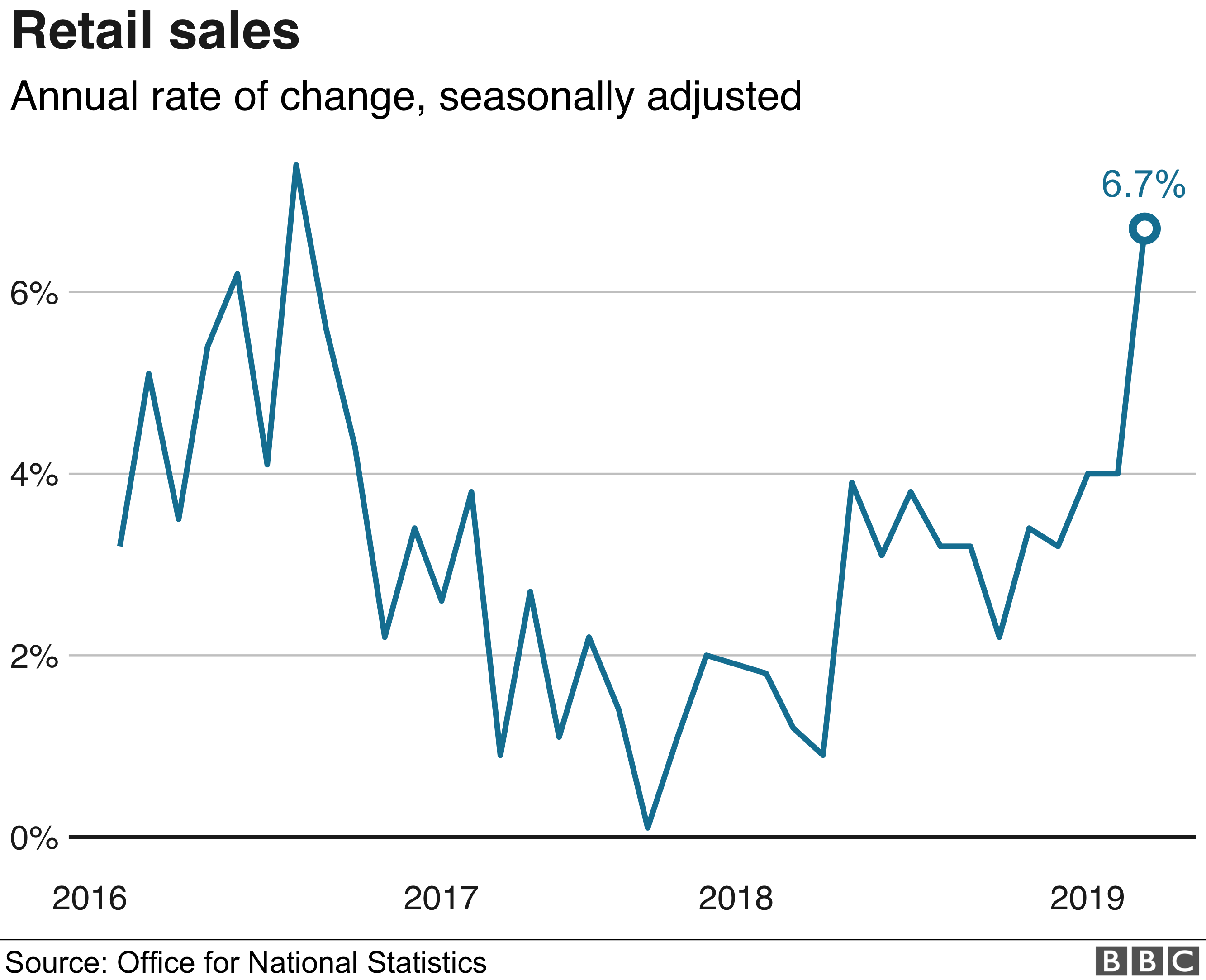
The Office for National Statistics (ONS) said the year-on-year growth in March was 6.7% - the highest since October 2016.
The ONS said milder weather had helped to boost sales in comparison with the "Beast from the East" last year.
Monthly sales rose 1.1% - economists had been expecting a fall - with the warm weather boosting clothing sales.
Department stores were the only type of stores to report a fall in sales compared with the previous year, seeing a 0.3% decline in March.
The problems facing department stores was illustrated by Debenhams, which entered administration earlier this month before being taken over by its lenders.
In contrast, food stores registered a 3.3% annual rise, and textile, clothing and footwear stores saw a 7.1% increase from a year earlier,
Rhian Murphy, head of retail sales at the ONS, said: "March's mild weather boosted sales, with food shops also recovering after a weak February".
February's month-on-month growth figure was revised up to a rise of 0.6% from 0.4%, which Ruth Gregory, senior UK economist at Capital Economics, said "adds to evidence that the economy grew at a pretty reasonable rate... in the first quarter given the political chaos".
She noted that the ONS adjusted the figures for Easter - the run-up to Easter Sunday fell in the comparable period last year - but that the boost in food sales in March may have been sparked by stockpiling ahead of the original date for Brexit.
Philipp Gutzwiller, head of retail at Lloyds Bank Commercial Banking, said the third consecutive month of increasing sales was good news for retailers as they headed in to the Easter break after a mixed Christmas.
"Those who see drops in reported annual profits as symptomatic of the continued decline of the High Street should look at the contrasting fortunes of some who have sophisticated physical and online presences," he said.
Retail sales graphic
It is the latest data to be released this week, giving clues to the state of the UK economy.
On Tuesday, separate ONS data showed that average weekly earnings, excluding bonuses, rose 3.4% in the three months to February and the unemployment rate was lower than at any time since the end of 1975.
That was followed on Wednesday by figures showing inflation was stable at 1.9% in March.
Ed Monk, associate director for personal investing at Fidelity International, said: "The week's economic releases have ended with good news. Even accounting for the Beast from the East, which kept shoppers at home a year ago, today's retail sales data show households willing to spend more.
"That reflects a slow recovery from a decade-long wage squeeze and, perhaps, a willingness to look through the apparently never-ending uncertainty that is Brexit".
Ms Gregory expects retail sales to provide a boost to GDP in the first quarter, but added: "Of course it is entirely possible that sales will be weaker in the second quarter if no-deal Brexit concerns caused consumers to bring forward purchases in to March".

Thursday, April 18, 2019

Reuters News - Peace talks postponed as Taliban objects to size of Afghan delegation

KABUL (Reuters) - A meeting between the Taliban and Afghan politicians and civil society aimed at ending more than 17 years of war in Afghanistan has been postponed, officials and diplomats said on Thursday, citing Taliban objections to the size of the Afghan delegation.
The talks were set to begin on Friday in Doha, but a senior government official in Kabul said “the gathering has been called off for now and details were being reworked.”
Afghan delegates scheduled to fly to the Qatari capital on Thursday were told the trip was postponed and new dates were being discussed, a western diplomat in Kabul said.
“The government will have to change the composition of the delegation to make this meeting happen,” the diplomat said on condition of anonymity.
Taliban spokesman Zabihullah Mujahid said leaders of the hardline Islamist group were uncomfortable with the size of the Afghan delegation and its composition.
“Presence of some participants was completely against the list of what was agreed upon,” Mujahid told Reuters over phone, adding that the delegation included Afghans working for the government.
The Taliban have repeatedly refused to meet President Ashraf Ghani’s government, which they call a puppet regime, but have held several rounds of peace talks with U.S. officials.
Ghani said Wednesday the 250-member Afghan delegation included some government officials attending in a personal capacity. But the group did not include some of the most powerful figures in Afghan politics, who are reluctant to join forces with Ghani ahead of presidential elections due in September.
Reporting by Abdul Qadir Sediqi, Rupam Jain, Editing by Darren Schuettler

Wednesday, April 17, 2019

BBC News - House price growth at six-year low

For sale and sold signsImage copyrightPA
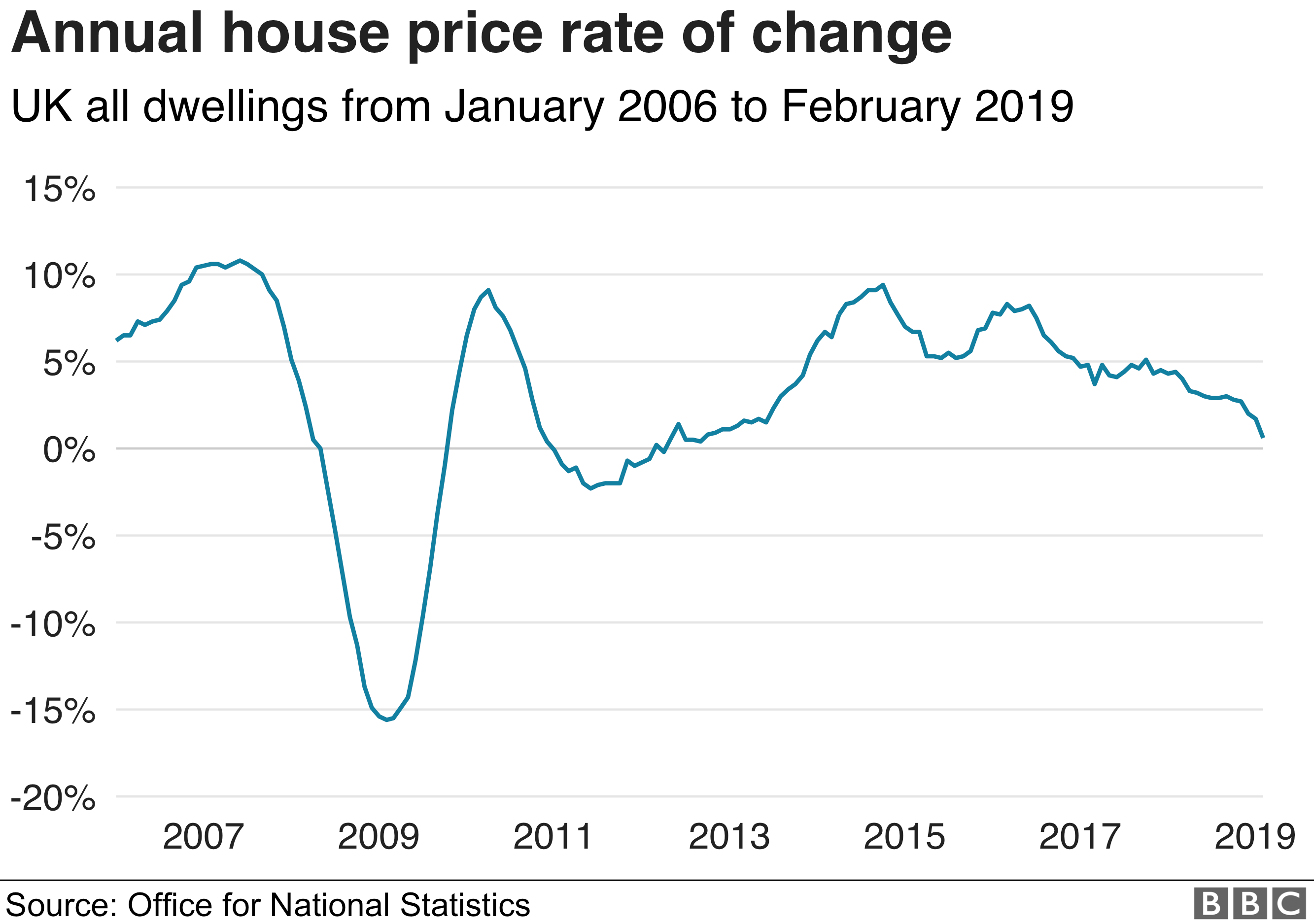
House prices rose in February at the slowest rate since September 2012 while in London house prices fell, the Office for National Statistics said.
Average house prices increased by 0.6% in the year to February 2019 but fell by 3.8% in London.
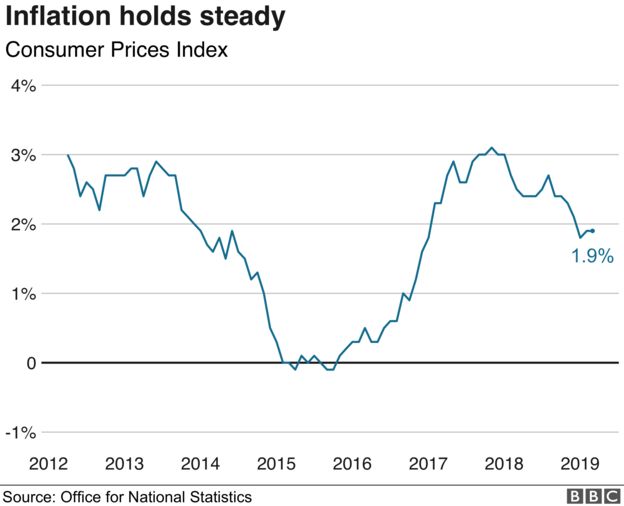
The ONS said inflation was stable at 1.9% in March as a rise in fuel prices from February was offset by falls in food prices.
The figures ease pressure on the Bank of England to raise interest rates.
The Bank of England targets inflation - the rate of price increases - at 2% and last month kept rates unchanged at 0.75%, where they have been since August last year.

What is happening to house prices?

The ONS said there had been a slowdown in house price growth over the past two years.
The average UK house price was £226,000 in February, £1,000 higher than a year ago.
chart
The fall in London house prices was the largest fall since mid-2009, but the city remains the most expensive place to buy property with an average price of £460,000.
Ben Brettell, senior economist at Hargreaves Lansdown, said the fall in London house prices was the largest since the immediate aftermath of the financial crisis.
"This follows efforts by policymakers to cut down on riskier mortgage lending, though clearly uncertainty over Brexit will have played a large part in the capital's faltering housing market," he said.
Other indicators have pointed to a subdued housing market. Halifax, the UK's biggest lender, said earlier this month that property prices had fallen by 1.6% in March compared with February.

What is driving inflation?

At 1.9%, the latest inflation rate, measured by the Consumer Price Index, was a little lower than the 2% that had been forecast by economists.
Mike Hardie, head of inflation at the ONS, said: "Inflation is stable, with motor fuel prices rising between February and March this year, offset by falls in food prices as well as the cost of computer games growing more slowly than it did at this time last year."
chartImage copyrightAFP
Inflation in the games, toys and hobby sector fell to 1.1% in March from 3.1% in February helping to keep a lid on the overall basket of prices.
Average petrol prices were 1.2p per litre higher at 120.3p.

What does it mean for interest rates?

Mr Brettell said the inflation number made the Bank of England's job easier "as there's no pressure to raise rates as it grapples with continued uncertainty over Brexit".
Howard Archer, economic adviser to the EY Item Club of forecasts said it was "decent news for both consumers and the Bank of England".
It comes after data on Tuesday had shown that average weekly earnings, excluding bonuses, rose 3.4% in the three months to February and the unemployment rate lower than at any time since the end of 1975.
The Bank of England's Monetary Policy Committee will meet next month to discuss rates.
Mr Archer said: "Despite a tight labour market, it is difficult to see the Bank of England raising interest rates at their May meeting or any time soon, amid likely MPC concern that prolonged Brexit uncertainties will likely to weigh down on the economy".
However, Samuel Tombs, chief UK economist at Pantheon Macroeconomics, said that the inflation data would not give the MPC "breathing space" to keep rates on hold because "the labour market is still tightening and the economy is coping with Brexit uncertainty".

What is the economic outlook?

The Bank of England has said that economic outlook would continue to depend "significantly on the nature and timing of EU withdrawal".
In the short-term economists say pressure on inflation could come from household energy prices in April when energy regulator Ofgem increases its price cap by 10%.
Mr Archer said it was "questionable" whether earnings growth can continue as the growth in wages dipped to a five-month low of 3.2% in the month of February.

Tuesday, April 16, 2019

Reuters News - Notre-Dame blaze probably accidental, French prosecutors say

PARIS (Reuters) - The fire that tore through Notre-Dame cathedral was probably caused by accident, French prosecutors said on Tuesday after firefighters doused the last flames in the ruins overnight.

More than 400 firemen were needed to tame the inferno that consumed the roof and collapsed the spire of the eight-centuries-old cathedral. They worked through the night to bring the fire under control some 14 hours after it began.
“We are favoring the theory of an accident,” Paris public prosecutor Remy Heitz said, adding that 50 people were working on what was expected to be a long and complex investigation.

Monday, April 15, 2019

BBC News - EU approves new trade talks with US

By Andrew Walker
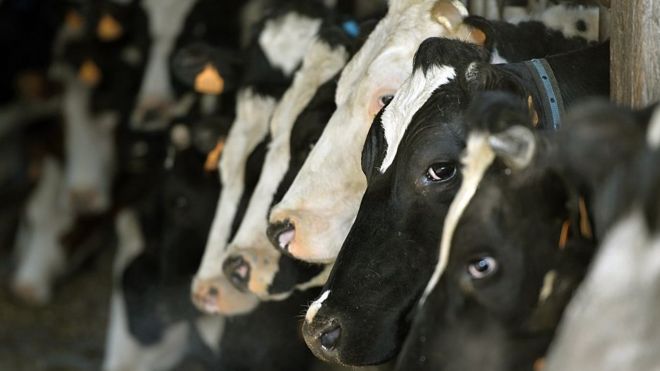
Cows wait before leaving for pasture grazing in Florian Couillaud's organic dairy farm near Nantes, in BrittanyImage copyrightGETTY IMAGES
Image captionFrance does not want farm tariffs to be included in trade talks
European Union countries have approved plans for trade talks with the United States.
President Donald Trump and the head of the European Commission, Jean-Claude Juncker, agreed last year that they wanted to reduce trade barriers.
The decision by EU ministers gives the Commission authorisation to conduct formal talks.
But there is already a disagreement over whether farm goods should be covered by the talks.
If the talks do get going, it would not be the first attempt by the two sides to make a bilateral trade agreement.
Under President Barack Obama, the US and the EU had a programme of negotiations known as the Transatlantic Trade and Investment Partnership, or TTIP.
It was very controversial, especially in Europe. Among the many criticisms from campaigners was the view that it would have given too much scope for international businesses to challenge the decisions of elected governments.
In any event, TTIP was abandoned.
The proposals now coming out of Brussels are much less wide-ranging than TTIP was.

Breaking barriers

EU ministers have given the Commission - which conducts trade talks on the group's behalf - a mandate to negotiate on two tracks.
One is to seek the elimination of tariffs (taxes on imports) on industrial goods on a "reciprocal basis".
The second is intended to reduce regulatory barriers to trade, specifically in an area known as conformity assessment. That is the procedure by which regulators ensure that goods comply with, for example, safety rules before they are made available for sale.
The idea is to develop arrangements that would enable an agency in the EU (or the US) to certify that a product complies with all the relevant rules in the US (or the EU).
Getting goods assessed by an agency in a firm's home country can be cheaper and less difficult. The Commission says this is especially an issue for smaller businesses.
Analysis by the Commission said that eliminating tariffs could boost EU exports to the US by 7% and slightly more for goods shipped in the opposite direction.

French opposition

The EU's decision was not unanimous. France voted against and Belgium abstained.
French officials in particular are reported to be opposed to trade negotiations with the US because of the Trump administration's decision to withdraw from the Paris Agreement on tackling climate change.
France has, however, been outvoted. But the negotiating guidelines given to the Commission do respect French concerns in that they do not allow for talks on cutting tariffs on agricultural goods.
This could be a major obstacle to negotiations , because the US does want farm goods included.
Germany was particularly keen to make progress with the talks.
President Trump is considering new tariffs on car imports. The US is an important market for German carmakers and getting the talks going could reduce the risk that the US might act.
The bilateral tension was increased further last week, when the US announced a list of European goods for extra tariffs in retaliation for subsidies to the aircraft maker Airbus. The US has won a World Trade Organization dispute in which it claimed the subsidies were prohibited under WTO rules.
The US is waiting for a WTO arbitrator to rule on how much retaliation it can apply. The EU has also won a case against the US over aviation subsidies to Boeing.