Wednesday, May 8, 2019

Reuters News - Exclusive: China backtracked on almost all aspects of U.S. trade deal - sources

WASHINGTON/BEIJING (Reuters) - The diplomatic cable from Beijing arrived in Washington late on Friday night, with systematic edits to a nearly 150-page draft trade agreement that would blow up months of negotiations between the world’s two largest economies, according to three U.S. government sources and three private sector sources briefed on the talks.

The document was riddled with reversals by China that undermined core U.S. demands, the sources told Reuters.
In each of the seven chapters of the draft trade deal, China had deleted its commitments to change laws to resolve core complaints that caused the United States to launch a trade war: Theft of U.S. intellectual property and trade secrets; forced technology transfers; competition policy; access to financial services; and currency manipulation.
U.S. President Donald Trump responded in a tweet on Sunday vowing to raise tariffs on $200 billion worth of Chinese goods from 10 to 25 percent on Friday – timed to land in the middle of a scheduled visit by China’s Vice Premier Liu He to Washington to continue trade talks.
The United States said on Wednesday the higher tariffs would go into effect on Friday, according to a notice posted on the Federal Register.
Trump said on Wednesday that China is mistaken if it hopes to negotiate trade later with a Democratic presidential administration.
“The reason for the China pullback & attempted renegotiation of the Trade Deal is the sincere HOPE that they will be able to ‘negotiate’ with Joe Biden or one of the very weak Democrats,” Trump tweeted. Trump also said he would be happy to keep tariffs on Chinese imports in place.
The stripping of binding legal language from the draft struck directly at the highest priority of U.S. Trade Representative Robert Lighthizer - who views changes to Chinese laws as essential to verifying compliance after years of what U.S. officials have called empty reform promises.
Lighthizer has pushed hard for an enforcement regime more like those used for punitive economic sanctions – such as those imposed on North Korea or Iran – than a typical trade deal.
“This undermines the core architecture of the deal,” said a Washington-based source with knowledge of the talks.

‘PROCESS OF NEGOTIATION’

Spokespeople for the White House, the U.S. Trade Representative and the U.S. Treasury Department did not immediately respond to requests for comment.
Chinese Foreign Ministry spokesman Geng Shuang told a briefing on Wednesday that working out disagreements over trade was a “process of negotiation” and that China was not “avoiding problems”.
Geng referred specific questions on the trade talks to the Commerce Ministry, which did not respond immediately to faxed questions from Reuters.
Lighthizer and U.S. Treasury Secretary Steven Mnuchin were taken aback at the extent of the changes in the draft. The two cabinet officials on Monday told reporters that Chinese backtracking had prompted Trump’s tariff order but did not provide details on the depth and breadth of the revisions.
Liu last week told Lighthizer and Mnuchin that they needed to trust China to fulfill its pledges through administrative and regulatory changes, two of the sources said. Both Mnuchin and Lighthizer considered that unacceptable, given China’s history of failing to fulfill reform pledges.
One private-sector source briefed on the talks said the last round of negotiations had gone very poorly because “China got greedy.”
“China reneged on a dozen things, if not more ... The talks were so bad that the real surprise is that it took Trump until Sunday to blow up,” the source said.
“After 20 years of having their way with the U.S., China still appears to be miscalculating with this administration.”

FURTHER TALKS THIS WEEK

The rapid deterioration of negotiations rattled global stock markets, bonds and commodities this week. Until Sunday, markets had priced in the expectation that officials from the two countries were close to striking a deal.
Investors and analysts questioned whether Trump’s tweet was a negotiating ploy to wring more concessions from China. The sources told Reuters the extent of the setbacks in the revised text were serious and that Trump’s response was not merely a negotiating strategy.
On Wednesday morning, U.S. stock market indexes were mostly weaker again, pointing to a third straight day of losses on Wall Street. The S&P 500 has fallen more than 2 percent so far this week. Yields on benchmark U.S. Treasury securities fell to the lowest in more than a month.
Chinese negotiators said they couldn’t touch the laws, said one of the government sources, calling the changes “major.”
Changing any law in China requires a unique set of processes that can’t be navigated quickly, said a Chinese official familiar with the talks. The official disputed the assertion that China was backtracking on its promises, adding that U.S. demands were becoming more “harsh” and the path to a deal more “narrow” as the negotiations drag on.
Liu is set to arrive in Washington on Thursday for two days of talks that just last week were widely seen as pivotal – a possible last round before a historic trade deal. Now, U.S. officials have little hope that Liu will come bearing any offer that can get talks back on track, said two of the sources.
To avert escalation, some of the sources said, Liu would have to scrap China’s proposed text changes and agree to make new laws. China would also have to move further toward the U.S. position on other sticking points, such as demands for curbs on Chinese industrial subsidies and a streamlined approval process for genetically engineered U.S. crops.
The U.S. administration said the latest tariff escalation would take effect at 12:01 a.m. Friday (0401 GMT), hiking levees on Chinese products such as internet modems and routers, printed circuit boards, vacuum cleaners and furniture.
The Chinese reversal may give China hawks in the Trump administration, including Lighthizer, an opening to take a harder stance.
Mnuchin, who has been more open to a deal with improved market access, and at times clashed with Lighthizer, appeared in sync with Lighthizer in describing the changes to reporters on Monday, while still leaving open the possibility new tariffs could be averted with a deal.
Trump’s tweets left no room for backing down, and Lighthizer made it clear that, despite continuing talks, “come Friday, there will be tariffs in place.”
Additional reporting by Chris Prentice and Dan Burns in NEW YORK, and Jing Xu and Ben Blanchard in BEIJING; Editing by Simon Webb, Brian Thevenot and Paul Simao

Tuesday, May 7, 2019

BBC News - Traffic-free days begin in Edinburgh city centre

Cyclists in EdinburghImage copyrightCITY OF EDINBURGH COUNCIL
Image captionCity of Edinburgh Council tweeted a picture of one iconic street devoid of cars
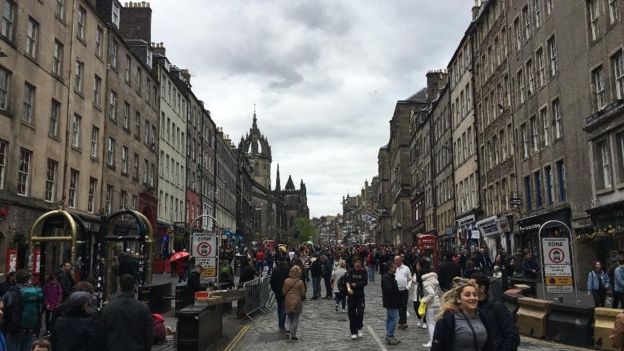
A number of Edinburgh's city centre streets have been closed to traffic under plans to reduce air pollution.
The city has become the first in the UK to join the Open Streets movement.
Streets in the Old Town, including the Canongate, Cockburn Street and Victoria Street, were closed between midday and 17:00.
The initiative will take place on the first Sunday of every month as part of an 18-month trial.
Edinburgh's cycle hire scheme will also be free all week to encourage people to ditch their vehicles.
The movement has seen cities around the world temporarily close some streets to all but pedestrians and non-motorised vehicles on a regular basis.
A series of events took place to celebrate the launch in Edinburgh, including jazz performances in Dunbar Close Garden, Tai Chi on the High Street and electric bike trials on Victoria Street.
canongate
Image captionA mini-badminton net was put up in the middle of the Canongate for people to make the most of the deserted road
High Street
Image captionEdinburgh's High Street was also part of the closure, which will take place on the first Sunday of every month as part of an 18-month trial
Lesley Macinnes, City of Edinburgh Councils's transport and environment convener, said: "We've seen how successful similar schemes internationally have proved by encouraging active travel, improving air quality and creating a safer, more relaxed atmosphere so I can't wait to see this take shape in the capital.
"Climate change is a real threat to society, it's clear that we have to act, and Open Streets is undoubtedly a step in the right direction."

Closed roadsImage copyrightCITY OF EDINBURGH COUNCIL
Image captionThe roads in green will be closed to vehicles on the first Sunday of the month as part of the trial by the City of Edinburgh Council

Monday, May 6, 2019

Reuters News - China trade team still plans on U.S. talks as Trump vows to raise tariffs

BEIJING/WASHINGTON (Reuters) - China said on Monday that a delegation was still preparing to go to the United States for trade talks, even as U.S. President Donald Trump dramatically increased pressure on Beijing to reach a deal, saying he would hike tariffs on Chinese goods this week.

Trump’s comments on Sunday marked a major escalation in tensions between the world’s two largest economies, and a shift in tone from the president, who as recently as Friday had cited progress toward a deal.
Stock markets sank and oil prices tumbled on his remarks, as negotiations to end the months-long trade war were thrown into doubt. [MKTS/GLOB]
“We are also in the process of understanding the relevant situation. What I can tell you is that China’s team is preparing to go to the United States for the discussions,” Chinese Foreign Ministry spokesman Geng Shuang told a news briefing.
But Geng did not say if Vice Premier Liu He, who is China’s lead official in the negotiations, will be part of the delegation as originally planned. Negotiations are set to start May 8 in Washington.
“What is of vital importance is that we still hope the United States can work hard with China to meet each other half way, and strive to reach a mutually beneficial, win-win agreement on the basis of mutual respect,” Geng said.
The Wall Street Journal reported earlier that China was considering cancelling this week’s meetings in Washington in light of Trump’s comments, which took Chinese officials by surprise.
Trump appeared to defend his decision in a tweet early Monday, slamming the U.S.-China trade deficit and vowing not to lose out to Beijing.
A less-than-rosy update from U.S. Trade Representative Robert Lighthizer, including details that China was pulling back from some previous commitments, prompted Trump’s weekend decision.
“The Trade Deal with China continues, but too slowly, as they attempt to renegotiate. No!” Trump said in a tweet.
Trump said tariffs on $200 billion of goods would increase on Friday to 25 percent from 10 percent, reversing a decision he made in February to keep them at 10 percent due to progress between the two sides.
The president also said he would target a further $325 billion of Chinese goods with 25 percent tariffs “shortly,” essentially covering all products imported to the United States from China.

‘ATMOSPHERE HAS CHANGED’

U.S. officials did not weigh in on whether they expected talks to go ahead this week. The White House and the U.S. Trade Representative’s Office declined to comment. China’s commerce ministry did not immediately respond to a request for comment.
“The atmosphere of the negotiations has changed,” said a Chinese official with knowledge of the situation.
Whether and how the talks proceed are being re-evaluated, the official told Reuters on condition of anonymity.
“All that depends on the attitude of the United States,” the official said.
Chinese news outlets have been told not to independently report on Trump’s tweets, and instead adhere to any report from the official Xinhua news agency, said a source with direct knowledge of the matter.
Global financial markets, which had been expecting news of a trade deal soon, went into a tailspin. U.S. equity futures fell more than 2 percent and stocks across trade-reliant Asia tumbled. China’s main indexes slid 5 percent.
“There is still a question of whether this is one of the famous Trump negotiation tactics, or are we really going to see some drastic increase in tariffs,” said Nick Twidale, Sydney-based analyst at Rakuten Securities Australia. “If it’s the latter, we’ll see massive downside pressure across all markets.”
Mindful of his 2020 re-election bid, Trump had also suggested the duties were not leading to price increases for U.S. consumers. “The Tariffs paid to the USA have had little impact on product cost, mostly borne by China,” he tweeted.
Tariffs on Chinese goods are actually paid to the United States by companies that import the goods, and most of those companies are U.S.-based. American businesses, while supportive of Trump’s crackdown on China’s trade practices, are eager for the tariffs to be removed, not expanded.
“Raising tariffs means raising taxes on millions of American families and inviting further retaliation on American farmers,” said Christin Fernandez, a spokeswoman for the Retail Industry Leaders Association.

‘HANG TOUGH’

Nevertheless, the president’s aggressive strategy drew rare bipartisan support from U.S. Senate Democratic leader Chuck Schumer, who urged Trump to “hang tough” in a tweet: “Don’t back down. Strength is the only way to win with China.”
One Chinese trade expert said recent signs of resilience in both economies were breeding over-confidence.
“The urgency is gone. So, it’s likely to see a longer trade war,” the expert said, speaking on condition of anonymity due to the sensitivity of the topic.
The trade war resulted in billions of dollars in losses for both sides in 2018, hitting autos, technology and above all, agriculture, while inflicting collateral damage on export-reliant economies and companies from Japan to Germany.
On Friday, Trump said talks with China were going well.
Last week, industry sources said they believed the talks were in the end game, but a Trump administration official said aides had told the president that significant hurdles remained.
The increase in U.S. tariffs on Friday would be the first since Trump imposed 10 percent tariffs on $200 billion of Chinese goods in September, coming on top of 25 percent tariffs on $50 billion of goods enacted earlier last year.
Negotiations about tariffs have been one of the remaining sticking points between the two sides. China wants the tariffs to be removed, while Trump wants to keep some, if not all, as part of any final deal to ensure China lives up to its commitments, a White House official said on Sunday.
Reporting by Jeff Mason, David Shepardson, Timothy Gardner, Lawrence Hurley and Makini Brice in Washington; Sinead Carew in New York; and Ben Blanchard, Michael Martina, Shu Zhang, Jing Xu, Cheng Leng and Yawen Chen in Beijing; Editing by Simon Cameron-Moore and Jeffrey Benkoe

Friday, May 3, 2019

BBC News - Bank warns of 'more frequent' rate increases than expected

Interest rate increases could be "more frequent" than expected if the economy performs as the Bank of England is expecting, governor Mark Carney says.
The markets are forecasting just one interest rate increase by 2021.
But if there is a resolution to the Brexit impasse, and inflation and growth continue to pick-up, then more increases are likely, Mr Carney said.
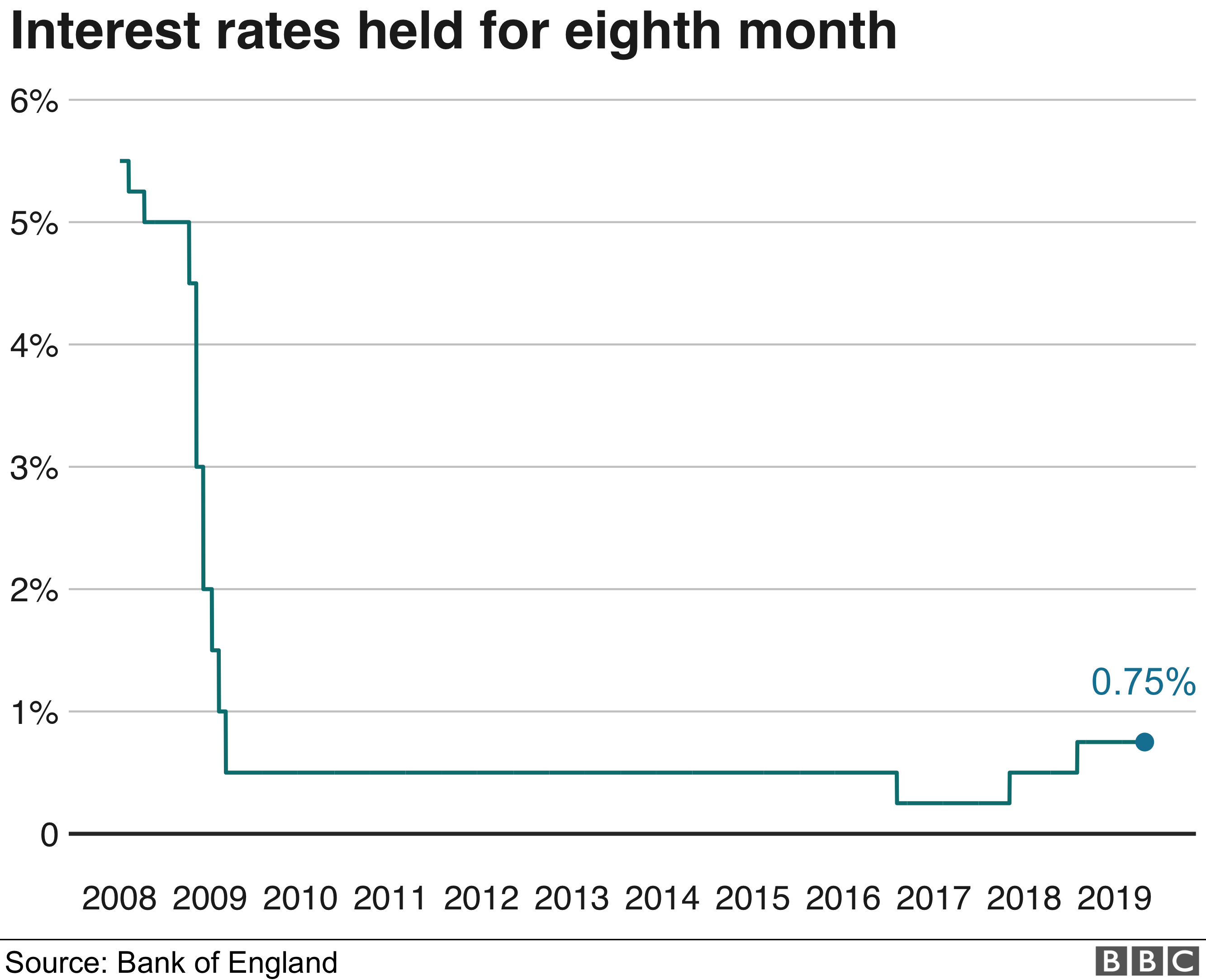
As expected, the Bank kept interest rates on hold at 0.75% at its latest policy meeting.
Interest rates have been at that level since last August, when the Bank raised them by a quarter of a percentage point.
The Bank is expecting growth and inflation to pick up over the next two years.
In a news conference, Mr Carney said: "If something broadly like this forecast comes to pass... it will require interest rate increases over that period and it will require more, and more frequent interest rate increases, than the market currently expects."
The Bank's forecasts are based on a "smooth adjustment" to any new trading relationship with the European Union.
interest rates

What did the Bank say about the economy?

In its Quarterly Inflation Report, the Bank of England raised its UK growth forecast for this year, in part because the outlook for the global economy is a bit brighter.
The Bank now sees growth of 1.5% this year, up from February's forecast of 1.2%.
Economic growth has been subdued since the UK voted in June 2016 to leave the EU.
In particular, business investment has been falling.
The Bank says stockpiling has been giving the economy a short-term boost, but for this year, the strengthening of the global economy will have a more important effect.
In the minutes from its latest policy meeting, the Bank said "global growth had shown signs of stabilisation, and had been a little better than expected".
It also forecasts the unemployment rate will continue falling in the coming years to 3.5% by 2022, which would be the lowest rate since 1973.
Presentational grey line

Will the Bank raise interest rates soon?

Analysis box by Dharshini David, economics correspondent
The Bank is reluctant to move interest rates until there is further clarity, not least about the path of Brexit.
For as it highlights (again), the movement in rates then could be "in either direction", depending on the outcome, the impact on the economy and whether it decides to support growth or inflation.
If all goes smoothly, then the Bank is likely to turn its firepower on inflation and proceed with raising rates "at a gradual pace and to a limited extent" - especially if there's a bounce in investment and hiring.
At the moment, the MPC reckons "the cost of waiting for further information is relatively low".
But that, given the degree of inflationary pressure it's forecasting, is quite a gamble.
If the Bank has missed the boat, then rates might have to ultimately rise faster and by more than originally envisaged to curb inflation.
That would be an unenviable parting gift from Mr Carney to his successor.
Presentational grey line

What does it mean for mortgages?

Moves in interest rates are important to the 3.5 million people with variable or tracker mortgages.
Even a small quarter-point rise can add hundreds of pounds to their annual mortgage costs.
Mortgage market experts say that for those who can afford to buy a home, now is a good time to borrow.
"Right now, you've got lenders that want your business and rates are exceptionally low," said David Hollingworth, from L&C Mortgages.
Some lenders are offering five-year fixed deals at below 2%, he said.
Even borrowers with a small deposit can find competitive rates of interest, he added.

What is the outlook for the housing market?

The Bank expects a fall in UK house prices this year, with property values predicted to drop by 1.25%.
It says some households are likely to have delayed moving house because of Brexit uncertainty.
It also says that affordability is also slowing the market, particularly in areas where prices are high, such as London and the South East.

When will Mark Carney step down?

Mark Carney will step down on 31 January 2020 after more than six years in the post.
Interviews will be held over the summer and the appointment will be made by the government in the autumn.
The government is under pressure to consider female candidates, as men hold the Bank's key positions.
At the moment, the Monetary Policy Committee, which sets interest rates, only has one female among its nine members.
When asked about the lack of diversity at the Bank, Mr Carney said "big progress" had been made with women now making up 31% of senior management.

Thursday, May 2, 2019

Reuters News - As records fall on Wall Street, investors seek bets on economic growth

by April Joyner
NEW YORK (Reuters) - As the bull market gets a new lease on life, Wall Street is growing less fretful of a U.S. growth slowdown and betting on shares of companies in sectors that will benefit from the economic up-cycle, such as industrials and financials.
After tumbling nearly 20% from its peak at the end of 2018, the S&P 500 has rebounded strongly this year as U.S. economic data remain robust and the Federal Reserve has indicated a pause in interest-rate hikes. Last week’s U.S. gross domestic product reading, which put first-quarter growth at a 3.2% annualized rate, further bolstered economic sentiment.
Accordingly, fears of a stock market meltdown have given way to talk of a possible melt-up. The S&P 500 has notched record highs in the past three trading sessions.
As a result, shares of companies in cyclical sectors and industries - those whose fortunes ebb and flow in tandem with the economy - have grown more attractive. Indeed, industrials and consumer discretionary stocks have outperformed the S&P 500 this year.
Industrials are well placed to continue their ascent, especially if the United States and China reach a trade agreement as anticipated, said Tim Ghriskey, chief investment strategist at Inverness Counsel in New York. Last year’s trade tensions greatly contributed to the economic worries at the end of last year, he said.

Wednesday, May 1, 2019

BBC News - Labour's John McDonnell says UK economy requires 'revolution

By Ben Chu
Labour is planning a "revolution" for the UK economy, John McDonnell has told the BBC.
The shadow chancellor was speaking to Newsnight for a series of reports to mark 40 years since the election of Margaret Thatcher.
He said he saw parallels between today and 1979 when Mrs Thatcher swept to power in a major political sea-change.
"Things aren't working for people, so they're looking for change," Mr McDonnell said.
Asked whether Labour's plans represented evolution or revolution he said: "OK it will be a revolution. Transformative - because we are going to change society and that's what's demanded of us now."
He added: "And do you know? I think most people accept that now. We'll do it by taking people with us. But it will be done on a very pragmatic basis.
It is common sense socialism and the point about that first period of office when we go into government will be to lay the foundations for this transformation that we want.
"So we are in a hurry - because the issues are so desperate now."
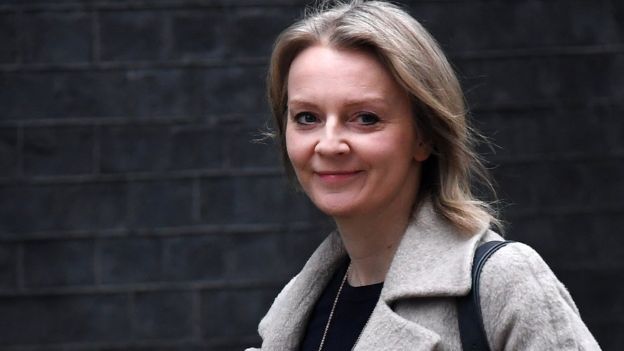
Chief Secretary to the Treasury, Liz Truss, looks at the cameras as she walks to Cabinet meetingImage copyrightEPA
Image captionLiz Truss said Labour's plans for higher tax will "choke" economic growth.
Labour is advocating higher taxes on the wealthy and companies, a major expansion of public investment, the re-nationalisation of certain utilities and moves to give many more workers a direct financial ownership stake in their firms.
Critics and advocates alike say this would represent a major break from the Thatcherite legacy of lower taxes, free markets, deregulation and privatisation.

'Something big'

Speaking in the same Newsnight film on the future of the UK's economic settlement, the Chief Secretary to the Treasury, Liz Truss, agreed the UK was on the verge of a major change.
"I do think there is something happening, something big. Politics is now debating ideas again from first principles. We went through a few years - the Blair years, the Cameron years - where it was all about managerial politics... now we are having a more fundamental debate about our economy."
But she rejected Labour's policy agenda, particularly on tax and a bigger role for the state.
"I think higher taxes just choke economic growth," she said.
"Money that is taken in taxes is money that can't be invested in the wider economy. I look at countries like Japan and Korea which run very successful economies and the size of the state is lower.
"There's no reason we can't be more successful. Our challenge as a government is to raise economic growth. Getting growth up means more money is going into tax and public services."
Newsnight's three film series "The 40-year itch" begins on Newsnight on Monday 29 April. The first film will explore the future of work.
You can watch Newsnight on BBC Two weekdays at 22:30 or on iPlayer, subscribe to the programme on YouTube and follow it on Twitter.