Tuesday, June 11, 2019

BBC News - Brexit shutdown slashes UK car production by 45%

Factory shutdowns designed to cope with disruption from a 29 March Brexit, slashed UK car production in April by almost a half.
Even though Brexit is delayed the factories still closed and production fell 44.5% according to the Society of Motor Manufacturers and Traders (SMMT).
In what it called "an extraordinary month", the SMMT said only 70,971 cars rolled off production lines.
That was 56,999 fewer than in April a year ago.
Production for both home and overseas markets fell by 43.7% and 44.7% respectively.
The SMMT said car firms had brought forward their annual stoppages normally scheduled for the summer holidays.
It said the shutting of factories was part of a raft of costly measures, including stockpiling, training for new customs procedures and rerouting of logistics. It said the factories would not be able to repeat the process for the new 31 October Brexit deadline set by the European Union.
Mike Hawes, SMMT chief executive, said: "Today's figures are evidence of the vast cost and upheaval Brexit uncertainty has already wrought on UK automotive manufacturing businesses and workers.
"Prolonged instability has done untold damage, with the fear of 'no deal' holding back progress, causing investment to stall, jobs to be lost and undermining our global reputation."

Global slowdown

The stoppages in the factories have exacerbated a continuing slow down in the global car industry caused by the trade tensions between the US and China, uncertainties over the arrival of electric and self driving cars, and tougher environmental controls after the VW emissions scandal.
April was the 11th consecutive month of output falls in the UK.
In the year to date, 127,240 fewer cars have been built compared with the same period in 2018 - a decline of more than a fifth.
The SMMT estimated production for the whole of 2019 would be about 10% down on last year. It said the market might pick up by the end of the year if there was a favourable deal between the UK and the EU and a substantial transition period to adapt to trading outside the single market.
But it said a no-deal Brexit would make the declines worse with the threat of border delays, production stoppages and additional costs.
Mr Hawes said: "This is why 'no deal' must be taken off the table immediately and permanently, so industry can get back to the business of delivering for the economy and keeping the UK at the forefront of the global technology race."
The Department for Business, Energy and Industrial Strategy said: "The Government wants to see the UK automotive sector continue to grow and attract further investment.
"Through our modern industrial strategy we continue to invest in the future of our automotive industry, including £1bn for research and development into cleaner vehicles, and the Faraday Battery Challenge to develop the next generation of car battery technologies in the UK."

Monday, June 10, 2019

Reuters News - Germany's Maas: Europe will stick to Iran's nuclear deal, but cannot work miracles

TEHRAN (Reuters) - Britain, France and Germany are committed to stick to their commitments from Iran’s nuclear deal with world powers, German Foreign Minister Heiko Maas said on Monday, adding that it was important to keep on talking to avoid a military escalation.
“We want to fulfil our obligations,” Maas said during a joint news conference with his Iranian counterpart Mohammad Javad Zarif in Tehran. “We cannot work miracles, but we will try to avert a failure (of the nuclear deal),” Maas added.
Maas said it was important to continue dialogue with Iran and use those talks also for frank discussions. “The situation in the region here is highly explosive and extremely serious,” Maas said. “A dangerous escalation of existing tensions can also lead to a military escalation.”
Reporting by Sabine Siebold; Writing by Michael Nienaber; Editing by Raissa Kasolowsky

Friday, June 7, 2019

BBC News - The decline of cash in the UK - in charts

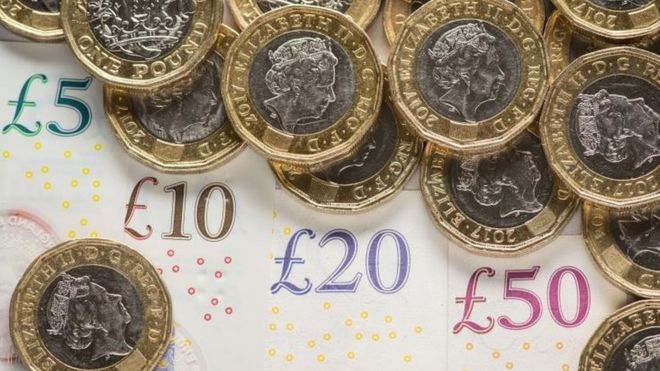
Notes and coinsImage copyrightPA
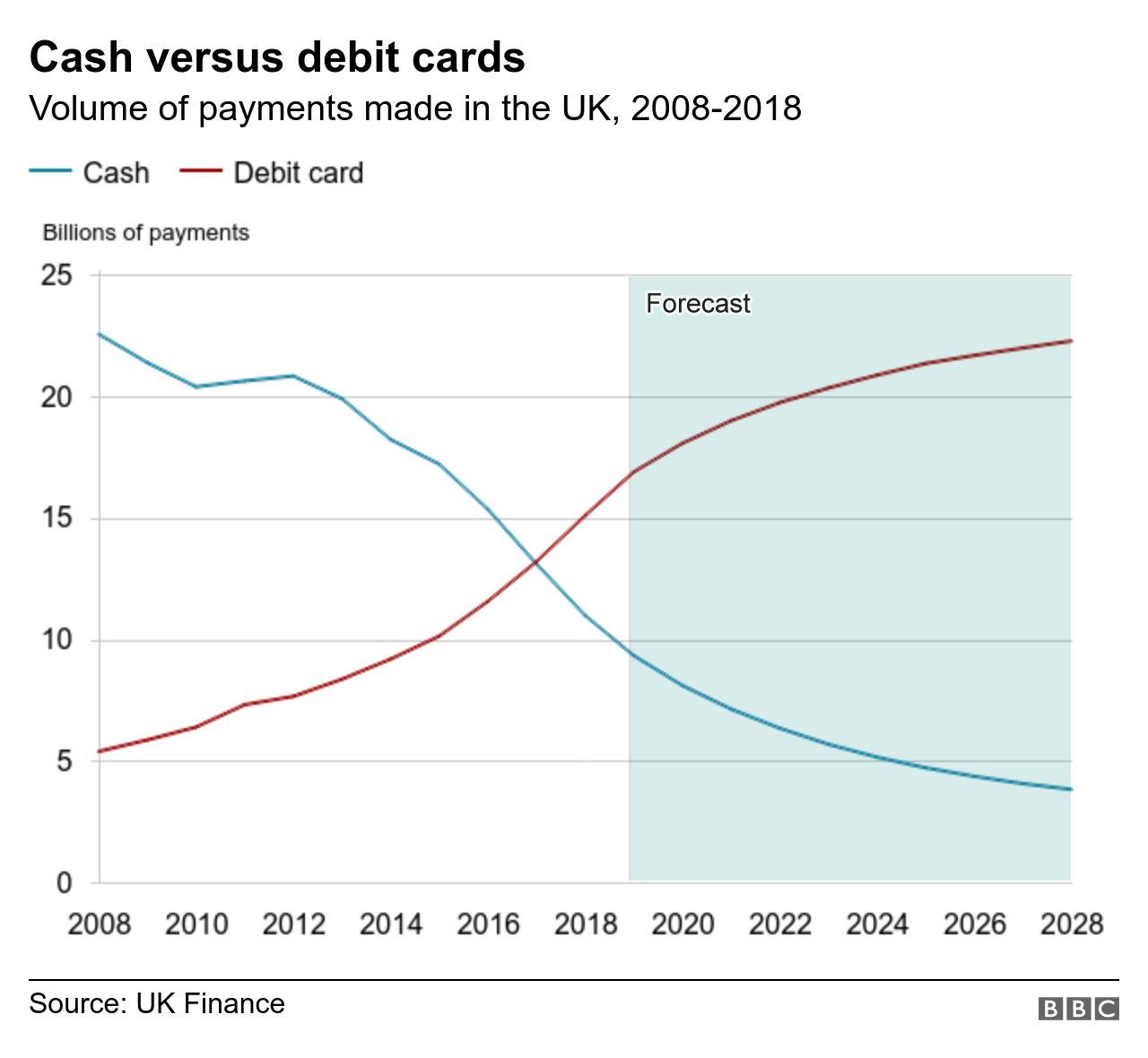
Cash use is falling, with predictions that fewer than one in 10 transactions will be completed with notes and coins in 10 years' time.
Ten years ago, cash was used in six out of 10 payments, but it has been overtaken in popularity by debit cards, driven by the use of contactless technology.
A review of payments, published by banking trade body UK Finance on Thursday, said cash was here to stay, but would play a less important role in the future.
The most recent figures show cash payments are still common, but declining - down 16% from 2017 to 2018, while debit card use is rising.
Cash v debit card over time graph
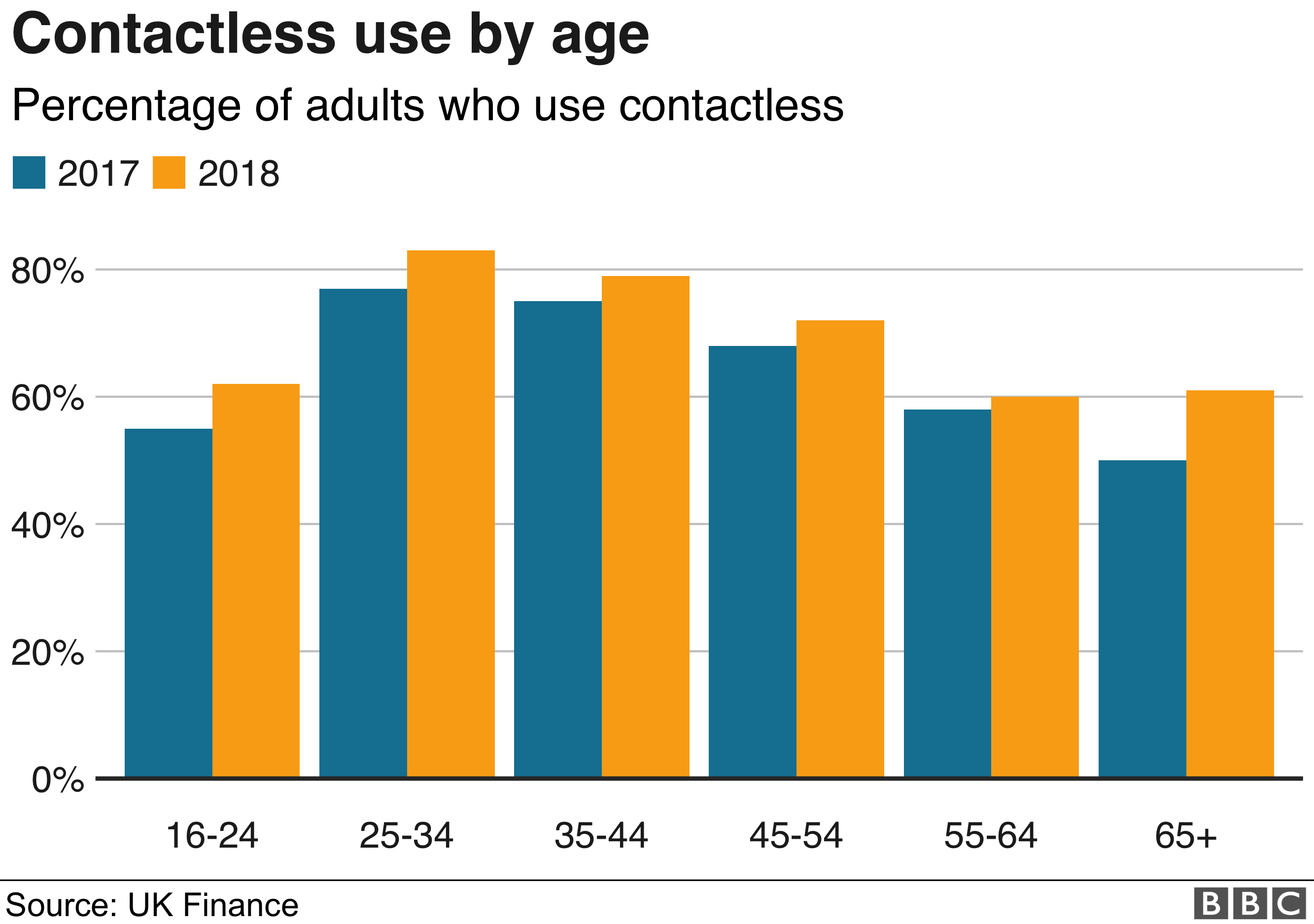
Contactless payments on debit cards were once used primarily by young adults, but older consumers have adopted the technology, with some of the biggest rises in the last year among pensioners.
Contactless use by age graphic
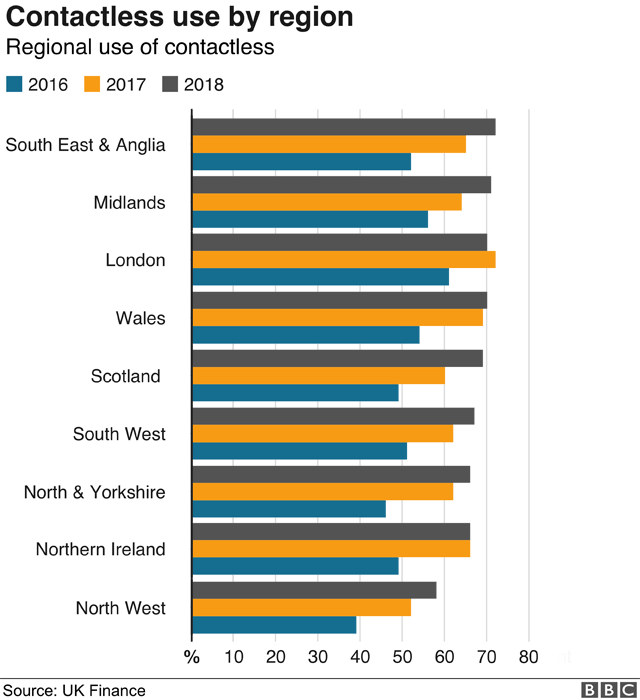
The use of contactless was given a massive leg-up a few years ago, when it was adopted by the London Underground. Now, however, other regions have caught up with - or overtaken - London in terms of the proportion of adults who make contactless payments.
Theories about the lower take-up in the North West of England include an ageing population in coastal towns sticking with cash, plus the lack of digital access owing to a lack of connectivity in areas such as the Lake District.
Contactless use by region graphic

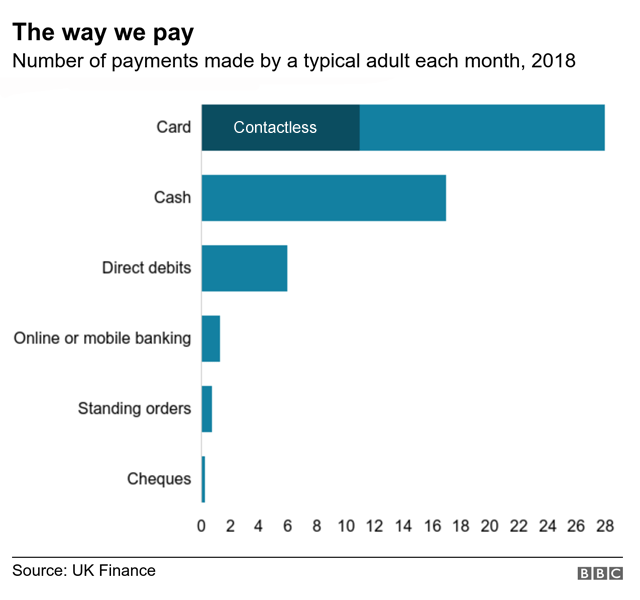
Overall, this means that debit cards are used more than any other form of payments in our monthly outgoings, but cash is far from dead.
Number of payments made by a typical adult in 2018

Thursday, June 6, 2019

Reuters News - U.S., Mexico to resume talks over tariffs, border as Trump seeks more progress

WASHINGTON (Reuters) - Mexican and U.S. officials are set to resume talks in Washington on Thursday aimed at heading off punitive tariffs on Mexican goods as President Donald Trump called for Mexico to take more action to curb migration at the southern U.S. border,
The two sides met on Wednesday for discussions led by Vice President Mike Pence in an effort to strike a deal that would satisfy the U.S. president, who has called for the imposition of tariffs from Monday.
Staff-level meetings are scheduled to begin at 2 p.m. (1800 GMT) with Mexican officials at the White House, a White House official said on background.
“They have to step up and they have to step up to the plate, and perhaps they will. We’re going to see if we can solve the problem,” Trump told reporters as he departed Ireland on Thursday to attend events marking the 75 anniversary of D-Day in France.
“We’re having a great talk with Mexico. We’ll see what happens, but something pretty dramatic could happen. We’ve told Mexico the tariffs go on, and I mean it too,” Trump said.
Pence told reporters the U.S. State Department would lead talks on Thursday, but gave no further details.
Mexican officials ramped up efforts to halt the flow of Central American migrants crossing the border to the United States, with Mexican soldiers, armed police and migration officials blocking migrants here along its own southern border with Guatemala.
It was unclear whether the hardening of Mexico’s response would appease Trump, who is struggling to make good on his key 2016 presidential campaign promise to build a wall along the U.S.-Mexico border as part of a hard-line immigration stance.
With efforts to get Mexico and then the U.S. Congress to fund the barrier having failed, Trump threatened to shut down the border completely, before backing off and turning to punitive tariffs.
Last week, Trump said Mexico must take a harder line on the flow of migrants across the border or face 5% tariffs here on all its exports to the United States from June 10, rising to as much as 25% later this year.
The unexpected announcement rattled global financial markets and even Trump’s fellow Republicans fretted about the potential economic impact on U.S. businesses and consumers who would have to absorb the costs.
Mexico would also take an economic hit that analysts have said could spark a recession. Credit ratings agency Fitch downgraded Mexico’s sovereign debt rating on Wednesday, citing trade tensions among other risks, while Moody’s lowered its outlook to negative.
Even with more talks on Thursday, it was unclear when any resolution would come, with Trump in Europe through Friday.
U.S. Secretary of State Mike Pompeo, who attended Wednesday’s discussions with Mexican Foreign Minister Marcelo Ebrard, had no public events scheduled for Thursday. Pence was scheduled to travel outside of Washington for most of the day.
Ebrard said Wednesday’s discussions had focused on migration rather than tariffs and more talks were needed to find common ground.
If the tariffs go ahead, the United States would be in a serious trade dispute with both China and Mexico, two of its top three trading partners.
Mexican President Andres Manuel Lopez Obrador has said he is optimistic a deal will be reached, but Mexican officials have meanwhile prepared a list of U.S. products that may face retaliatory tariffs.
Those would target U.S. products from agricultural and industrial states regarded as Trump’s electoral base, a tactic Beijing has also used with an eye toward his re-election bid in the 2020 U.S. presidential election.
Still, Trump remained confident in his tariff strategy.
“I think China wants to make a deal badly, I think Mexico wants to make a deal badly,” he told reporters in Ireland.
Reporting by Roberta Rampton and Lesley Wroughton in Washington and Steve Holland in Shannon, Ireland; Additional reporting by Alexandra Alper; Writing by Susan Heavey; Editing by Bernadette Baum

Wednesday, June 5, 2019

BBC News - India loses place as world's fastest-growing economy

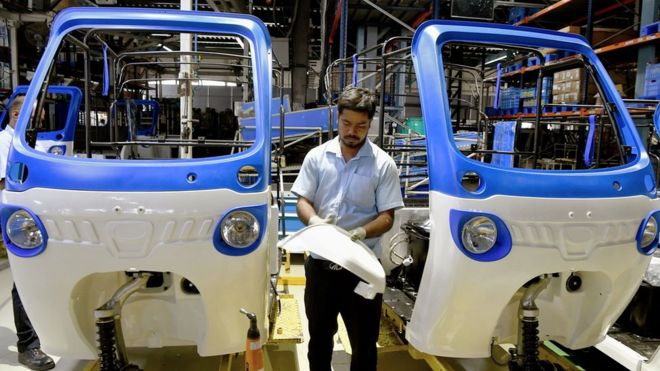
Rickshaw making plant in BangaloreImage copyrightGETTY IMAGES
India has lost its spot as the world's fastest-growing major economy after it grew more slowly than expected in the first three months of 2019.
Official data showed the economy grew 5.8%, which is slower than the 6.4% growth registered by China, and down from 6.6% in the previous quarter.
It was the first set of figures since Narendra Modi secured a second election victory this month.
During his first term, India became the world's fastest-growing economy.
But the latest figures, which show the slowest growth rate in 17 quarters, mean India's growth rate has fallen behind China for the first time in nearly two years.
Economists had been expecting the economy to grow 6.3% in the first quarter.
The figures will put pressure on Prime Minister Modi's government and the central bank to provide stimulus to the economy through fiscal measures.
Unlike China, India's economic growth has been driven by domestic consumption over the last 15 years and the latest data showed weaker consumer demand.
There was also a slower growth in investment, which fell to 3.6% from 10.6% in the previous quarter.
Finance secretary Subhash Chandra Garg said that the next quarter - the three months of April to June - could also be "relatively slower".
But, it should start to turnaround in the third quarter, he said.

'Jobs crisis'

The Reserve Bank of India is now expected to cut interest rates next month.
Unemployment data, that has been repeatedly delayed, was also issued on Friday and showed a rate of 6.1% in the 2017/18 fiscal year.
"It shows the jobs crisis is still there: there are not many new ones being created," said NR Bhanumurthy, a professor at the National Institute of Public Finance and Policy in New Delhi.
There has not been detailed official data on unemployment for several year and chief statistician Pravin Srivastava told reporters "it would be unfair to compare it with the past."

Tuesday, June 4, 2019

BBC News - Kenya's new banknotes and the battle against corruption

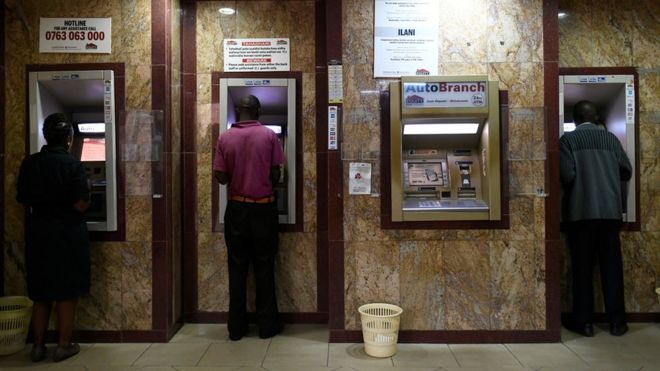
Kenyans withdrawing cash from an ATMImage copyrightGETTY IMAGES
Image captionKenyans will exchange the old 1,000 shilling notes for the new tender
Kenya's President Uhuru Kenyatta has announced that the country's currency is to be replaced with a new generation of banknotes.
Kenyans must return their 1,000 shilling ($10; £8) notes to banks by 1 October, in a bid to fight money laundering, counterfeits and corruption.
New banknotes are to be brought in over the coming months with other denominations being phased out gradually.
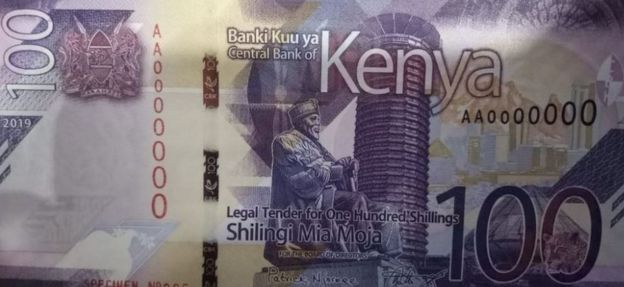
Some Kenyans have expressed anger over the new banknote design, which features an image of a statue of Kenya's first President, Jomo Kenyatta - the current president's father.
The decision on the design, as well as the clampdown on the 1,000 shilling notes, has been challenged in court.

Why is Kenya replacing its banknotes?

Kenya is withdrawing the note to crack down on embezzlement and tackle a wave of counterfeit 1,000 shilling notes.
The governor of Kenya's central bank, Patrick Njoroge, also expressed "grave concern" over larger banknotes being used for "illicit financial flows in Kenya and also other countries in the region".
The 1,000 shilling note is the highest value note in Kenya and according to Mr Njoroge, the Kenyan shilling is the equivalent to the US dollar in east Africa, in terms of its recognition.
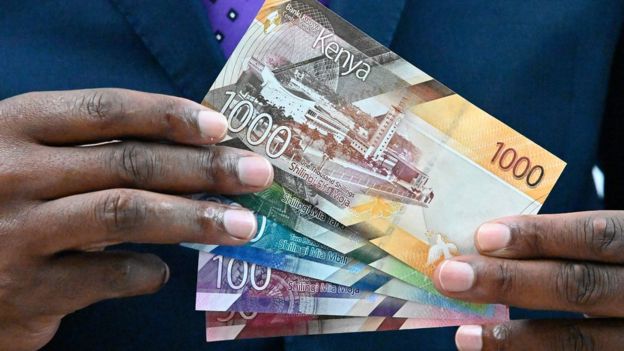
Patrick Njoroge displays some of the new designs for the Kenyan currency notesImage copyrightGETTY IMAGES
Image captionPatrick Njoroge displays some of the new designs for the Kenyan currency notes
President Kenyatta promised to stamp out corruption when he was elected in 2013.
But his critics say there have been few convictions since then, especially of high-profile people.
BBC Africa business reporter Georgie Ndirangu says the demonetisation - the withdrawal of a coin, note, or precious metal from use as legal tender - is seen as a direct response to this criticism.
Officials and well connected businessmen in corrupt cartels are believed to hold hundreds of millions of illegally obtained shillings in cash, and withdrawing the 1,000 shilling note is expected to close many money-laundering avenues, as they have to be exchanged for the new currency, he said.

How will the changeover happen?

Mr Njoroge said the four-month transition period should allow enough time for Kenyans to exchange their old 1,000 shilling notes.
Those exchanging less than 5m shillings would be able to do so at their local bank but any higher amounts will need approval from Kenya's central bank.
Mr Njoroge said he would be holding talks with managers of foreign-exchange bureaux and money-remittance providers to put in place controls to prevent illicit financial flows.
He said he would communicate with banks across the region so that illegal money did not get exchanged in their countries.

Why are Kenyans angry about the new currency?

As well as showcasing Kenya's wildlife, the new banknote design features the Kenyatta International Convention Centre (KICC) with a statue of Jomo Kenyatta in the middle.
The new Ksh100 Kenyan note showing the statue of President Kenyatta
Image captionThe new 100 shilling note showing the statue of President Kenyatta
The banknote also shows a lion, giraffes and elephants
Image captionThe new bank note also displays Kenya's Big Five - its most famous wildlife
He played a major role in leading Kenya to independence and went on to become the country's first president.
The Constitution of Kenya 2010 says that money - both coins and banknotes - should not feature a portrait of an individual.
Human Rights Activist Okiya Omtatah is challenging the decision in court, arguing that there has been a lack of public participation in designing the notes, as well as the demonetisation of the current 1,000 shilling note.
But some Kenyans back the decision to put Kenyatta on the note. One man said it was a "sign of respect" for the "founding father" of Kenya.

What other countries have demonetised?

In 2016, India changed almost all of its cash overnight, which some critics claim caused long-term financial problems. The Indian government said it was a necessary move to tackle tax evasion and terrorism funding, and in a country where 90% of transactions are in cash, to move towards a cashless society.
Nigeria introduced a similar ban on old notes in 1984 in an attempt to crackdown on corruption, as did Ghana in 1982 to help with tax evasion.

Monday, June 3, 2019

Reuters News - Donald Trump welcomed to Buckingham Palace by Queen Elizabeth

LONDON (Reuters) - Britain rolled out the royal red carpet for Donald Trump on Monday but the pomp, pageantry and banquet with Queen Elizabeth looked set to be overshadowed by the U.S. President’s views on Brexit, the UK’s next leader and a row over China’s Huawei.

Trump and his wife, Melania, were greeted by the 93-year-old monarch at Buckingham Palace at the start of a three-day state visit which sees him feted with the full force of royal ceremony: a formal dinner with the queen, tea with heir Prince Charles, and a tour of Westminster Abbey, coronation church of English monarchs for 1,000 years.
“I look forward to being a great friend to the United Kingdom, and am looking very much forward to my visit,” Trump wrote on Twitter as he landed at London’s Stansted Airport.
But beyond the theater, the proudly unpredictable 45th U.S. president is rocking the boat with the United States’ closest ally, whose political establishment has been in chaos for months over Britain’s departure from the European Union.
As he was flying into the British capital, he reignited a feud with London Mayor Sadiq Khan - who had written on Sunday that Britain should not be rolling out the red carpet for the U.S. president - describing him as a “stone cold loser.
The state visit, promised by Prime Minister Theresa May back in January 2017 when she became the first foreign leader to meet him after he took office, is cast as a chance to celebrate Britain’s “special relationship” with the United States, boost trade links and reaffirm security cooperation.
At Buckingham Palace, Melania, stood beside Elizabeth and Charles’s wife Camilla, while Charles and Trump inspected the guard.
Trump will have lunch with the queen before the monarch’s second son Prince Andrew accompanies him to Westminster Abbey where the president will lay a wreath at the Grave of the Unknown Warrior.
The day culminates with a lavish state banquet at Buckingham Palace - where men wear white tie coats with tails and women evening gowns.

UNCONVENTIONAL

But away from the pageantry, Trump is set to make his trip the most unconventional state visit in recent British history.
He has already waded far into Britain’s turbulent domestic politics, where more than a dozen candidates are vying to replace May, who announced last month she was quitting after failing to get her EU divorce deal through parliament.
The president, who has regularly criticized May’s Brexit tactics, said Britain must leave the bloc on the due date of Oct. 31 with or without a deal and praised a more radical Brexit-supporting potential successor as British leader.
He also called for arch-Brexiteer Nigel Farage, a scourge of May’s ruling Conservative Party, to conduct talks with the EU.
Brexit is the most significant geopolitical move for the United Kingdom since World War Two and if it ever happens then London will be more reliant on the United States as ties loosen with the other 27 members of the EU.

HUAWEI TENSIONS

At a meeting with May, Trump will also warn Britain that security cooperation, a cornerstone of the western intelligence network, could be hurt if London allows China’s Huawei a role in building parts of the 5G network, the next generation of cellular technology.
The Trump administration has told allies not to use its 5G technology and equipment because of fears it would allow China to spy on sensitive communications and data. Huawei denies it is, or could be, a vehicle for Chinese intelligence.
U.S. Secretary of State Mike Pompeo told Britain last month it needed to change its attitude toward China and Huawei, casting the world’s second largest economy as a threat to the West similar to that once posed by the Soviet Union.
Britain’s relationship with the United States is an enduring alliance, but some British voters see Trump as crude, volatile and opposed to their values on issues ranging from global warming to his treatment of women.
Hundreds of thousands protested against him during a trip last year and a blimp depicting Trump as a snarling, nappy-clad baby will fly outside Britain’s parliament during the visit. Other protesters plan a “carnival of resistance” in central London.
Jeremy Corbyn, the socialist leader of Britain’s opposition Labour Party, who has declined an invitation to attend the state banquet, scolded Trump for getting involved in British politics.
Another senior Labour lawmaker, Yvette Cooper, said it was wrong to gift Trump the opportunity of photographs with the royal to boost his re-election campaign next year.
“So appalled Theresa May has given this man a red carpeted platform to do this,” she wrote on Twitter. “Doesn’t help Britain to be lavishing pomp on a president so determined to be divisive, childish & destructive.”
While Monday is dominated by pageantry, the second day of Trump’s trip will focus on politics, including a breakfast with business leaders, talks with May in 10 Downing Street, a news conference and a dinner at the U.S. ambassador’s residence.
Additional reporting by Kate Holton, Andrew MacAskill, Alistair Smout and William Schomberg; Writing by Guy Faulconbridge and Michael Holden; Editing by Jon Boyle