Wednesday, August 7, 2019

Reuters News - U.S. dollar: When will bulls turn to bears?

NEW YORK (Reuters) - Trump wants it to be cheaper. The IMF says it should be cheaper. Hedge funds think it has room to run. So what gives with the dollar?
Since the trade war between the world’s two largest economies erupted in March last year, the dollar has gained more than 3 percent against a basket of currencies.
The dollar’s strength, however, does not sit well with President Donald Trump, who has advocated for a weaker currency to make U.S. exports more competitive. On Monday, the U.S. Treasury labeled China a currency manipulator for allowing the yuan to weaken beyond a key level.
Trump feels that U.S. trading partners, the Chinese in particular, are all working frantically to keep their currencies cheap to gain an edge in trade.
His rhetoric has led to speculation that the U.S. government, through the Treasury, could intervene to weaken the dollar by using the Exchange Stabilization Fund. That is seen as unlikely. That fund has approximately $146 billion in reserves, according to Bank of America Merrill Lynch, which may not be enough to have a significant impact in a more than $5 trillion currency market.
Trump is not the only one who believes the dollar should be weaker. The International Monetary Fund says the dollar ought to be about 6-12 percent cheaper based on near-term economic fundamentals, but structural issues such as the greenback’s position as the global reserve currency make that unlikely.
But week after week, hedge funds keep piling up bets that the dollar’s surge has further to run as the world appears headed toward a trade-induced pause in growth if not outright recession.
So who’s right? Here are the arguments:

BULLISH SCENARIO

Being bullish on the dollar has been a popular trade. Bank of America Merrill Lynch’s July fund manager survey showed the dollar was the fourth most crowded trade with 49 percent of respondents saying it is overvalued. The speculative community has been net long dollars since mid June last year.
Bulls say the dollar could benefit from increasing trade tensions.
“It’s a safe haven and offers a very liquid store of value,” said Mazen Issa, senior FX strategist at TD Securities, who said there are very few alternatives to the dollar in the event of a full-scale trade war with China.
Foreign investors also tend to buy U.S. Treasuries as a safe haven hedge, analysts said.
Further enhancing the dollar’s and Treasuries’ appeal is the yield premium over their counterparts.
Seema Shah, chief strategist at Principal Global Investor, said that with more than 40 percent of non-U.S. bonds trading at negative yields, Treasuries have become high yielders.

BEARISH VIEW

While the trade tension has benefited the dollar as a safe haven, there is an argument that the trade stress could undermine the greenback because it would have an adverse impact on the U.S. economy.
Analysts said trade tensions could diminish business and consumer confidence as well as tighten financial conditions.
“We feel that the escalation in the trade war is a risk to the U.S. economy that would prompt the Fed to ease more,” said Richard Franulovich, head of FX strategy at Westpac in New York.
Interest rate futures implied traders fully expect the Fed to lower rates again at its policy meeting next month, after cutting rates last week for the first time in a decade, CME Group’s FedWatch showed on Tuesday.
“We’re starting to get to a point now where it seems that the more hostile the U.S.-China trade war becomes, the more bearish it’s becoming for the dollar, and of course we didn’t quite see that in the early days of the trade war,” said Bipan Rai, head of FX strategy at CIBC in Toronto.
Increasing U.S. debt could also weigh on the greenback, analysts have said.
Zhiwei Ren, portfolio manager at Penn Mutual Asset Management, said it is hard to envision a bullish scenario for the dollar at this point even though the U.S. economy has outperformed the rest of the world.
“The dollar has been strong for the last two to three years,” Ren said. “It’s very hard for one country to stay strong for too long.”
Reporting by Gertrude Chavez-Dreyfuss; additional reporting by Karen Brettell and April Joyner; editing by Megan Davies and Leslie Adler

Tuesday, August 6, 2019

BBC News - US officially labels China a 'currency manipulator'

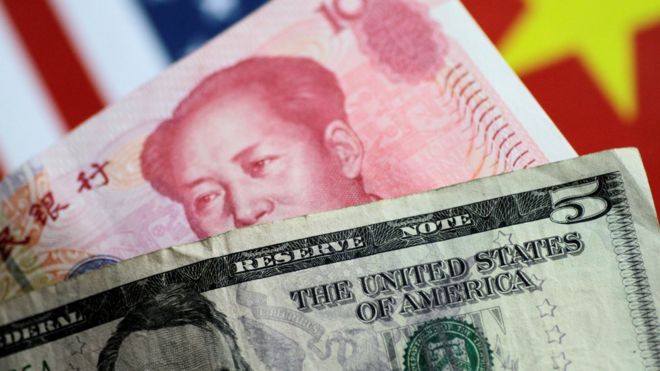
Dollar and yuanImage copyrightREUTERS
The US has officially named China as a "currency manipulator", a statement which will intensify tensions between the world's two largest economies.
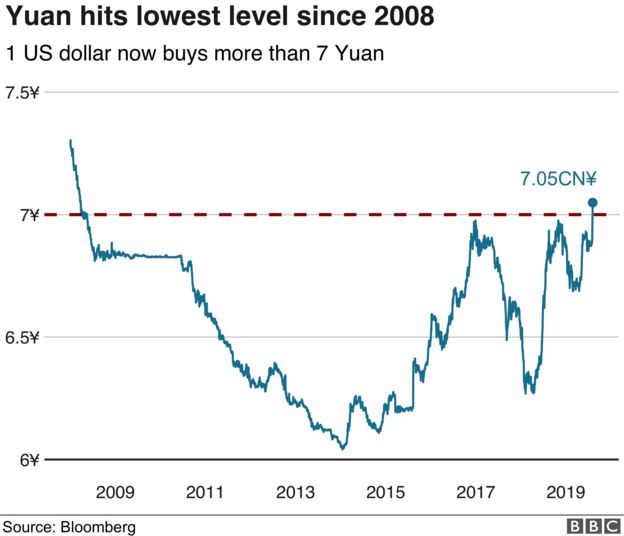
The announcement by the US Treasury follows a sharp fall in the value of the Chinese yuan against the dollar.
The drop caught markets off-guard as Beijing usually supports the currency.
Last week, China pledged to retaliate after US President Donald Trump vowed to impose 10% tariffs on $300bn (£246.7bn) of Chinese imports.
On Monday, the yuan passed the seven-per-dollar level for the first time since 2008, prompting Mr Trump to accuse China on Twitter of manipulating its currency.
The US Treasury department defines currency manipulation as when countries deliberately influence the exchange rate between their currency and the US dollar to gain "unfair competitive advantage in international trade".
A weaker yuan makes Chinese exports more competitive, or cheaper to buy with foreign currencies.
On Monday, the People's Bank of China (PBOC) said the slump in the yuan was driven by "unilateralism and trade protectionism measures and the imposition of tariff increases on China".
The US government said Treasury Secretary Steven Mnuchin will now engage with the International Monetary Fund (IMF) "to eliminate the unfair competitive advantage created by China's latest actions".
The move is largely symbolic because the US is already engaged in trade discussions with China and has implemented tariffs on the country's imports.
However, it fulfils a presidential campaign promise by Mr Trump who pledged to name China a currency manipulator on his first day in office.
The decision rattled investors, with Wall Street's main stock market indexes recording their worst trading day for 2019. Asia markets extended losses on Tuesday, with the Shanghai Composite down 1.3% in afternoon trading.
Presentational grey line

Analysis

By Michelle Fleury, New York Business Correspondent
The move doesn't change much. Not legally speaking.
But it is a big deal, accentuating just how fast things have gone south between the world's two largest economies.
When the US Treasury labels a country a currency manipulator - as it has done here with China - the next step would normally be for negotiations to begin between the two countries. In this case, trade negotiations have already been going on for more than a year.
The process also opens the path for America to introduce tariffs. Again, that's already happening as part of Mr Trump's 'America First' approach to trade.
Under the designation, Mr Mnuchin is also expected to work with the IMF to address its concerns. It's not clear yet what that will yield.
Still it's worth remembering that while the decision may not change much technically, it will have significant political ramifications.
Nobody thinks this will increase the odds of a compromise by the Chinese side when it comes to trade.
So don't be surprised if the prospect of a currency war further rattles investors' already frayed nerves.
Presentational grey line
Yuan vs dollar
Presentational white space
No country has officially been named a currency manipulator by the US since Bill Clinton's administration did so to China in 1994.
In its announcement, the US Treasury said: "China has a long history of facilitating an undervalued currency through protracted, large-scale intervention in the foreign exchange market.
"In recent days, China has taken concrete steps to devalue its currency, while maintaining substantial foreign exchange reserves despite active use of such tools in the past."

Monday, August 5, 2019

BBC News - US Congress reaches deal to avert budget showdown

Mitch McConnellImage copyrightEPA
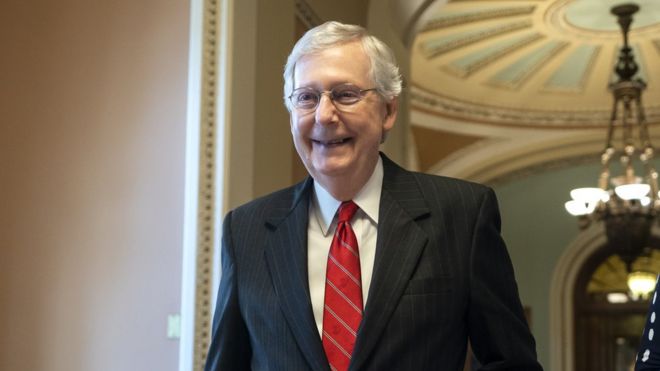
Image captionMitch McConnell said the bill would prevent any debt crisis
The US Senate has approved a two-year federal budget deal that includes big spending increases.
The bill, which has already been passed by the House of Representatives, will suspend government borrowing limits until the end of July 2021.
It has yet to be signed by President Donald Trump, who campaigned for it despite opposition from conservatives.
Lawmakers said it would avert a budget crisis in the run-up to next year's presidential election.
However, it looks certain to add to already high levels of US government debt, which already stands at $22.5tn.
The agreement sets government spending at $1.37 trillion (£1.12tn) for the next financial year, beginning in October.
President Trump has described the deal as "phenomenal" and encouraged sceptical Republicans to "go for it".
"There is always plenty of time to CUT!" Mr Trump tweeted ahead of the vote.
Before the vote was held, the outcome appeared to be in the balance - Republican Senate Majority Leader Mitch McConnell refused to confirm what numbers would vote in its favour.
"It's going to pass," he told CNN, without going into detail about how each senator in his caucus planned to vote.
After it passed, Mr McConnell said the legislation "ensures our federal government will not approach any kind of debt crisis in the coming weeks or months".
It passed by 67 votes to 28 with cross-party support, despite some opposition from conservative Republicans who were concerned at the high levels of spending.
The final vote from Republicans was 30 in favour, and 23 opposed. Five Democrats also voted against it.
Old habits die hard. Despite the vigorous urging of Donald Trump and Republican congressional leadership, rank and file members of the party offered only tepid support for the bipartisan budget deal that increased the US national debt ceiling and paved the way for higher government spending.
For most of the Obama administration, such a thing would be anathema to the entire party. Now, the president - despite campaigning on eliminating the budget deficit in 10 years - seems at peace with growing the annual shortfall to record levels.
It turns out many in his party aren't on board - at least, when it comes to issuing a "no" vote when a "yes" outcome is certain.
Over the past three years, congressional Republicans have been reluctant to cross their president, lest they draw his ire - and the political consequences that follow. The budget, it appears, is one line they seem willing to cross.
At least for the moment, the costs of appearing hypocritical on the nation's finances are higher than the prospect of a Trumpian condemnation that may never come.
Presentational grey line
One Republican senator, Rand Paul, who voted against the bill, told Breitbart News: "This may well be the most fiscally irresponsible thing we've done in the history of the United States."
"What is irresponsible is a Congress that believes they are Santa Claus and they can be everything to everyone and everything is free," he continued.
Under the bill, defence spending will go up from $716bn this year to $738bn next year, while non-defence spending will rise from $605bn to $632bn.
Treasury Secretary Steven Mnuchin had warned that if the bill failed to pass, the government could run out of money during the summer Congressional recess, triggering another government shutdown.
The last time that happened, in January, it cost the US economy an estimated $3bn..

Friday, August 2, 2019

Reuters News - China warns of retaliation after Trump threatens fresh tariffs

BEIJING/WASHINGTON (Reuters) - China on Friday said it would not be blackmailed and warned of retaliation after U.S. President Donald Trump vowed to slap a 10% tariff on $300 billion of Chinese imports from next month, sharply escalating a trade row between the world’s biggest economies.
Trump stunned financial markets on Thursday by saying he plans to levy the additional duties from Sept. 1, marking an abrupt end to a truce in a year-long trade war that has slowed global growth and disrupted supply chains.
Beijing would not give an inch under pressure from Washington, Chinese Foreign Ministry spokeswoman Hua Chunying said.
“If America does pass these tariffs then China will have to take the necessary countermeasures to protect the country’s core and fundamental interests,” Hua told a news briefing in Beijing.
“We won’t accept any maximum pressure, intimidation or blackmail. On the major issues of principle we won’t give an inch,” she said, adding that China hoped the United States would “give up its illusions” and return to negotiations based on mutual respect and equality.
Trump also threatened to further raise tariffs if Chinese President Xi Jinping fails to move more quickly to strike a trade deal.
The newly threatened duties, which Trump announced in a series of tweets after his top trade negotiators briefed him on a lack of progress in talks in Shanghai this week, would extend tariffs to nearly all Chinese goods that the United States imports.
The president later said if trade discussions failed to progress he could raise tariffs further - even beyond the 25 percent levy he has already imposed on $250 billion of imports from China.
Senior Chinese diplomat Wang Yi told reporters on the sidelines of an Association of Southeast Nations event in Thailand that additional tariffs were “definitely not a constructive way to resolve economic and trade frictions”.
U.S. Secretary of State Mike Pompeo, who was also in Bangkok, decried “decades of bad behavior” by China on trade and said Trump had the determination to fix it.
The news hit financial markets hard. On Friday, Asian and European stocks took a battering and safe-haven assets such as the yen, gold and government bonds jumped as investors rushed for cover. [MKTS/GLOB]
Retail associations in the United States predicted a spike in consumer prices, hitting consumer stocks on Thursday on Wall Street, where Target Corp tumbled 4.2%, Macy’s Inc fell 6% and Nordstrom Inc was down 6.2%.
Asked about the impact on financial markets, Trump told reporters: “I’m not concerned about that at all.”
Moody’s said the new tariffs would weigh on the global economy at a time when growth is already slowing in the United States, China and the euro zone.
The tariffs may also force the Federal Reserve to again cut interest rates to protect the U.S. economy from trade-policy risks, experts said.

CHINESE RETALIATION?

One Chinese official told Reuters it was not the first time Trump had “flip-flopped”, and that though the time between the talks being declared constructive and Trump’s threat of new tariffs was short, officials in Beijing were already prepared.
“Discussion followed by a fight has become the normal pattern,” the official said.
Possible retaliatory measures by China could include tariffs, a ban on the export of rare earths that are used in everything from military equipment to consumer electronics, and penalties against U.S. companies in China, analysts say.
So far, Beijing has refrained from slapping tariffs on U.S. crude oil and big aircraft, after cumulatively imposing additional retaliatory tariffs of up to 25% on about $110 billion of U.S. goods since the trade war broke out last year.
China is also drafting a list of “unreliable entities” - foreign firms that have harmed Chinese interests. U.S. delivery giant FedEx is under investigation by China.
“China will deliver each retaliation methodically, and deliberately, one by one,” ING economist Iris Pang wrote in a note.
“We believe China’s strategy in this trade war escalation will be to slow down the pace of negotiation and tit-for-tat retaliation. This could lengthen the process of retaliation until the upcoming U.S. presidential election,” Pang said.

FRUSTRATED

U.S. Trade Representative Robert Lighthizer and Treasury Secretary Steven Mnuchin briefed Trump earlier this week on their first face-to-face meeting with Chinese officials since Trump met Xi at the G20 summit at the end of June and agreed to a ceasefire in the trade war.
“When my people came home, they said, ‘We’re talking. We have another meeting in early September.’ I said, ‘That’s fine, but until such time as there’s a deal, we’ll be taxing them,” Trump told reporters.
A source familiar with the matter said Trump grew frustrated and composed the tweets shortly after Lighthizer and Mnuchin told him China made no significant movement on its position.
Previous negotiations collapsed in May, when U.S. officials accused China of backing away from earlier commitments.
American business groups in China expressed disquiet over the latest round of U.S. tariffs. The U.S.-China Business Council said on Friday it was concerned the action “will drive the Chinese from the negotiating table, reducing hope raised by a second round of talks that ended this week in Shanghai”.
“We are particularly concerned about increased regulatory scrutiny, delays in licenses and approvals, and discrimination against U.S. companies in government procurement tenders,” said the U.S.-China Business Council’s President Craig Allen in an e-mail.
Ker Gibbs, the president of the American Chamber of Commerce in Shanghai, said that as market access in China “remains unnecessarily restricted”, the United States should continue its dialogue with Beijing, and “also work with like-minded countries to persuade China that fair and reciprocal trade and investment benefits all.”

CROPS AND DRUGS

Trump said Beijing had failed to fulfil promises to stop sales of the synthetic opioid fentanyl to the United States, which U.S. officials say was to blame for most of more than 28,000 synthetic opioid-related overdose deaths in the United States in 2017.

Thursday, August 1, 2019

BBC News - Brexit: £2.1bn extra for no-deal planning

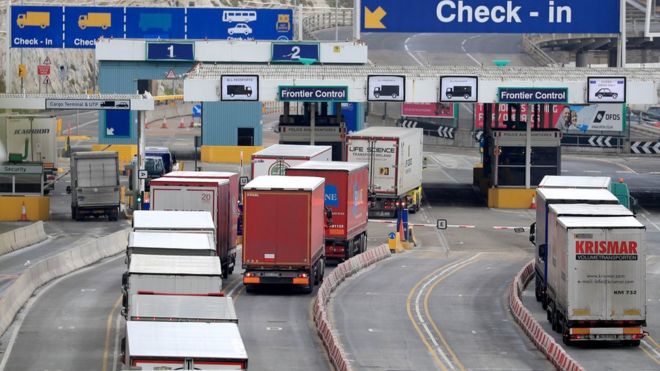
Lorries at Port of DoverImage copyrightPA
The government has announced an extra £2.1bn of funding to prepare for a no-deal Brexit - doubling the amount of money it has set aside this year.
The plans include more border force officers and upgrades to transport infrastructure at ports.
There will also be more money to ease traffic congestion in Kent and tackle queues created by delays at the border.
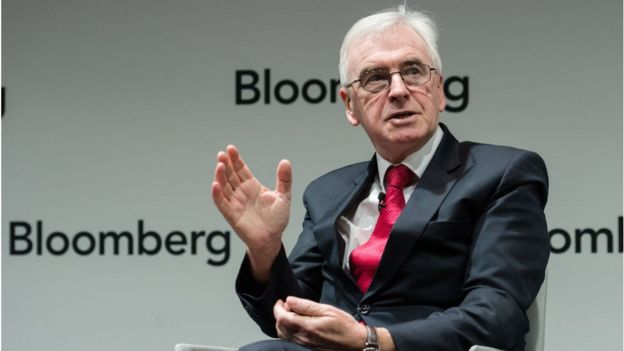
Shadow chancellor John McDonnell described the plans as "an appalling waste of taxpayers' cash".
The package also includes money for stockpiling medicines to ensure continued supplies and a national programme to help businesses.
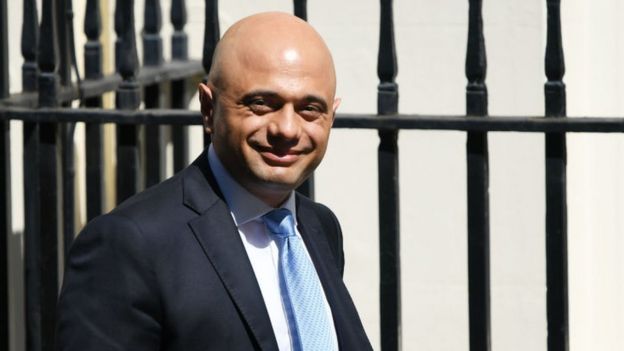
"With 92 days until the UK leaves the European Union it's vital that we intensify our planning to ensure we are ready," said Chancellor Sajid Javid, announcing the move.
"We want to get a good deal that abolishes the anti-democratic backstop. But if we can't get a good deal, we'll have to leave without one.
"This additional £2.1bn will ensure we are ready to leave on 31 October - deal or no-deal."
The shadow chancellor said the extra money was "all for the sake of Boris Johnson's drive towards a totally avoidable no-deal".
He added: "This government could have ruled out no-deal and spent these billions on our schools, hospitals, and people.
"Labour is a party for the whole of the UK, so we'll do all we can to block a no-deal, crash-out Brexit."
"Turbo-charging" no-deal preparation is the energetic promise of the new Treasury, which under previous management had been accused by the now prime minister and his Brexiteer allies of dragging its feet on funding for such measures.
Some of this boost, however, is a repeat prescription for vital medicine supply - spending tens of millions again on reserving cross-Channel ferry capacity and for specialist warehousing and stockpiling that was not, in the end, required after the last Brexit deadline.
All this is designed to mitigate the anticipated freight gridlock around Dover and Calais.
But that is not entirely in the government's hands. Much depends on whether the French authorities choose to enforce full customs and health checks on freight from the UK.
The flow across the Channel also depends on the preparedness of many smaller traders, more than half of whom have not signed up to the most basic customs registration that will become mandatory for European trade under no-deal.
An advertising campaign will target this vital group. It will have to persuade them that no-deal is highly likely, even as the prime minister himself suggests the chances are vanishingly small.
Presentational grey line
Liberal Democrat treasury spokesman Chuka Umunna said the money was a "drop in the ocean".
"They promised us an extra £350m each week for the NHS, now they are making more money available just to ensure access to medicine."
Prime Minister Boris Johnson has previously said he is willing to take the UK out of the EU on 31 October - whether a Brexit deal has been agreed or not.
Former Border Force director-general Tony Smith said the extra money was a "step in the right direction" but more should have been done earlier.
"I don't understand why this wasn't implemented three years ago when the government knew we were leaving the European Union," he said.
Chancellor Sajid JavidImage copyrightCHRIS J RATCLIFFE
Image captionChancellor Sajid Javid said the UK had to "intensify" its planning
There could be a row over the pledge to spend such a vast sum on preparing for no-deal, given Boris Johnson's previous comment that the chances of this happening were a "million to one", said the BBC's assistant political editor Norman Smith.
Another contentious area will be the government's plan to spend around £130m on a huge public information campaign on advice and help for the event of no-deal, he said.
In comparison, David Cameron's decision to send leaflets to every household in the run-up to the 2016 Brexit referendum had a total cost of £9m.

Investment needed anyway?

Conservative peer Baroness Altmann, a former pensions minister, said: "This is huge amounts of taxpayers' money that is being spent on something the government itself has said will be hugely damaging to the British economy and to the British way of life."
But Chief Secretary to the Treasury Rishi Sunak insisted the latest funding was not a waste, even if the UK ended up leaving with a deal.
"A lot of the money we are spending is going to go on things that we would need to spend anyway because we're leaving the European Union," he told BBC Radio 4's Today programme.
"Investment in things like our ports, our border infrastructure... all of that is money we should be spending anyway for those new arrangements."
The new money consists of £1.1bn which will be provided to departments and devolved administrations immediately, while a further £1bn will be made available if needed.
This comes on top of £4.2bn, which has been allocated since 2016 for Brexit preparations by the previous chancellor, Philip Hammond.
Shadow chancellor John McDonnellImage copyrightGETTY IMAGES
Image captionShadow chancellor John McDonnell described the plans as "an appalling waste"
But not all of that money would have been spent on getting ready for a no-deal scenario.
The measures announced by Mr Javid include £344m to be spent on new border and customs operations.
This includes recruiting an extra 500 border force officers, in addition to 500 already announced, while there will also be more money for training customs agents and processing UK passport applications.

'Sceptical'

Another £434m will be spent on ensuring continuity of vital medicines and medical products, including freight transport, warehousing and stockpiling.
Of the rest, £108m will go on promoting and supporting businesses "to ensure they are ready for Brexit", including a national programme of business readiness and "helping exporters to prepare for, and capitalise on, new opportunities".
There will also be a public information campaign and an increase in consular support for Britons living abroad, at a cost of £138m.
Meg Hillier, chair of the Public Accounts Committee, said she was "sceptical about how much can be spent with the time available".
She said her committee had been told the UK was now past "the point of no return" for effective spending to mitigate the effects of no deal, adding: "My biggest question is how on earth can you spend that amount of money in time, how can you recruit and train border guards in the time available, 91 days, it's just not feasible."