Monday, February 10, 2020

Reuters News - Asian markets fall as coronavirus concerns weigh on sentiment

SYDNEY (Reuters) - Stocks and oil fell while safe-haven gold rose on Monday as the death toll from a coronavirus outbreak surpassed the SARS epidemic, raising alarm bells about its severity.

As many as 908 people have so far died in China’s central Hubei province as of Sunday with most of the new deaths in the provincial capital of Wuhan, the epicenter of the outbreak.
MSCI’s broadest index of Asia-Pacific shares outside Japan stumbled 0.7% to be on track for its second straight day of loss. Japan’s Nikkei fell 0.8% while South Korea’s KOSPI was off 1.4% and Australian shares eased 0.5%.
The losses extended from Wall Street on Friday where the Dow fell 0.9%, the S&P 500 declined 0.5% while the Nasdaq dropped 0.5%. E-mini futures for S&P 500 were down 0.3% on Monday.
“Expect markets to be sensitive to virus headlines. In this environment, we favor defensive positioning,” ANZ economists wrote in a note.
“Markets will be sensitive to coronavirus news, as factories and ports in China reopen. The extent to which that is achievable will indicate the level of ongoing disruption,” they added.
As Chinese authorities made plans for millions of people returning to work after an extended Lunar New Year break a large number of workplaces and schools are still likely to remain closed and many white-collar employees will work from home.
Worries about the hit to the world’s second-largest economy has hurt investor risk appetite though confidence in China’s ability to contain the epidemic has prevented sharp losses.
China’s central bank has taken a raft of measures to support the economy, including reducing interest rates and flushing the market with liquidity. From Monday, it will provide special funds for banks to re-lend to businesses working to combat the virus.
Despite the measures, many of China’s usually teeming cities have almost become ghost towns as authorities ordered virtual lockdowns, canceled flights, closed factories and shut schools.
On Friday, Singapore raised its coronavirus alert level and reported more cases not linked to previous infections or travel to China.
An advance team of international experts led by the World Health Organization (WHO) left for Beijing to help investigate the epidemic, the Geneva-based agency said on Sunday.
The virus has dominated broader market sentiment with better-than-expected U.S. jobs data on Friday failing to lift sentiment.
Non-farm payrolls increased by 225,000 jobs in January, with employment at construction sites increasing by the most in a year amid milder-than-normal temperatures, the Labor Department said.
Benchmark 10-year U.S. Treasury notes ticked higher to push yields down to 1.5645%.
Euro zone bond yields fell after German industrial output tumbled in December to notch its biggest fall since January 2009, fanning concerns about the bloc’s biggest economy.
The euro held near four-month lows at $1.0950.
The dollar slipped against the yen to be on track for a second straight day of losses. It was last at 109.61 yen.
The Australian dollar, considered a liquid proxy for China plays, briefly hit an 11-year low of $0.6679. It fell 0.2% last week to clock its six straight weekly loss.
That left the dollar index flat at 98.662.
Oil prices slipped as Russia said it would need more time before committing to output cuts along with the Organization of the Petroleum Exporting Countries and other producers amid falling demand for crude as China battles the coronavirus.
Since Jan. 17, oil prices have fallen by 14% while copper has is down around 10%.
Brent crude futures declined 52 cents to $53.95 a barrel, while U.S. crude futures slipped 45 cents to $49.87 a barrel.
U.S. gold futures added 0.3% at $1,577.5 an ounce. Spot gold was higher at $1,574.4.
Editing by Sam Holmes

Friday, February 7, 2020

BBC News - Chicken or fish? UK and EU clash over trade menu

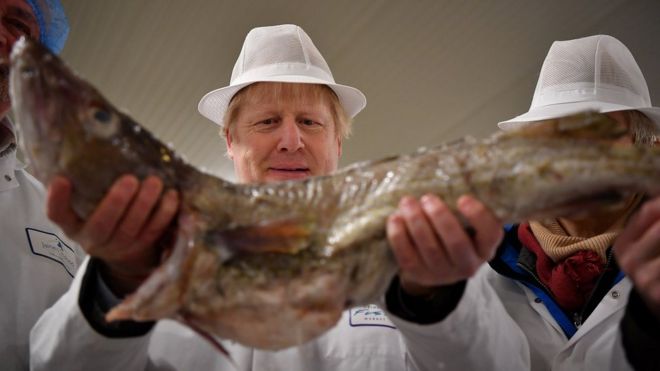
Boris Johnson holding a fishImage copyrightREUTERS
From today's menu which fight would you prefer? The chicken or the fish? Boris Johnson's speech today confirmed what sources in Defra have been telling me for some time. The UK will take US chicken before sacrificing UK fish.
While saying that the UK would not accept any diminution of food standards, in a speech in which he bemoaned the number of American "bashers" he tellingly added that "science would be the guide" in setting standards.
That is precisely the language US trade officials have used when discussing their use of anti-bacterial treatment of chicken and their approach to US-UK trade talks.
Most scientists say there is nothing inherently wrong with chlorinated chicken - as Boris Johnson quipped, Americans appear well nourished and most people don't come back from the US complaining.
The objection is that chlorination is deemed necessary/desirable to combat the greater risk of contamination due to overcrowding and longer transport distances. The PM said he would encourage the US to adopt higher animal welfare standards.
There was a much harder line on fish. More fish for UK vessels from UK waters is a non-negotiable red line, according to Defra sources. British fishing grounds were "first and foremost for British boats", said Mr Johnson.
That means less of the catch for French and Dutch boats. The political declaration hopes that a deal on fisheries can be concluded by the end of June, so this will be an early flashpoint in negotiations.
As Boris Johnson and Michel Barnier dug their trenches today, Mr Barnier marked out his territory pretty much as advertised in the political declaration - the bit of the Brexit divorce bill which dealt with future arrangements.
Boris Johnson moved quite a long way from what the UK originally signed up to. Article 17 of the political declaration said the EU and UK signed up to "ensuring a level playing field for open and fair competition". That clearly means something different to Boris Johnson than it does to Mr Barnier.
For Mr Barnier it means adopting the same rules and regulations on state aid, social and employment standards, environment and tax matters. Boris Johnson binned that idea today - emphatically saying the idea that the UK should be expected to follow EU rules was as unacceptable to the UK as the EU would find it having to adhere to UK rules.
The UK would like to adopt a Canada-style approach - where tariffs on goods are abolished and yet both party remains largely able to set their own standards and pursue their own trade policies.
The EU has made it pretty clear that what is appropriate for Canada (thousands of miles away, with quite a small trading relationship with EU) is not appropriate for a country that is on the EU's doorstep doing hundreds of billions' worth of two-way trade every year.
Oh well, never mind, says Mr Johnson - we'll do an "Australia-type deal" with the EU. To be clear - Australia is also a long way away and does not even have a trade deal with the EU. It is essentially a no-deal relationship with a few extra agreements on the side.
Businesses have reacted with cautious pessimism to these opening exchanges - meaning they don't like the apparent distance between the trenches dug today, but hope they are just opening positions.

Thursday, February 6, 2020

Reuters News - China to halve tariffs on some U.S. imports as virus risks grow

BEIJING (Reuters) - China on Thursday said it would halve additional tariffs levied against 1,717 U.S. goods last year, following the signing of a Phase 1 deal that brought a truce to a bruising trade war between the world’s two largest economies.
While the announcement reciprocates the U.S. commitment under the deal, it is also seen by analysts as a move by Beijing to boost confidence amid a virus outbreak that has disrupted businesses and hit investor sentiment.
Casting doubts over the immediate outlook, however, was the prospect raised in a local media report that Beijing could invoke a disaster-related clause in the trade agreement, which might allow it to avoid repercussions even if it cannot fully meet the targeted purchases of U.S. goods and services for 2020.
China’s finance ministry said in a statement that from 0501 GMT on Feb. 14, additional tariffs levied on some goods will be cut to 5% from 10% and others lowered to 2.5% from 5%.
The ministry did not state the value of the goods affected by the decision, but the products benefiting from the new rule are part of the $75 billion of goods that China announced last year that it would impose 5% to 10% tariffs on, which came into effect on Sept. 1.
In a separate statement, the finance ministry said the tariffs reduction corresponds with the those announced by the United States on Chinese goods, which were also scheduled for Feb. 14.
Further adjustments would depend on the development of the bilateral economic and trade situation, the ministry said.
The reductions will cut tariffs on soybeans from 30% to 27.5%, although some traders say the impact could be limited as the 25% tariffs remains in place. Duties on crude oil will fall to 2.5% from 5% that was imposed in September.
The remaining tariffs were scheduled to kick in Dec. 15 but were suspended due to the interim trade deal.
“Any move to de-escalate is always good. Especially, when the market is overwhelmed by the news about virus, good news about tariff is refreshing,” said Tommy Xie, head of Greater China research at OCBC Bank in Singapore.
“The announcement shows China’s commitment to implement the phase one trade deal despite the disruptions from the recent virus outbreak,” said Xie.
The news was positive for financial markets and comes as Beijing seeks to shore up investor and business confidence in China as a virus outbreak casts deep uncertainty over the economic outlook.
The yuan hit its highest in two weeks, while Asian stocks and Wall Street futures also rallied after the announcement.
China’s finance ministry said it hopes both sides can abide by the trade deal and implement it to boost market confidence, push bilateral trade development and aid global economic growth.

POTENTIAL DELAYS

While the proposed tariff cuts point to clear progress in Sino-U.S. trade ties, the virus outbreak has cast doubt over just how soon the Phase 1 deal could help the China’s slowing economy.
China’s Global Times on Thursday reported Beijing is considering using a disaster-related clause in the Phase 1 deal due to the coronavirus outbreak, citing an unnamed Chinese trade expert close to the government.
The Phase 1 deal text contains a disaster clause that allows for implementation delays in the event of “natural disaster or other unforeseeable event”.
U.S. Agriculture Secretary Sonny Perdue on Wednesday warned the United States would have to be tolerant if the fast-spreading coronavirus impaired China’s ability to increase purchases of U.S. farm products under the signed trade deal.
Chinese foreign ministry spokeswoman Hua Chunying, when asked about the Global Times report at a daily briefing on Thursday, referred the matter to the relevant departments.
Some analysts had said following the trade deal that China may need to roll back some of the tariffs on U.S. goods such as soybeans and crude oil in order to meet its purchasing commitments. Other analysts also noted such moves are expected to cushion faltering growth at home.
“Under the phase 1 deal, China has to meet a tough target to increase U.S. import by $100 billion this year, so a measure like this was necessary and expected,” said Tomo-o Kinoshita, global market strategist at Invesco Asset Management.
“But at the same time, that they did this now points to their desire to support Chinese companies as the coronavirus epidemic will obviously deal a huge blow to China’s growth,” he added.
Reporting by Se Young Lee, Lusha Zhang, Yawen Chen, Winni Zhou, Hallie Gu, Dominique Patton and Gabriel Crossley; Additional reporting by Hideyuki Sano in Tokyo; Editing by Himani Sarkar and Sam Holmes

Wednesday, February 5, 2020

BBC News - Petrol and diesel car sales ban brought forward to 2035

A ban on selling new petrol, diesel or hybrid cars in the UK will be brought forward from 2040 to 2035 at the latest, under government plans.
The change comes after experts said 2040 would be too late if the UK wants to achieve its target of emitting virtually zero carbon by 2050.
Boris Johnson unveiled the policy as part of a launch event for a United Nations climate summit in November.
He said 2020 would be a "defining year of climate action" for the planet.
The summit, known as COP26, is being hosted in Glasgow. It is an annual UN-led gathering set up to assess progress on tackling climate change.
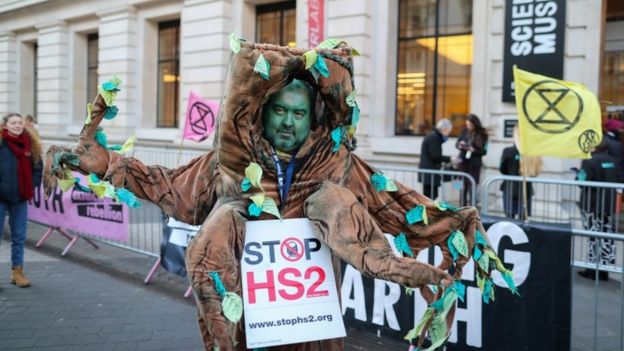
Sir David Attenborough said at the launch event at London's Science Museum that he was looking forward to COP26 and found it "encouraging" that the UK government was launching a "year of climate action".
"The longer we leave it... the worse it is going to get," he said.
"So now is the moment. It is up to us to organise the nations of the world to do something about it."
ProtesterImage copyrightREUTERS/ANTONIO BRONIC
Image captionCampaign group Extinction Rebellion held a protest outside London's Science Museum to coincide with the event
In a statement made ahead of the launch, Mr Johnson said the ban on selling new petrol and diesel cars would come even earlier than 2035, if possible.
Hybrid vehicles are also now being included in the proposals, which were originally announced in July 2017.
People will only be able to buy electric or hydrogen cars and vans, once the ban comes into effect.
The change in plans, which will be subject to a consultation, comes after experts warned the previous target date of 2040 would still leave old conventional cars on the roads following the clean-up date of 2050.
The Scottish government does not have the power to ban new petrol and diesel cars but has already pledged to "phase out the need" for them by 2032 with measures such as an expansion of the charging network for electric cars.
Mr Johnson said the 2050 pledge was necessary because the UK's "historic emissions" meant "we have a responsibility to our planet to lead in this way".
The announcement comes as COP26's former president Claire O’Neill, who was sacked on Friday, wrote a bitter letter accusing Mr Johnson of failing to support her work.
The prime minister's official spokesperson said Downing Street had "no comment" to make on the letter, but thanked Mrs O'Neill for her work towards the conference.
He said her replacement would be a "ministerial post" with details set out "in due course."
Mr Johnson did not answer the BBC's David Shukman's questions about the row.
Mr Johnson said: “Hosting COP26 is an important opportunity for the UK and nations across the globe to step up in the fight against climate change.
“As we set out our plans to hit our ambitious 2050 net zero target across this year, so we shall urge others to join us in pledging net zero emissions.
“There can be no greater responsibility than protecting our planet, and no mission that a global Britain is prouder to serve."
At the Science Museum the prime minister added that a "catastrophic period of global addiction" to hydrocarbons had led to the planet being "swaddled in a tea cosy" of carbon dioxide.
But Green Party MP Caroline Lucas said on Twitter: "Carbon emissions are not 'swaddling the planet like a tea cosy'. They are behind wildfires in Australia, soaring temperature records and the broken lives of those least responsible. The PM needs to understand that - and act."
Friends of the Earth's Mike Childs said the government was "right" to bring forward the ban, but that 2030 would be better than 2035.
“A new 2035 target will still leave the UK in the slow-lane of the electric car revolution and meantime allow more greenhouse gases to spew into the atmosphere," he said.
He said the government could show "real leadership" ahead of COP26 by reversing plans to develop "climate-wrecking roads and runways".
AA president Edmund King said: "Drivers support measures to clean up air quality and reduce CO2 emissions but these stretched targets are incredibly challenging."
The chief executive of the society of motor manufacturers and traders (SMMT) accused the government of "moving the goalposts".
"With current demand for this still expensive technology still just a fraction of sales, it's clear that accelerating an already very challenging ambition will take more than industry investment," Mike Hawes said.
He said the government's plans must safeguard industry and jobs, as well as ensuring current sales of low emission vehicles were not undermined.
Meanwhile Mrs O’Neill accused Mr Johnson of promising money and people to support her work, but failing to deliver either.
Cabinet minister Michael Gove said Mrs O'Neill was a "close friend" but that he disagreed with her comments.
He told BBC Radio 5 Live Mr Johnson described his own political outlook as "that of a green Tory".
Mrs O'Neill said her "absolute desire for action has not been comfortable for some", adding that this was "not about me" or Mr Johnson - but about working towards "rapid decarbonisation".
She said at COP26 the UK must "absolutely double down on taking our great leadership and ambitions in this space, and really energising the world as to why this is a huge opportunity".

Tuesday, February 4, 2020

BBC News - UK aviation industry vows net zero carbon by 2050


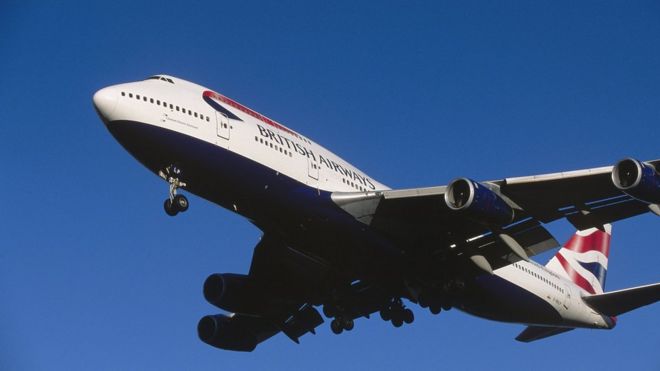
jetImage copyrightGETTY IMAGES

The UK's aviation industry is promising to reduce its net carbon emissions to zero by 2050.
Cleaner engines, new fuels and planting trees will all help, according to the industry group Sustainable Aviation.
The plan will mean airlines can cut pollution even as passenger numbers grow by an expected 70%, it said.
But campaigners say the only way to cut airline pollution is by reducing air travel and cancelling new airports and runways.
"We need to restrict flying," said Muna Suleiman, from Friends of the Earth. "We can't have airport expansion at the same time."

'Crisis'

Rail travel and buses are greener alternatives and taxes should be applied to frequent fliers, she said.
Biofuels, which Sustainable Aviation say will be part of the industry's plan, still pollute, Ms Suleiman added. "The crisis is here and now."
The aviation sector is under increasing pressure to come up with a plan to cut emissions, especially as it has no commercial comparator yet to the electric car, which is seen as the auto industry's hope for cutting emissions.
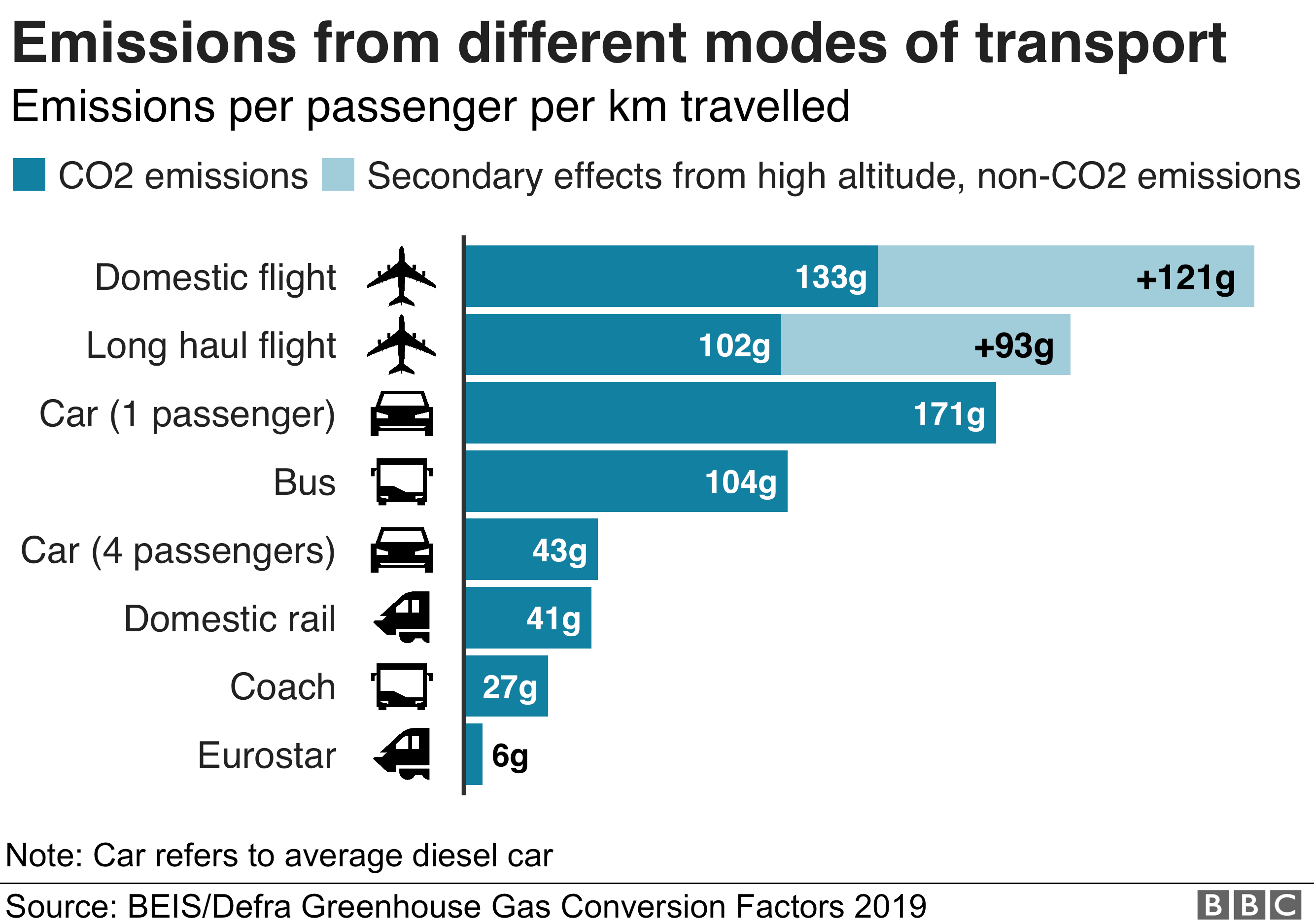
While other forms of transport produce more carbon, individual journeys on planes produce large amounts of CO2.
Sustainable Aviation says the UK industry can reduce its emissions of CO2 from 30 million tonnes a year to zero, without restricting growth.

Chart showing emissions from different modes of transport

An economy-class return flight from London to New York emits an estimated 0.67 tonnes of CO2 per passenger, according to the calculator from the UN's civil aviation body, the International Civil Aviation Organization (ICAO).
That is equivalent to 11% of the average annual emissions for someone in the UK or about the same as all of those caused by someone living in Ghana over a year.
US firm Wright Electric said last week it has started electric engine development for a 186-seater plane, and hopes to begin test flights in 2023.
British Airways is investing in a project to make fuel from rubbish.

'Difficult sector'

"We are going to have to do this through many projects," Alex Cruz, chief executive of British Airways, told the BBC.
"Biofuels will give us a greener alternative and we are attracted by that," he said, while conceding that they will still produce carbon dioxide and that they are expensive today.
"We do believe we will reach a point where the price will be compatible with the rest of fuel prices."
BA will also retire old planes, with the double-decker Boeing 747 being phased out in 2024.
Other plans include planting trees - so-called carbon offsetting - and investing in renewable power sources, said Matt Gorman, a council member of Sustainable Aviation.
"Aviation is one of the more difficult sectors to decarbonise but we are absolutely confident it can be done," said Mr Gorman. "We have to do it"
Sustainable Aviation's members include Heathrow Airport, British Airways, easyJet, Rolls Royce, Airbus and air traffic controller Nats.

Presentational grey line
Analysis box by Theo Leggett, business correspondent

The aviation sector has a problem. On one level, it is extremely successful. Passenger numbers in the UK are higher than they've ever been, and massive growth is expected worldwide over the next couple of decades.
More passengers means more planes, and all else being equal that means an awful lot more emissions. The sector only accounts for about 2.5% of global CO2 output at the moment, but the obvious risk is that share could rise significantly.
You don't have to be Greta Thunberg to realise where that could lead. There's a risk that faced with growing public pressure to act on climate change, regulators could start to clamp down on the sector in a meaningful way - and that could hit growth.
So here in the UK, businesses are taking pre-emptive action. Action they claim will reduce emissions to zero without curbing growth.
So how effective will the plans be? Boeing and Airbus are already selling a new generation of aircraft that are much more efficient than their predecessors, and it's fair to say that there are plenty of benefits to be gained from investing in new technology.
But the value of "market-based measures" such as carbon offsets is harder to calculate and hotly debated. People within the industry claim the projects they support are carefully chosen and reap real benefits.
Climate campaigners say that's greenwash - and they'd rather we simply decided to fly a lot less.

Monday, February 3, 2020

Reuters News - China seeks to boost economy as first virus death reported outside its borders

BEIJING/MANILA (Reuters) - The first death from the coronavirus outside of China was reported on Sunday and the Beijing government took steps to shore up an economy hit by travel curbs and business shut-downs because of the epidemic.
A 44-year-old Chinese man from the city of Wuhan in Hubei province, the epicenter of the epidemic, traveled to the Philippines and died there on Saturday, the Philippines’ Department of Health said.
The vice governor of China’s Hubei province, Xiao Juhua, said the virus outbreak was still “severe and complicated”.
A total of 304 people have died in China, the National Health Commission said on Sunday. Infections in China jumped to 14,380 as of Saturday, it said.
At least another 171 cases have been reported in more than two dozen other countries and regions, including the United States, Japan, Thailand, Hong Kong and Britain.
Beijing is facing mounting isolation as countries introduce travel restrictions, airlines suspend flights and governments evacuate their citizens, risking worsening a slowdown in the world’s second-largest economy.
China’s central bank said it would inject a hefty 1.2 trillion yuan ($173.8 billion) worth of liquidity into the markets via reverse repo operations on Monday as the country prepares to reopen its stock markets after an extended Lunar New Year holiday.
The government also said it would help firms that produce vital goods resume work as soon as possible, state broadcaster CCTV reported, citing a meeting chaired by Chinese Premier Li Keqiang.
Hong Kong Financial Secretary Paul Chan said the risk of further contraction in the region’s economy, which was buffeted by anti-government protests last year, has increased due to the epidemic.
Catering, retail, tourism and consumer sectors, which have been hit in the last six months, would “fall into a deeper winter”, Chan said.
In Beijing, some malls stayed open during the extended holiday but staff wearing surgical masks stood outside shops offering to take customers’ temperatures. Many other stores and cafes in the capital and other cities chose to close.
“We can’t work and have no income. I would rather work than stay at home and do nothing,” said 32-year-old restaurant worker Wu Caixia in Beijing.
Some meal deliveries in Shanghai and Beijing have started to arrive with a note showing the temperatures of the workers that prepared, packaged and delivered the food - to reassure customers they are not sick - according to residents and social media postings.
China Evergrande Group, the nation’s third-largest property developer, said in an internal note it would extend its Lunar New Year holiday to Feb. 16, and suspend construction work at all of its 1,246 sites until Feb. 20.
OPEC and non-OPEC’s Joint Technical Committee (JTC) has scheduled a meeting over Tuesday and Wednesday in Vienna to assess the impact of the virus on oil demand, OPEC+ sources told Reuters.

TRAVEL BANS, EVACUATIONS

Authorities have effectively quarantined Wuhan, sealing off roads and shutting down public transport.
The city - where the virus is thought to have emerged late last year in a market illegally trading wildlife - was about to open two new hospitals for virus patients, state broadcaster CCTV and Xinhua news agency reported. One of the facilities was built in eight days.
The virus has disrupted a string of sporting events across China. Organizers of the all-electric Formula E series said on Sunday they had abandoned plans for a race in the city of Sanya next month.
The Chinese data on the numbers of infections and deaths suggests the new coronavirus is less deadly than the 2002-03 outbreak of Severe Acute Respiratory Syndrome (SARS), which killed nearly 800 people of the some 8,000 it infected, although such numbers can evolve rapidly.
The World Health Organization has declared the outbreak a public health emergency of international concern, but said global trade and travel restrictions are not needed.
However, a string of countries have ramped up border controls. Singapore and the United States announced measures on Friday to ban foreign nationals who have recently been to China from entering their territories, and Australia followed suit on Saturday.
Russia will start evacuating Russian citizens on Monday and Tuesday, Interfax and TASS news agencies reported.
The Philippines expanded its travel ban to include all foreigners coming from China, widening an earlier restriction that covered only those from Hubei province. Indonesia also barred visitors who have been in China for 14 days.
More than 100 Germans and family members landed in Frankfurt on Saturday after being evacuated from Wuhan. Two of them had the virus, adding to the eight cases in Germany already in quarantine.
About 250 Indonesians were also evacuated from Hubei.
Japan plans to send another chartered plane mid-week or later to bring back Japanese nationals who are still in Hubei, its foreign ministry said on Sunday.
Japan has barred foreigners who have been in Hubei from entering the country. South Korea will impose a similar entry ban from Tuesday, Prime Minister Chung Sye-kyun said.
In Washington, national security adviser Robert O’Brien said the United States has offered to send U.S. medical and other health professionals but Beijing had not yet accepted.
For a graphic comparing coronavirus outbreaks, see tmsnrt.rs/2GK6YVK
Reporting by Lusha Zhang and Ryan Woo; Additional reporting by Yilei Sun, Leng Cheng and Brenda Goh in Shanghai, Martin Pollard in Jiujiang, Roxanne Liu and Pei Li in Beijing and Clare Jim in Hong Kong and Agustinus Beo Da Costa and Gayatri Suroyo in Jakarta; Writing by Lincoln Feast and Andrew Heavens; Editing by Christopher Cushing and Angus MacSwan