Tuesday, March 24, 2020

BBC News - Coronavirus: UK interest rates cut to lowest level ever

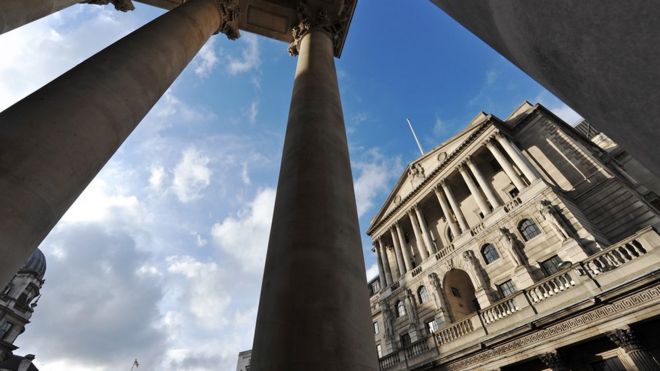
Bank of England
The Bank of England has cut interest rates again in an emergency move as it tries to support the UK economy in the face of the coronavirus pandemic.
It is the second cut in interest rates in just over a week, bringing them down to 0.1% from 0.25%.
Interest rates are now at the lowest ever in the Bank's 325-year history.
The Bank said it would also increase its holdings of UK government and corporate bonds by £200bn with an effort to lower the cost of borrowing.
It's a dramatic move by Andrew Bailey, who only took over from Mark Carney as Bank of England governor on Monday.
Last week, the Bank announced a 0.5% cut in rates to 0.25% and a package of measures to help businesses and individuals cope with the economic damage caused by the virus.
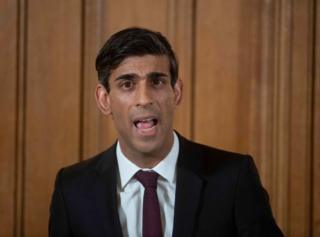
The move coincided with additional measures announced by Chancellor Rishi Sunak in the Budget,
However, the Bank said the measures it had taken so far were not going to be enough, and believed "a further package of measures was warranted".
"The spread of Covid-19 and the measures being taken to contain the virus will result in an economic shock that could be sharp and large, but should be temporary," it added.
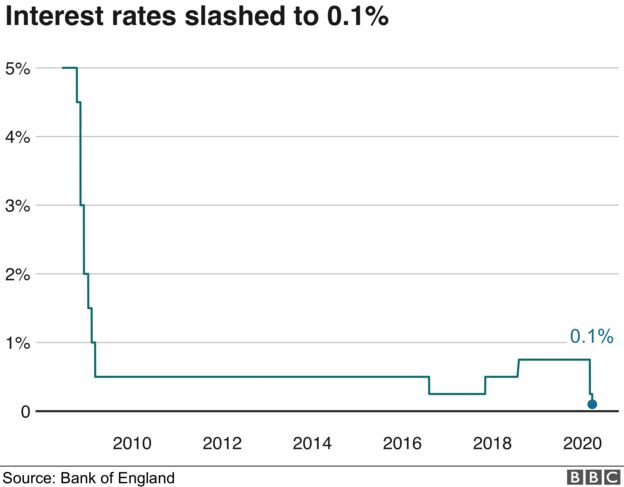
interest rates
The move comes as international investors are trying to secure more cash, in particular dollars. This means they're ditching assets such as UK government gilts, which are the "IOU" notes the government hands over to private investors willing to lend it money.
As the gilts are sold, the price drops and the yield - the effective interest rate compared to the price - rises. What that means is the cost of borrowing to private investors as well as to the government rises - just when the Bank of England wants it to fall and the government is about to borrow huge sums.
The Bank of England's plan to buy £200bn more bonds is aimed at fighting that effect.

'Lowest possible'

The fresh rate cut takes interest rates to the lowest they can feasibly go, said Jeremy Thomson-Cook, chief economist at payments company Equals Group.
"Lower rates and additional quantitative easing can keep markets satisfied and borrowing costs for both businesses and the government down but unless money is forced into the hands of small businesses soon, then it will be for nothing; they are the ones laying off staff due to a liquidity shock," he added.
Karen Ward, chief European market strategist at JPMorgan Asset Management, said: The support to the economy and health system will require vastly higher government borrowing. The central bank showing willing to buy government debt will ensure the market can absorb this additional issuance without undue stress."

Presentational grey line
Analysis box by Faisal Islam, economics editor
The Bank of England Governor has said today's second emergency rate cut in just over a week occurred after financial markets became "borderline disorderly", with fears about coronavirus leading to a rush into the US dollar away from sterling and lending to the UK government.
"We've seen very sharp moves in financial markets in the last few days, which is the pace of which frankly, was increasing very rapidly. And we were moving into conditions that were if not disorderly, frankly, bordering on disorderly let me put it that way," Andrew Bailey told journalists.
The Bank of England Monetary Policy Committee had an emergency call this morning so that rate cuts and further "quantitative easing" could be agreed and announced, with the Bank needing to be "on the offensive" because: "We can't wait for the hard economic data it will be too late by then", he said.
He said he had seen a range of private forecasts about the economic impact of the current crisis: "We don't have a precise forecast - every picture we look at has a very sharp V in it".
The governor also partly blamed rumours that appeared to emerge from Westminster of a shutdown to London for adding to the volatility in markets that saw sterling fall 5% against the dollar. Such a shutdown would be likely to impact on the functioning of the City.
He said: "I do have to say that, you know, there were rumours going on the market this time yesterday that there was going to be a lockdown in London. And I'd observe that did cause market prices to start moving around at that point. But I think the government has been clear, and it's clear that that is not the intention at the moment."
The governor also said that he had already intervened to try to get loans to businesses to keep people in employment, and he said the Bank had its thinking cap on as regards further monetary boosts it can make.
He reiterated his lack of enthusiasm for zero or negative interest rates because of their impact on the banking system's capacity to lend, and suggested that was the reason for limiting the cut to an unusual 0.15% (rather than the usual 0.25% or 0.5%) to a record low of 0.1%.
The key Monetary Policy Committee will meet again next week.

Monday, March 23, 2020

BBC News - Virus: Will government rescue package be enough for firms?

Chancellor of the Exchequer Rishi Sunak speaks during a daily press conference at 10 Downing Street.Image copyrightGETTY IMAGES
The government has announced the biggest intervention in private sector business since the Second World War to help fight the economic impact of coronavirus.
The questions it will try to answer later on Monday are: "How will it work? How do I get the money? What will it mean for my business and my staff?"
The British Business Bank will act as intermediary between the Treasury and the High Street banks who will be at the front line of getting it to customers.
At £350bn, the promised supply of financial support is enormous. But details on how the loan guarantees and grants announced in the Budget will be distributed in practice need to be clarified urgently.
Some of this is not straightforward so please bear with me.

Here's what we know

Firms with a turnover of up to £45m a year will theoretically be able to get a loan - interest free for 12 months of up to £5m with the government guaranteeing 80% of that loan. An enormous intervention welcomed by business.
However, I say theoretically because the government will only offer this guarantee if it thinks it is a loan that the business would be unable to get without state help. Erm, how do we police that?
Question: How do we know that the banks wouldn't have lent the money anyway - and are thus getting an 80% guarantee from taxpayers?
Answer: No-one cares right now. Lending industry bosses admit this is a potential problem but the urgency of the situation means we can't be too squeamish about potential abuses of the system. We can retrospectively punish bad behaviour where necessary.
Remember, the government guarantee is to the bank for taking the risk. The borrower will still be 100% liable for the debt.
Any loan of over £250k will need to be secured by company assets. If you don't pay it back, the bank gets to keep your company car, your factory, your equipment, your tools, but importantly NOT your principal primary residence.
Question: How many businesses will feel like taking on more secured debt at a time when no one can predict and few expect a return to business as normal anytime soon?
Answer - anecdotally - not many. £330bn of loan guarantees is a lot of supply but there may not be much demand.

Companies falling between the cracks

In terms of sheer size, this support package is a howitzer, but if it doesn't hit the target it's of limited use. There are two programmes on offer.
The loan guarantee scheme for companies with turnover up to £45m and a government promise to buy unlimited amounts of short-term IOUs from companies that are investment grade. That is a technical term that applies to firms with a high credit rating.
There are thousands of businesses that fall between the two stools. Just about every High Street chain wouldn't qualify for either. Next, generally considered the best-run retail business in the UK, scrapes over the hurdle. M&S, Boots, WH Smith, Pret a Manger and countless others would not.
The UK hospitality and retail sector employs 3.2 million people, more than any other sector in the economy. Most of the industry won't be eligible. While firms in this space will get 80% of their staff wages reimbursed (backdated to 1 March so staff laid off days before that announcement can be taken back onto payroll and still qualify), that still means cost going out, with little income coming in and no access to the big government pots.
The BBC also understands that while the loan guarantee scheme will cover 80% of any bank's losses on any individual loan - it will only guarantee a maximum of 60% of a bank's total loans under the scheme. So in fact the government is offering to share 60% of a bank's total losses rather than 80%. A materially different calculation.

Rent woes

Here is the final question for lenders. At what point does a health emergency and its pursuant severe economic downturn turn into another full-blown financial crisis?
Most commercial businesses I speak to have little intention or ability to pay a quarterly rent bill due next week. If they don't pay, those losses land on the landlords who have already seen huge reductions in rents, with many having massive debts of their own. Those debts then become bad loans to the banking system.
New international accounting rules (called IFRS 9 if you are interested) require firms to record their best guess of future total losses on bad loans upfront and account for it immediately, rather than drip feed them over years through their accounts. Given the gravity of the situation, that could mean a massive hole being ripped in company finances rendering some firms technically insolvent.
The international banking and accounting firms are aware of this - as are the regulators and there is huge pressure for the rules to be relaxed.
There are so many other questions. How do you get assistance to the self-employed - government-backed loans or grants based on recent trading history? Is there any assistance available to gig economy/zero hours workers above and beyond a benefits system that is far less generous than in other European countries?
To be fair to government and the civil servants who, like NHS staff, supermarket workers, taxi and delivery drivers and others, are working round the clock under incredibly demanding circumstances - this is an impossible situation to "get ahead of". Policies made on the hoof at such pace are bound to have holes in them.
The challenge will be to fill them nearly as quickly as they become apparent. It is a grim, grave and gruelling task.

Wednesday, March 18, 2020

Reuters News - Global powers throw cash at spiraling coronavirus crisis

WASHINGTON/LONDON (Reuters) - The world’s richest nations prepared more costly measures on Tuesday to combat the global fallout of the coronavirus that has infected tens of thousands of people, triggered social restrictions unseen since World War Two and sent economies spinning toward recession.
With the highly contagious respiratory disease that originated in China racing across the world to infect more than 190,000 people, governments on every continent have implemented draconian containment measures from halting travel to stopping sports and religious gatherings.
While the main aim is to avoid deaths - currently at over 7,500 - global powers were also focusing their attention on how to limit the inevitably devastating economic impact.
In the world’s biggest economy, the United States Senate prepared to consider a multibillion-dollar emergency spending bill to offer relief from the pandemic, but the Trump administration pressed for $850 billion more.
Airlines are among the worst-hit sector, with U.S. carriers seeking at least $50 billion in grants and loans to stay afloat as passenger numbers evaporate.
Britain, which has told people to avoid pubs, clubs, restaurants, cinemas and theaters, unveiled a 330 billion pounds ($400 billion) rescue package for businesses threatened with collapse.
Budget forecasters said the scale of borrowing needed might resemble the vast amount of debt taken on during the 1939-1945 war against Nazi Germany.
“Now is not a time to be squeamish about public sector debt,” Robert Chote, head of the Office for Budget Responsibility, told lawmakers.

QUEEN ELIZABETH TO MOVE

Underlining how the crisis has shaken even the most august of institutions, Britain’s Church of England suspended services while 93-year-old Queen Elizabeth was to move from Buckingham Place to Windsor Castle outside London.
France is to pump 45 billion euros ($50 billion) of crisis measures into the economy to help companies and workers, with output expected to contract 1% this year.
“I have always defended financial rigor in peacetime so that France does not have to skimp on its budget in times of war,” Budget Minister Gerald Darmanin was quoted as saying by financial daily Les Echos.
The European Union (EU) eased its rules to allow companies to receive state grants up to 500,000 euros ($551,000) or guarantees on bank loans to ensure liquidity.
Such promised cash splurges did not, however, enable world share markets or oil prices to shake off their coronavirus nightmare after Wall Street on Monday saw its worst rout since the Black Monday crash of 1987.
The Philippines was the first country to close markets, while Europe - now the epicenter of the pandemic - saw airline and travel stocks plunge another 7%.
With various central banks around the world having cut interest rates to try and help beleaguered economies, investors fret that they may have used up their policy ammunition early with far longer to go before the global health crisis is curbed.
A global recession beckons, with parallels to the 2008 financial crisis, economists say, though many predict a quick bounce back once the outbreak clears.

EUROS, COPA AMERICA OFF

Sports events continued to fall by the wayside.
Soccer’s 2020 Euros were postponed for a year, while South America’s Copa America was also put back to 2021.
Pakistan suspended its cricket Super League after an overseas player developed symptoms of coronavirus, the Kentucky Derby horse race was postponed from May until September, and there was continued speculation over the fate of the Olympics in Japan.
Around the world, bad news was relentless.
Brazil recorded its first coronavirus death while Peru put its military on the streets.
Israel’s government authorized the Shin Bet security service to use cellphone-monitoring technology usually used for anti-terrorism to retrace movements of infected people.
Iran temporarily freed about 85,000 prisoners.
Daily life was turned upside down for millions worldwide.
“Everything has ground to a halt,” said Tiziana Marra, a wedding planner in Europe’s worst-hit nation Italy, where the epidemic has created havoc for nuptials.
“It is as if people are preparing for war,” said an astonished shopkeeper in Rwanda, as panicked consumers clamored to stock up on rice, cooking oil, sugar and flour.
“Prices have gone up - but still they buy.”
Graphic - Interactive graphic tracking global spread of coronavirus: here
Reporting by David Shepardson in Washington and David Milliken in London; Additional reporting by Doina Chiacu, Maria Caspani and Susan Heavey in Washington; Andrew MacAskill in London; Leigh Thomas, Geert De Clercq, Benoit Van Overstraeten and Caroline Pailliez in Paris; Philip Puellella and Noor Zainab Hussain in Rome; Clement Uwiringiyimana in Kigali; Catherine Cadell in Beijing; Writing by Andrew Cawthorne and Lisa Shumaker; Editing by Giles Elgood and Bill Berkrot

Tuesday, March 17, 2020

BBC News - Rate cuts: US goes to almost zero and launches huge stimulus programme

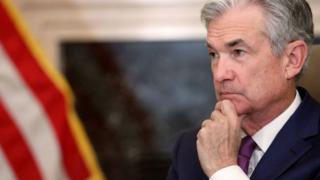
Fed Chair Jerome PowellImage copyrightGETTY IMAGES
Image captionFederal Reserve Chairman Jerome Powell held a media conference on Sunday
The US has cut interest rates to almost zero and launched a $700bn stimulus programme in a bid to protect the economy from the effect of coronavirus.
It is part of a co-ordinated action announced on Sunday in the UK, Japan, eurozone, Canada, and Switzerland.
In a news conference Fed chairman Jerome Powell said the pandemic was having a "profound" impact on the economy.
US President Donald Trump said the emergency action "makes me very happy".
The Fed has cut rates to a target range of 0% to 0.25%, and said it would it begin buying bonds - quantitative easing - a move that pumps money directly into the economy.
The central bank had already cut interest rates by half a percentage point after an emergency meeting on 3 March. That had been the first rate cut outside of a regularly scheduled policy meeting since the financial crisis in 2008.
Stock markets have plunged in recent days amid fears that economic paralysis will wipe out corporate profits and spark a global recession.
But early indications suggest the Fed's move may not shore up financial markets. US stock market futures, which anticipate the direction of shares when trading begins, were almost 4% down.
Speaking after the emergency meeting, which was held in place of the Fed's regular rates setting decision scheduled for this week, Mr Powell warned that although it was clear the outbreak was already having a major impact on the economy it was still too early to tell just how far-reaching the effects will be.
"The economic outlook is evolving on a daily basis and it is depending on the spread of the virus... that is not something that is knowable," he said.
As part of Sunday's announcement, the Fed will work with other central banks to increase the availability of dollars for commercial banks.
These so-called currency swap lines were an important tool in maintaining financial stability after the 2008 banking crisis.
"Today's coordinated action by major central banks will improve global liquidity by lowering the price and extending the maximum term of US dollar lending operations," Bank of England Governor Mark Carney said in a joint statement with Andrew Bailey, who succeeds him as BoE chief on Monday.
The Bank of Japan also eased monetary policy by pledging to buy risky assets at double the current pace and announced a new loan programme to extend one-year, zero-rate loans to financial institutions.
Presentational grey line
Analysis box by Faisal Islam, economics editor
The Federal Reserve has now fired most of its remaining big guns to stimulate a US economy facing a serious financial shock from the coronavirus.
Interest rates were slashed by one full percentage point to just above zero, and the bank restarted the pumping of hundreds of billions of dollars into financial markets. Global central banks, including the Bank of England, joined in to ease the flow of dollars around the world.
It was the full crisis toolkit designed to inject confidence into markets that ran riot last week as the outbreak turned into a global pandemic.
While the moves should soothe the financing of US business, they also reflect that the health emergency in the US has become far worse than expected and reveals US authorities are running short of options.
Interest rate cuts are a blunt instrument to deal with a pandemic, and more is expected from Congress and the White House, in particular.
President Trump welcomed the cut, but it was his decision to ban European travel that sparked the latest record share sell off on Thursday.
There is some hope that a video conference call later between leaders of the G7 western industrialised nations, including President Trump and British Prime Minister Boris Johnson, will result in a more coordinated global approach to the virus.
The authorities will be watching markets carefully today, including Mr Bailey, on his first day in the job.
Presentational grey line
Michael Hewson, chief market analyst at UK-based CMC Markets, described the co-ordinated move as throwing "the kitchen sink at the markets. [It] serves to underscore the seriousness of the economic shocks coming our way".
And in the US, Greg McBridge, chief financial analyst at online bank and mortgage firm Bankrate.com, said: "Desperate times call for desperate measures and the Fed is doing just that in an effort to keep credit markets functioning and prevent the type of starving of credit that nearly toppled the global economy into a depression in 2008.
"Reducing interest rates to borrowers will ease the burden of existing debts slightly but is unlikely to spur the usual surge of borrowing as consumers and businesses batten down the hatches for a coming drop off in US economic activity.

Monday, March 16, 2020

Reuters News - Germany tries to halt U.S. interest in firm working on coronavirus vaccine

BERLIN (Reuters) - Berlin is trying to stop Washington from persuading a German company seeking a coronavirus vaccine to move its research to the United States, prompting German politicians to insist no country should have a monopoly on any future vaccine.

German government sources told Reuters on Sunday that the U.S. administration was looking into how it could gain access to a potential vaccine being developed by a German firm, CureVac.
Earlier, the Welt am Sonntag German newspaper reported that U.S. President Donald Trump had offered funds to lure CureVac to the United States, and the German government was making counter-offers to tempt it to stay.
Responding to the report, the U.S. ambassador to Germany, Richard Grenell, wrote on Twitter: “The Welt story was wrong.”
A U.S. official said: “This story is wildly overplayed ... We will continue to talk to any company that claims to be able to help. And any solution found would be shared with the world.”
A German Health Ministry spokeswoman, confirming a quote in the newspaper, said: “The German government is very interested in ensuring that vaccines and active substances against the new coronavirus are also developed in Germany and Europe.”
“In this regard, the government is in intensive exchange with the company CureVac,” she added.
Welt am Sonntag quoted an unidentified German government source as saying Trump was trying to secure the scientists’ work exclusively, and would do anything to get a vaccine for the United States, “but only for the United States.”
German Interior Minister Horst Seehofer told a news conference that the government’s coronavirus crisis committee would discuss the CureVac case on Monday.
CureVac issued a statement on Sunday, in which it said: “The company rejects current rumors of an acquisition”.
CureVac’s main investor Dietmar Hopp said he was not selling and wanted CureVac to develop a coronavirus vaccine to “help people not just regionally but in solidarity across the world.”
“I would be glad if this could be achieved through my long-term investments out of Germany,” he added.

Friday, March 13, 2020

BBC News - Is this the digital future for Bank of England banknotes?

Digital screenImage copyrightGETTY IMAGES
Image captionDigital money would be denominated in pounds, like banknotes
The Bank of England is considering the introduction of electronic banknotes for use by consumers and businesses.
Governor Mark Carney said: "We are in the middle of a revolution in payments," saying the Bank must look into how electronic money could work.
He said this would complement, not replace, paper banknotes while people still wanted physical cash.
But it could open the door to programmable money to integrate with home appliances or the tax system.
Banknotes have been the only way for households to make payments with central bank money for 300 years, a discussion paper published by the Bank says.
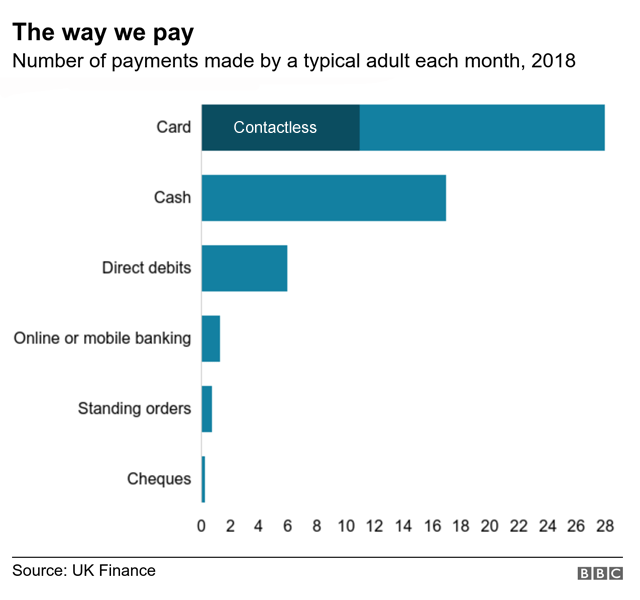
The total value of banknotes in the UK economy was close to an all-time high, but people had been making fewer payments in cash, the Bank said.
Number of payments made by a typical adult in 2018
The governor said fintech firms had begun to offer new forms of money and new ways to pay with it, but it was important to have currency from a trusted central bank.
So, the Bank is considering a Central Bank Digital Currency, which would be denominated in pounds sterling, just like banknotes. So £10 of the digital currency would always be worth the same as a £10 note.
This system would be different from money held digitally in a bank account, or cryptocurrencies. It would be guaranteed by the Bank, rather than a commercial business.
The idea also suggests that consumers would be able to pay for things without all the data about their transactions going to their bank. There would be some anonymity, as there is with cash.
Loading Central Bank Digital Currency would be an electronic version of withdrawing banknotes from an ATM. The Bank stressed this would not replace cash, particularly for those who prefer to use it.
"As long as demand for cash remains, the Bank is committed to meeting this demand," the Bank's discussion paper says.
The currency would also be separate from card payments, meaning it would not be affected by technical failures at Visa, Mastercard, or other payment networks.

Payments of the future

The introduction of a digital currency could lead to "programmable money", when payments could be integrated with appliances at home or tills at the shops.
Tax payments could be routed to HM Revenue and Customs at the point of sale, the Bank said.
Other examples are shares automatically paying dividends directly to shareholders, or electricity meters paying suppliers directly, based on the amount of power used.
It could also help with very small payments at a lower cost than now, allowing payments such as for a few pence each time to read individual news articles, rather than signing up to a monthly subscription.
Other central banks around the world are investigating the option of issuing digital currency. Interested parties are being invited to respond to the Bank of England's discussion by 12 June.