Friday, June 26, 2020

BBC News - Fed acts to keep banks 'prudent' amid virus risks

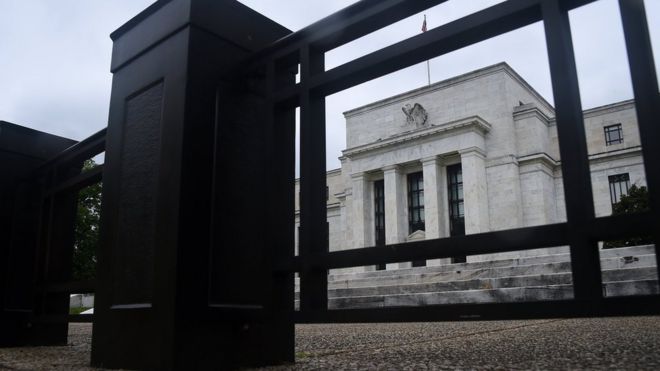
Federal ReserveImage copyrightGETTY IMAGES
The Federal Reserve has warned that America's biggest banks could be hit by losses of up to $700bn (£563.6bn) in a severe downturn due to the pandemic.
The US central bank said it would require firms to keep money on hand to guard against the risks.
The Fed said it was barring share repurchases and limiting dividend payments until at least October.
Although banks have been a source of "strength" so far, officials warned of a "high degree of uncertainty".
"Today's actions...to preserve the high levels of capital in the US banking system are an acknowledgment of both the strength of our largest banks, as well as the high degree of uncertainty we face," said Randal Quarles, the Fed's vice chair for supervision of the Federal Reserve's Board of Governors.
The announcement accompanied the results of the Federal Reserve's latest annual stress tests, which were instituted after the financial crisis. The stress tests are designed to suss out potential weakness in the financial system.
This year, the Fed added an additional analysis based on the current downturn, which was set off when authorities instituted lockdowns to try to slow the spread of coronavirus.
Using a scenario where the pandemic severely impacted the US economy, the Fed looked at how the country's 33 biggest banks would fare if unemployment rates were to climb to 19.5%.
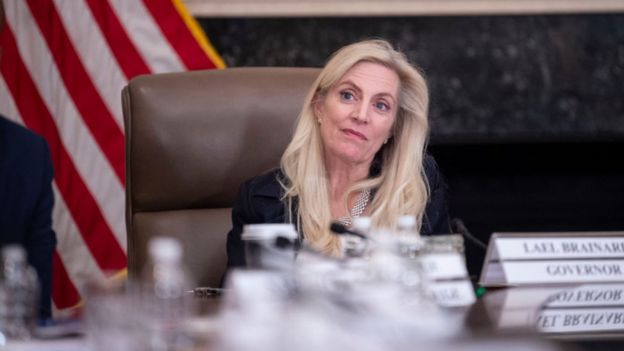
US Federal Reserve Governor Lael BrainardImage copyrightAFP
Image captionFederal Reserve Governor Lael Brainard thinks the Fed has not gone far enough in protecting US banks
That is higher than the record 14.7% unemployment rate the US reported in April - but about the level the Labor Department said was likely if it adjusted for discrepancies in survey data.
The Fed did not say how individual banks fared under the virus scenario, but warned that aggregate losses could reach $700bn.
"The Board is taking action...to require the largest banks to adopt prudent measures to preserve capital in coming months," said Mr Quarles.

Not far enough?

Federal Reserve Governor Lael Brainard thinks that the Fed should have announced further measures given the potential losses at stake, by barring dividend payments altogether, as well as other distributions of capital.
The current shock is already more severe than anything the Fed had anticipated in its stress tests, despite past criticism that the central bank was being unrealistically gloomy, she noted.
"It is clear that recent changes in financial markets and the macroeconomic outlook could have a material impact on banks' risk profiles and financial conditions," she said.
"This action creates a significant risk that banks will need to raise capital or curtail credit at a challenging time."

Wednesday, June 24, 2020

Reuters News - Three U.S. governors to quarantine visitors from states where COVID-19 spiking

NEW YORK (Reuters) - As the number of new coronavirus cases surged in many areas of the United States, New York, New Jersey and Connecticut - once at the epicenter of the outbreak - will require visitors from states with high infection rates to quarantine on arrival.
The announcement on Wednesday came a day after the country recorded the second-largest increase in novel coronavirus cases since the health crisis began in early March. There were nearly 36,000 new infections nationwide on Tuesday, according to a Reuters tally.
States subject to the 14-day quarantine are Alabama, Arkansas, Arizona, Florida, North Carolina, South Carolina, Texas, Washington and Utah, New York Governor Andrew Cuomo said at a briefing.
“This is a smart thing to do,” New Jersey Governor Phil Murphy said via video at a joint news conference in New York City. “We have taken our people, the three of us from these three states, through hell and back, and the last thing we need to do right now is subject our folks to another round.”
While the United States appeared to have curbed the outbreak in May, leading many states to lift restrictions on social and economic activity, the virus is moving into rural areas and other places that it had not initially penetrated deeply.
The virus is also renewing its surge in states that opened up early to ease the devastating effect of the restrictions on local economies.
The New York-New Jersey-Connecticut tri-state area was able to lower its infection rate after locking down much of its economy and moving slowly to reopen.
With little federal guidance and decisions largely left to local officials and businesses, however, the pace of reopening in the rest of the country continues to look like a patchwork.
Florida, one of the first states to reopen, on Wednesday experienced a record increase of more than 5,500 new cases. Oklahoma, which never ordered a statewide lockdown, on Wednesday posted record new cases for the sixth time this month.
On Tuesday, Arizona, California, Mississippi and Nevada had record rises. Texas set an all-time high on Monday.
The surge in cases nationwide on Tuesday was the highest since a record of 36,426 new infections on April 24.

QUARANTINE

The new quarantine order also applies to tri-state residents returning from the targeted states, to be determined by the number of new cases per 100,000 people or the percent testing positive, Cuomo said.
Visitors found violating the order, which takes effect from midnight, could face fines of $1,000 for a first violation and $5,000 for repeat offenses, he said.
Such quarantines are not unprecedented. Hawaii requires visitors from the U.S. mainland to self-quarantine for two weeks. Florida and Texas at one point required people coming in from New York area airports to quarantine for two weeks.
The U.S. Department of Justice has filed its support for a lawsuit challenging Hawaii’s quarantine, saying visitors are being denied rights granted to most island residents.
While some of the increased numbers of cases can be attributed to more testing, the numbers do not correlate.
The average number of tests has risen 7.6% over the last seven days, according to data from The COVID Tracking Project, while the average number of new cases rose 30%.
The percentage of positive tests is also rising.
At least four states are averaging double-digit rates of positive tests for the virus, such as Arizona at 20%. By contrast, New York has been reporting positive test rates of around 1%.
The European Union hopes to reopen borders from July but will review individual nations’ COVID-19 situation fortnightly, according to diplomats and a document laying out criteria that could keep Americans and Russians out.
(Open tmsnrt.rs/2WTOZDR in an external browser for a Reuters interactive)
Reporting by Jonathan Allen and Peter Szekely in New York; Additional reporting by Susan Heavey in Washington; Writing by Sonya Hepinstall; Editing by Lisa Shumaker

Tuesday, June 23, 2020

BBC News - Former chancellor Sajid Javid warns against return to austerity

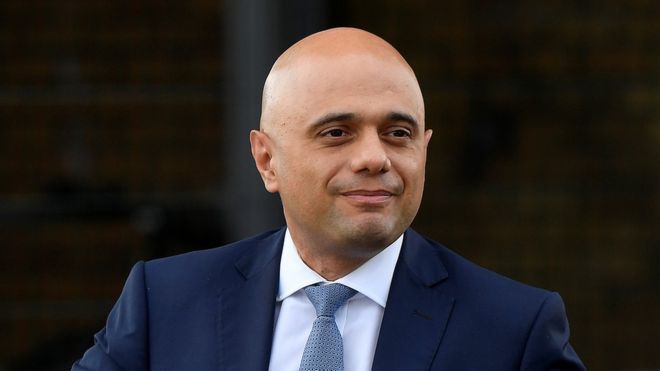
Sajid JavidImage copyrightGETTY IMAGES
Former chancellor Sajid Javid has warned against a return to austerity as the UK economy struggles with the effects of the coronavirus crisis.
In a report by the Centre for Policy Studies, he also called for low taxes on business to aid the UK's recovery.
The conservative think tank, which was co-founded by Margaret Thatcher, said this should be based on "a dynamic private sector and low taxes".
Prime Minister Boris Johnson has said there will be no return to "austerity".
However, Labour has said the government should have offered more generous support during the crisis.
The report by the Centre for Policy Studies said that a quick economic bounce back from the coronavirus crisis is is unlikely.
But it said coronavirus emergency spending measures should be stopped, if possible, by April 2021.
It said that polls suggest the UK is "not ready" to return to austerity measures introduced by former chancellor George Osborne, "necessary though they were".
Instead, the report calls for tax to shift away from profits and incomes and towards reformed property tax and tightening tax reliefs "which unduly favour the wealthy".
National insurance should be given a "significant temporary" reduction to make it cheaper for employers to take on staff.

'Optimistic' hopes

Mr Javid, who resigned from the Treasury in February, said "early hopes of a V-shaped recovery" had "proved optimistic".
He predicted that "some long-term damage to the economy" had become "unavoidable", with as many as 2.5 million people out of work due to the Covid-19 lockdown.
But to speed up the rate of people re-entering employment, Mr Javid argued in the After The Virus report, published on Tuesday, that ministers must make it easier for businesses to hire workers.
"If we want to support and stimulate employment, then axiomatically the best option is to cut the payroll tax - employer's National Insurance," Mr Javid said.
"Tax employment less, and all other things being equal you will end up with more of it."
Other recommendations made in the report include temporarily cutting VAT and bringing forward "shovel ready" infrastructure projects, with Mr Javid arguing that the "only way out of this crisis is growth".
He joins fellow former chancellor Alistair Darling in calling for an emergency VAT cut to boost consumer spending, a move undertaken by the Labour peer after the 2008 financial crisis.
Mr Javid said: "If we want to secure the strongest possible recovery, it's essential that no stone is left unturned."
The Labour Party, in a report in March on the economic effects of coronavirus, criticised the government for acting too slowly and said it should underwrite a bigger proportion of wages for those who lose their jobs.

Monday, June 22, 2020

BBC News - US China cold war 'bigger global threat than virus'

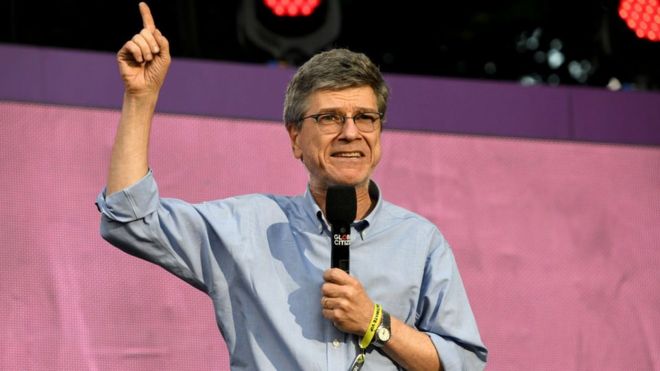
 Jeffrey Sachs
The deepening cold war between the US and China will be a bigger worry for the world than coronavirus, according to influential economist Jeffrey Sachs.
The world is headed for a period of "massive disruption without any leadership" in the aftermath of the pandemic, he told the BBC.
The divide between the two superpowers will exacerbate this, he warned.
The Columbia University professor blamed the US administration for the hostilities between the two countries.
"The US is a force for division, not for cooperation," he told me in an interview with BBC's Asia Business Report.
"It's a force for trying to create a new cold war with China. If this takes hold - if that kind of approach is used, then we won't go back to normal, indeed we will spiral into greater controversy and greater danger in fact."

Tensions grow

Mr Sachs's comments come as tensions between the US and China are continuing to grow on several fronts - not just trade.
This week President Trump signed legislation authorising US sanctions against Chinese officials responsible for the repression of Muslims in Xinjiang province.
And in an interview with the Wall Street Journal President Trump said he believed China might have encouraged the international spread of the virus as a way to destabilise competing economies.
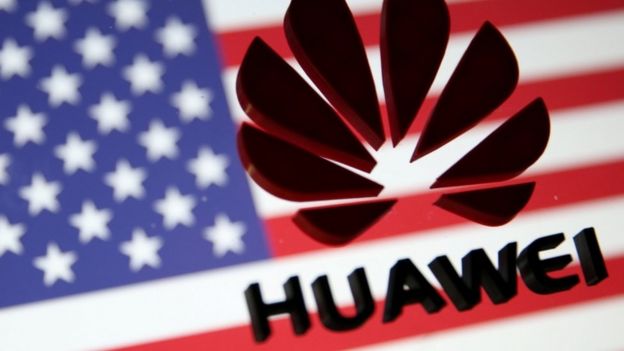
US flag and Huawei logoImage copyrightREUTERS
Image captionThe US has banned Huawei from using US chip technologies but is allowing American firms to work with the firm on 5G standards
The Trump administration has also targeted Chinese companies, in particular Chinese telecoms giant Huawei, which Washington says is being used to help Beijing spy on its customers. China denies this, as does Huawei.
But President Trump's tough stance on China and Huawei may have all been part of a political ploy to get himself re-elected - at least according to a new book by former National Security Advisor John Bolton.
Professor Sachs agrees that targeting Huawei was never simply a security concern.
"The US lost its step on 5G, which is a critical part of the new digital economy. And Huawei was taking a greater and greater share of global markets.
"The US concocted in my opinion, the view that Huawei is a global threat. And has leaned very hard on US allies... to try to break the relations with Huawei," he said.

Tensions flare

The US is not the only country that China has been locked in conflict with.
This week tensions have flared at the India-China border, with at least 20 Indian soldiers killed in some of the worst violence the two sides have seen in almost fifty years.
Meanwhile, China has been actively funding economic projects in Pakistan, Myanmar, Sri Lanka and Nepal - India's closest neighbours - which have rankled fears in Delhi that Beijing is trying to cut off its influence in the region.
Mr Sachs admitted that China's rise is of concern to its neighbours in Asia - especially if it doesn't do more to assuage fears that it is trying to grow in a peaceful and cooperative way.
"Do I believe that China could do more to ease fears which are very real? I do," he told me.
"The big choice frankly is in China's hands. If China is cooperative, if it engages in diplomacy, regional cooperation and multilateralism, in other words - soft power - because it is a very powerful country…. then I think that Asia has an incredibly bright future."

Friday, June 19, 2020

Reuters News - Trump says U.S. will not lock down again amid rising coronavirus cases

WASHINGTON (Reuters) - President Donald Trump said on Wednesday the United States would not close businesses again as several states reported rising numbers of new coronavirus infections.
“We won’t be closing the country again. We won’t have to do that,” Trump said in an interview with Fox News Channel.
Trump’s comments come after White House economic adviser Larry Kudlow and Treasury Secretary Steven Mnuchin both said the United States could not shut down the economy again.
In a call with governors, Vice President Mike Pence encouraged them to repeat the administration’s claim that increased testing accounts for the spike in numbers, the New York Times has reported.
The paper’s analysis found that positive cases outstripped the average number of administered tests in at least 14 states.
Restaurants, gyms, schools and other locations closed down in March as the country braced for the coronavirus, which has so far sickened 2.16 million Americans and killed nearly 118,000.
Millions of Americans found themselves unemployed as a result of the pandemic. Trump had previously touted the strength of the economy, making it central to his re-election bid in November.
Reporting by Makini Brice and Eric Beech; Editing by Christian Schmollinger and Michael Perry

Thursday, June 18, 2020

BBC News - Coronavirus: Bank pumps £100bn into UK economy to aid recovery

Breaking News image
The Bank of England will pump an extra £100bn into the UK economy to help fight the "unprecedented" coronavirus-induced downturn.
Bank policymakers voted 8-1 to increase the size of its bond-buying programme.
However, they said there was growing evidence that the hit to the economy would be "less severe" than initially feared.
The Bank's Monetary Policy Committee (MPC) also kept interest rates at a record low of 0.1%.
The move comes just days after Bank governor Andrew Bailey said policymakers were ready to take action after the economy suffered its biggest monthly contraction on record.
The UK economy shrank by 20.4% April, while official jobs data showed the number of workers on UK payrolls fell by more than 600,000 between March and May.

Tuesday, June 16, 2020

Reuters News - U.S., China to each allow four weekly flights for airlines; Delta to fly next week

(Reuters) - The United States and China will each allow four weekly flights between the two countries, the U.S. Transportation Department said on Monday, easing a standoff on travel restrictions in the midst of the novel coronavirus pandemic.
The U.S. government still hopes China will agree to restore full U.S. flight rights under their bilateral aviation agreement, the Transportation Department said Monday in its revised order on China flights.
“As the Chinese government allows more flights by U.S. carriers, we will reciprocate,” it said.
The United States had threatened to bar Chinese passenger flights on June 16 due to Beijing’s curbs on U.S. airlines amid simmering tensions between the world’s two largest economies, and has raised concerns about the number of charter flights Chinese carriers want to fly.
Among U.S. airlines, Delta Air Lines (DAL.N) and United Airlines (UAL.O) had each sought to restart daily passenger flights to China in June but changed their plans in the absence of government approval.
Following China’s agreement to allow four U.S. flights total, Delta said it would operate two flights to Shanghai from Seattle next week and once weekly flights from Seattle and Detroit beginning in July, all via Seoul.
United said it was aiming to re-launch service to China in the weeks ahead.
Chinese authorities have already agreed to some changes on requirements for U.S. carriers, including allowing temperature checks to be done before flights take off for China, rather than mid-flight as previously discussed, a person briefed on the matter said.
Reporting by David Shepardson and Tracy Rucinski; Editing by Grant McCool and Stephen Coates