Wednesday, July 8, 2020

BBC News - Coronavirus: How are other economies dealing with the downturn?

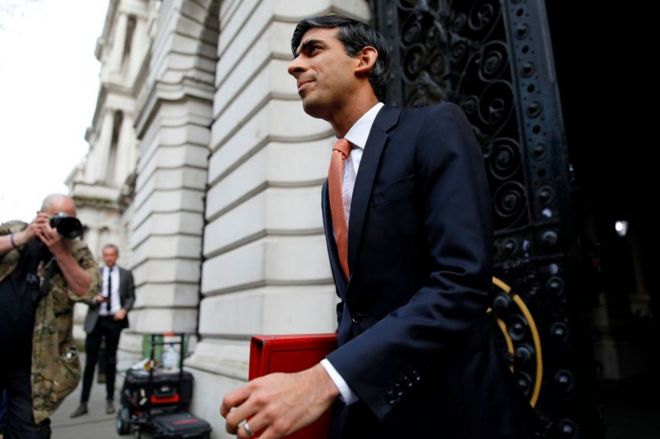
Chancellor Rishi SunakImage copyrightGETTY IMAGES
Image captionHas the chancellor been as generous as his peers abroad?
Chancellor Rishi Sunak is due to set out the next instalment in the government's plans to help the British economy recover from the blows inflicted by the pandemic.
Already this week the government has announced new financial assistance for the arts sector and a package to promote green jobs.
Mr Sunak's new measures will build on other steps already taken, including the Coronavirus Job Retention Scheme, some tax holidays and deferrals for business and additional welfare benefits.
But how have other countries responded to what is both a public health crisis and a sharp economic downturn?
Details of the responses vary, although there are some common objectives. Many countries have given businesses financial incentives not to make workers redundant.
There are tax breaks and loans for firms to help them contend with a collapse in revenue, and there are measures to help the most vulnerable people. Many countries have also set aside extra funds to help health systems cope with the burden imposed by the virus.
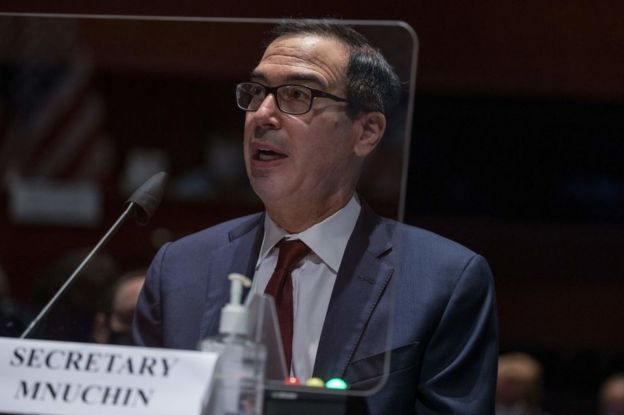
US Treasury Secretary Steven MnuchinImage copyrightGETTY IMAGES
Image captionUS Treasury Secretary Steven Mnuchin

The US

In the US, the core of the response is the Coronavirus Aid, Relief, and Economic Security Act, or Cares Act.
The International Monetary Fund (IMF) gives a figure for its total impact of $2.3tn (£1.8tn) or 11% of US annual income. It includes a total of more than half a trillion dollars extra for individuals in the form of tax rebates and unemployment benefits.
There were also "forgivable" loans for small businesses to enable them to retain workers. In effect that means grants because, yes, forgivable really does mean they don't have to be repaid in full provided conditions are met.
There was $25bn for a food safety net for the most vulnerable, which included an expansion of the programme which enables low income people and families to buy food (sometimes known as food stamps).
Subsequent legislation also provided $100bn for additional health related spending, a quarter of it specifically to expand testing for the virus.
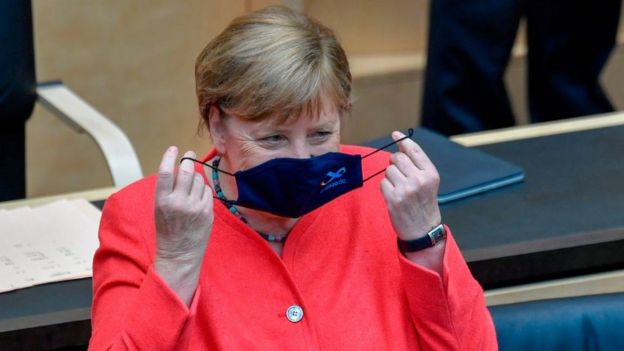
German Chancellor Angela MerkelImage copyrightGETTY IMAGES
Image captionGerman Chancellor Angela Merkel

Germany

Germany went into the crisis with its finances having been in surplus since 2012. The crisis will bring that run to an end.
As with other countries it's partly the automatic impact of the downturn, and partly policy choices by Berlin. Germany adopted a supplementary budget which the IMF values at almost 5% of annual national income. It covers spending on healthcare, including protective equipment and covid vaccine research.
There is an expansion of the existing system of financial support to help firms retain workers by putting them on shorter hours while covering some of the worker's loss of income.
This scheme, known in German as Kurzarbeit, has often been credited with helping limit the rise in unemployment in the wake of the financial crisis of 2008-9.
There have also been grants to small business owners and self-employed people and interest-free tax deferrals. A subsequent package in early June added further grants for small firms; subsidies and investment in green technology and digitalisation; and a temporary reduction in value added tax (VAT).
The argument for making the latter move temporary is that it can encourage consumers to bring spending forward, perhaps to buy a new appliance now rather than wait.
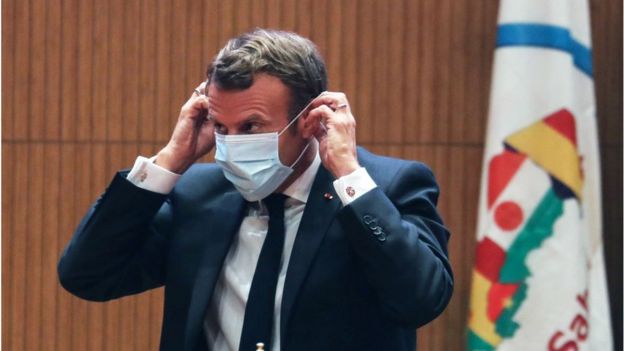
French President Emmanuel MacronImage copyrightGETTY IMAGES
Image captionFrench President Emmanuel Macron

France

France has legislated for an increase in overall spending the IMF calculates as equivalent to 5% of annual national income. And a further increase is in the pipeline.
Measures already undertaken include boosting health insurance, financial support for small businesses and self-employed people, and extending unemployment benefits that were due to expire.
Deadlines for tax and national insurance payments were postponed. There were additional plans announced for the motor industry - with car makers being encouraged to bring more production back to France.
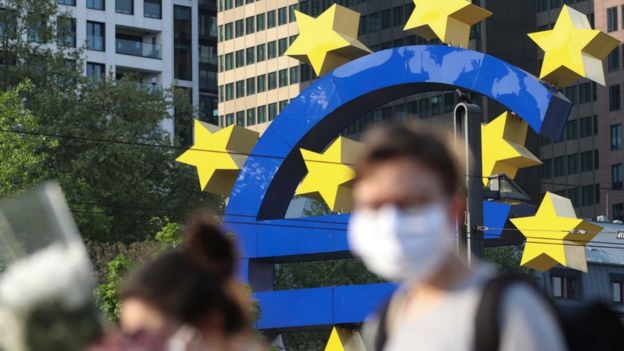
Euro sign at ECB building in Frankfurt, Germany, 24 Apr 2020Image copyrightAFP

What about the EU?

All three of these large economies - the US, Germany and France - have provided financial assistance to airlines, one of the first industries to be hit by the pandemic.
The European Union's response is also relevant to France and Germany - in fact their leaders are key drivers of that response, although other countries such as Spain and Italy are likely to be the main beneficiaries.
The headline figure for the EU response is more than half a trillion euros. It has elements intended to help countries that are especially hit by the economic impact of the heath crisis as well as firms and individuals, with support for workers and jobs.
There is continued political wrangling about whether EU support to member countries will be in the form of grants or loans.
EU rules on government finances (normally intended to limit borrowing) and on financial support for business (state aid rules to stop unfair competitive advantages) are being relaxed to give member countries more flexibility to support their national economies.

How do the responses compare?

Comparing the scale of official responses is not a straightforward exercise. Other analyses produce different figures from the IMF.
The situation is fast moving. Some elements are straightforward spending commitments. Some are allowing people and firms to delay making payments. Then there are loans and loan guarantees.
In most cases those are likely to be temporary supports, although it is certain that some loan guarantees will have to be paid and some loans made by governments won't be repaid. But the ultimate financial cost of this type of support is still less than the headline number.
What is clear is that by any standards, the responses have already been large in the UK and most other developed economies.

Tuesday, July 7, 2020

Reuters News - U.S. government awards Novavax $1.6 billion for coronavirus vaccine

CHICAGO (Reuters) - The U.S. government has awarded Novavax Inc $1.6 billion to cover testing, commercialization and manufacturing of a potential coronavirus vaccine in the United States, with the aim of delivering 100 million doses by January 2021.
The award is the biggest yet from “Operation Warp Speed”, the White House program aimed at accelerating access to vaccines and treatments to fight the coronavirus that causes COVID-19.
“What this Warp Speed award does is it pays for production of 100 million doses, which would be delivered starting in the fourth quarter of this year, and may be completed by January or February of next year,” Novavax Chief Executive Stanley Erck told Reuters.
It will also cover the cost of running a large Phase III trial - the final stage of human testing, which could begin as early as October.
The announcement follows a $456 million investment in Johnson & Johnson’s vaccine candidate in March, a $486 million award to Moderna Inc in April, and up to $1.2 billion in support in May for AstraZeneca’s vaccine being developed with Oxford University. The U.S. government also awarded Emergent Biosolutions $628 million to expand domestic manufacturing capacity for a potential coronavirus vaccine and drugs to treat COVID-19.
A safe and effective vaccine is seen as critical to ending a pandemic that has claimed over half a million lives globally, about a quarter of them in the United States.
The Gaithersburg, Maryland-based company is somewhat of a dark horse in the race for a coronavirus vaccine. The company was not on the list of vaccine finalists for Warp Speed reported by the New York Times that included Moderna, AstraZeneca, Pfizer Inc, J&J, and Merck & Co.
In May, Novavax got an additional $388 million in funding for COVID-19 vaccine development from the Coalition for Epidemic Preparedness Innovations (CEPI) after a $4 million investment in March. In June, the U.S. Department of Defense awarded the company $60 million to support manufacturing of 10 million doses of its vaccine in 2020.

‘A BIG SCALE UP’

The company is in the process of transferring its vaccine technology to an unnamed contract manufacturer that has two large manufacturing facilities, the CEO said. That is in addition to the work being done by Emergent Biosolutions, which is making doses to supply the company’s smaller early and midstage clinical trials.
The Novavax vaccine works in conjunction with an adjuvant - a substance that boosts the immune response to help the body build a robust defense against the virus.
Currently, Novavax makes its adjuvant in Sweden. The company is building up U.S. manufacturing capacity for its adjuvant “so that we can make upwards of a billion doses of adjuvant in the United States,” he said.
Novavax did not start human safety trials until late May. One reason for the delay is that the vaccine is grown in insect cells, a process that can take 30 days before company scientists can start purifying it and making it in bulk.
“You lose a month or so there, but I don’t think we’re behind because our data,” he said, referring to animal data showing a strong immune response and high levels of virus-killing antibodies.
Erck said Novavax expects results of its Phase I safety trial within the next week or so. The company aims to start midstage trials in August or September, with Phase III testing starting in October, he added.
By early next year, the company expects to be able to make 50 million doses a month in the United States.
“It’s a big scale up in a few different manufacturing sites in the United States,” Erck said. “What it leaves us with is the capacity of making many more doses in the U.S. in 2021.”
Novavax also has a manufacturing plant in the Czech Republic and hopes to have two other plants in Europe and one in Asia, Erck said. The company is also working with a manufacturer in India. The aim there is to make more than 100 million doses a month, he said.
Reporting by Julie Steenhuysen; Editing by Bill Berkrot

Monday, July 6, 2020

Reuters News - Australia closes state border for first time in 100 years after COVID-19 spike

SYDNEY (Reuters) - The border between Australia’s two most populous states will close from Tuesday for an indefinite period as authorities scramble to contain an outbreak of the coronavirus in the city of Melbourne.
The decision announced on Monday marks the first time the border between Victoria and New South Wales has been shut in 100 years. Officials last blocked movement between the two states in 1919 during the Spanish flu pandemic.
“It is the smart call, the right call at this time, given the significant challenges we face in containing this virus,” Victoria Premier Daniel Andrews told reporters in Melbourne.
The move will, however, likely be a blow to Australia’s economic recovery as it heads into its first recession in nearly three decades.
The number of COVID-19 cases in the Victorian capital of Melbourne has surged in recent days, prompting authorities to enforce strict social-distancing orders in 30 suburbs and put nine public housing towers into complete lockdown.
The state reported 127 new COVID-19 infections overnight, its biggest one-day spike since the pandemic began. It also reported two deaths, the first nationally in more than two weeks, taking the national tally to 106.
NSW Premier Gladys Berejiklian said there was no timetable for reopening the border, which will be patrolled by the military to prevent illegal crossings from 11.59 p.m. local time on Tuesday.
The state line is highly porous, with 55 roads, wilderness parks and rivers. Some businesses straddle both sides and several workers, and school children, commute daily.
Lyn McKenzie, who runs a paddle steamer business along the Murray River from Mildura, a border city of 30,000 people, is waiting for more detail to gauge the full impact on her business.
McKenzie lives on the NSW side of the river, the boats pick up passengers from the Victoria side and the river itself is classified as part of NSW.
“I’m seeing this as possibly needing to shut down again, but it’s a bit early for me, not knowing the exact details,” McKenzie told Reuters.
Berejiklian said people would be able to apply for daily permits to cross the border, but added there would be delays of around three days in issuing the passes.
Paul Armstrong, who runs a petrol station in Wodonga, a border town on the Victorian side, said his children live in New South Wales but go to school in Victoria.
“I wonder if they will need permits,” Armstrong said. Schools in Victoria are in their second week of the two-week winter vacation. Schools in New South Wales began their two-week term break on Monday.
NSW Police Commissioner Mick Fuller said the military would provide round-the-clock aerial and other surveillance to enforce the closure. Victoria’s only other internal border, with South Australia state, has been closed since March 22 under previous coronavirus measures.

MELBOURNE LOCKDOWN

Australia has fared better than many countries in the coronavirus pandemic, with just short of 8,500 cases so far, but the Melbourne outbreak has raised alarm bells.
The country has reported an average of 109 cases daily over the past week, compared with an average of just 9 cases daily over the first week of June.
Melbourne locals are concerned that renewed social distancing measures have not been implemented uniformly across the city.
“Without a full Melbourne lockdown, I am not super confident this is going to be contained,” Jack Bell, a lifeguard who lives in Victorian suburb of Kensington, told Reuters.
Kensington is one of the 30 suburbs that have reimposed social distancing measures. The nine public housing blocks that have been subjected to a complete lockdown, Australia’s first, are in neighbouring North Melbourne and Flemington.
Reporting by Byron Kaye, Swati Pandey, Colin Packham, Renju Jose and Sonali Paul; editing by Jane Wardell

Thursday, July 2, 2020

BBC News - Coronavirus: UK firms slash more than 12,000 jobs in two days

storesImage copyrightGETTY IMAGES
More than 12,000 people in the UK are set to lose their jobs after a raft of firms announced cuts in the past 48 hours.
The cuts are mainly being made by High Street retailers and in aviation - two of the sectors hardest hit by the coronavirus lockdown.
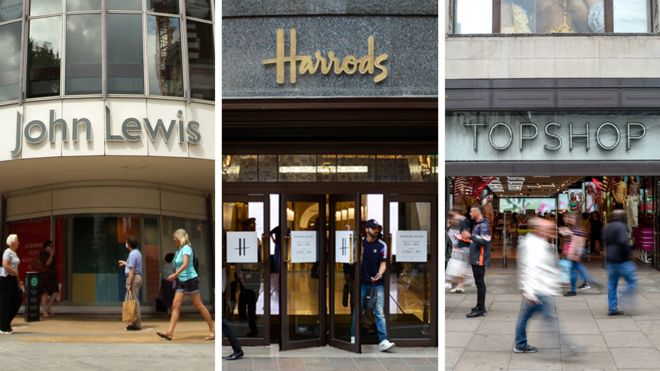
John Lewis has said it will close stores but has not confirmed how many jobs will go.
Topshop owner Arcadia and Harrods said they planned a total of 1,180 job cuts.

Where are the cuts falling?

Other lay-offs that have been announced include:
WH Smith, Bensons for Beds, Wrights Pies, tableware-maker Steelite International, the Adelphi Hotel in Liverpool and Norwich Theatre Royal have also announced plans to reduce staff.
Businesses have been hit hard since the UK went into lockdown on 23 March, and even though restrictions are gradually being eased, consumer demand remains depressed.
The government's furlough scheme will also start to be pared back from August, and firms are cutting jobs to control their costs.

What do employees say?

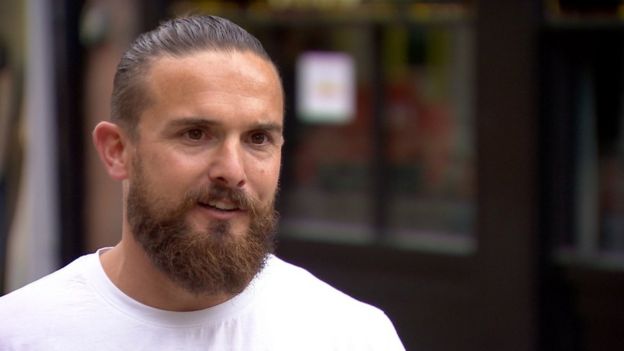
James Phillips
Image captionJames Phillips could be made redundant
James Phillips, a mechanical engineer, told the BBC he fears he could be made redundant.
He has been on furlough since March but has now been asked to attend a redundancy consultation meeting with his employer.
He said: "I'm three months away from having a baby, and I was about to sign for a mortgage this week on a new property, so it's impacted me massively, really. Everything's been put on hold."
Sue Hudson lost her job as a legal secretary at a solicitors in Bournemouth in April and has not found a job since.
"There are too many people chasing too few jobs," she told BBC Radio 5 Live. "It's very disheartening."

Why so many job losses now?

For most businesses, staffing is the highest cost, and many have been using the government's furlough schemes to keep workers on.
But the programme - which is paying 80% of the wages of more than 9 million workers - will start to be pared back from next month and will end in October.
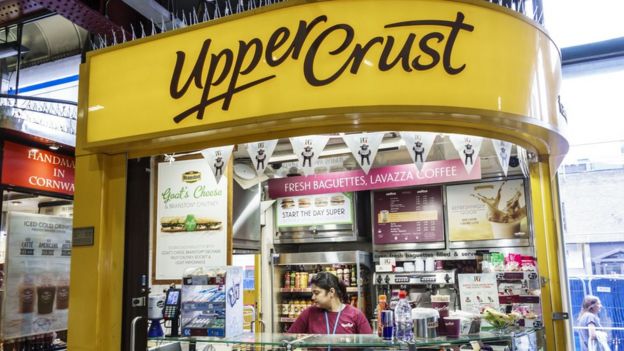
An Upper Crust sandwich shop kiosk at London's Waterloo Station.Image copyrightGETTY IMAGES
Image captionUpper Crust owner SSP has announced 5,000 job cuts
As firms have to consult for 30-45 days when making redundancies, some will feel that now is the time to act.
"There is already a cost to the employer from just a month's time," said BBC business correspondent Simon Gompertz.
"Larger employers, planning bigger layoffs, will be eyeing that escalating wage bill and maybe thinking the sooner they move the better."

What have firms said?

In an email to staff, Harrods' managing director Michael Ward said the department store was making its cuts with a heavy heart.
"Due to the ongoing impacts of this pandemic, we as a business will need to make reductions to our workforce."
He said it would take a "drastic improvement in external conditions" for Harrods to recover and return to growth.
John Lewis, which was already looking to "right size" its business before the crisis, said it had not decided which shops would close.
"The reality is that we have too much store space for the way people want to shop now," the company said in a statement.
Topshop owner Arcadia, which is slashing a fifth of its head office staff, also blamed the pandemic for its cuts.
"Due to the impact of Covid-19 on our business including the closure for over three months of all our stores and head offices, we have today informed staff of the need to restructure our head offices," it said.
Analysis box by Simon Jack, business editor

Does the government need to do more?

The reason the government has thrown tens of billions of pounds at trying to hold back the waves of unemployment is they realise that it does long-lasting damage to demand in the economy.
There is no doubt that the furlough scheme helped delay the impact, but this barrage of job cut announcements suggests the government is now struggling to turn the tide.
Boris Johnson described the virus as "still circling like a shark in our waters". It was an odd metaphor to use, considering the PM has previously praised the Mayor in Jaws for keeping the beaches open.
One thing seems certain: to combat the huge economic shock whose repercussions are being felt in airlines, factories and now high streets, the government will need a bigger boat than the £5bn of previously announced spending accelerated yesterday.
The pressure is now on Chancellor Rishi Sunak.
Presentational grey line
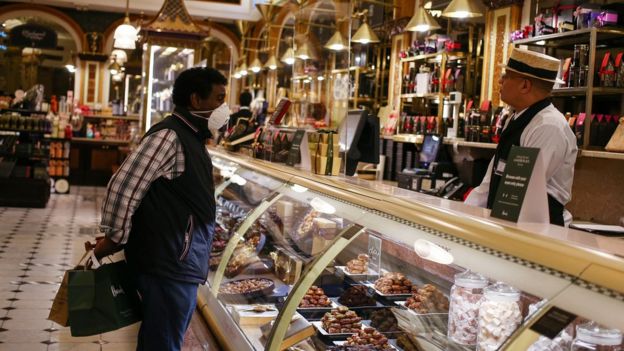
HarrodsImage copyrightGETTY IMAGES
Image captionHarrods said the "devastation in international travel" had meant it had lost "key customers"

Why is retail being hit so hard?

Retailers were already struggling before the coronavirus due to changes in shopping habits as consumers buy more online, as well as rising wages and business rates.
But the coronavirus crisis has placed huge pressure on an already weakened sector.
The vast majority of shops were told to shut in March when the UK went into lockdown, prompting a sharp fall in sales.
And while demand rebounded 12% in May, retail it remains well below pre-lockdown levels.

What about aviation?

Demand for air travel in April and May was down more than 90%, as airlines were hit hard by global lockdown measures and travel restrictions. And normal levels of demand are not expected to return for up to three years.
While planes aren't flying, airlines aren't making money, but they still have funds flying out of the door.
And firms that rely on airlines flying, such as commercial aerospace businesses, have decreased production.
Along with cuts at Airbus, Ryanair and EasyJet, British Airways has announced plans to slash 12,000 jobs - almost a quarter of its workforce.
Meanwhile, engineering giant Rolls-Royce, which makes jet engines, will cut 3,000 jobs across the UK.

Wednesday, July 1, 2020

BBC News - UK on track for V-shaped recovery, says Bank of England economist

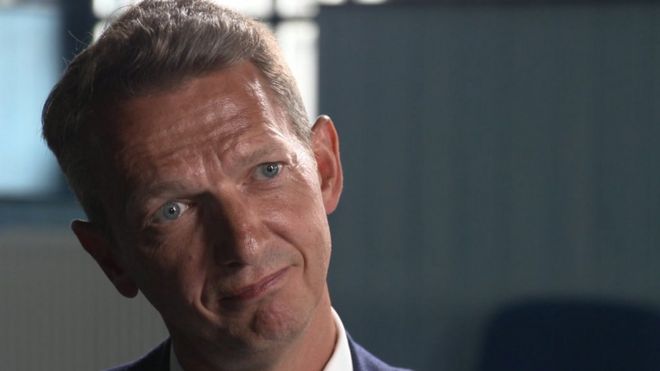
Andy Haldane
The UK economy is still on track for a quick or so-called V-shaped recovery, according to Bank of England economist Andy Haldane.
In a speech on Tuesday, he said the recovery in the UK and globally had come "sooner and faster" than expected.
However, he sounded a note of caution on jobs in the wake of the pandemic.
He said either consumer spending would ease unemployment or unemployment would cut household spending. Both could create virtuous or vicious cycles.
But at this stage, he said he could not tell which one would prevail.
So far, the economy is benefiting from robust strength in consumer spending, aided by many workers working from home or drawing 80% of their salaries through the government's furlough scheme.
"As the furlough scheme tapers from August, however, there is a risk this greater number of furloughed workers are not hired back by employers, adding to the unemployment pool," he said.
But he warned that the greatest risk was "a repeat of the high and long-duration unemployment rates of the 1980s, especially among young people".

Unemployment risk

Earlier this month, the Bank said the economy was on course for a contraction in the second quarter of about 20% compared with the final three months of 2019.
This is a record, but not quite as extreme as the 27% it predicted in May.
GDP chart
These numbers are subject to constant revision, however, both good and bad.
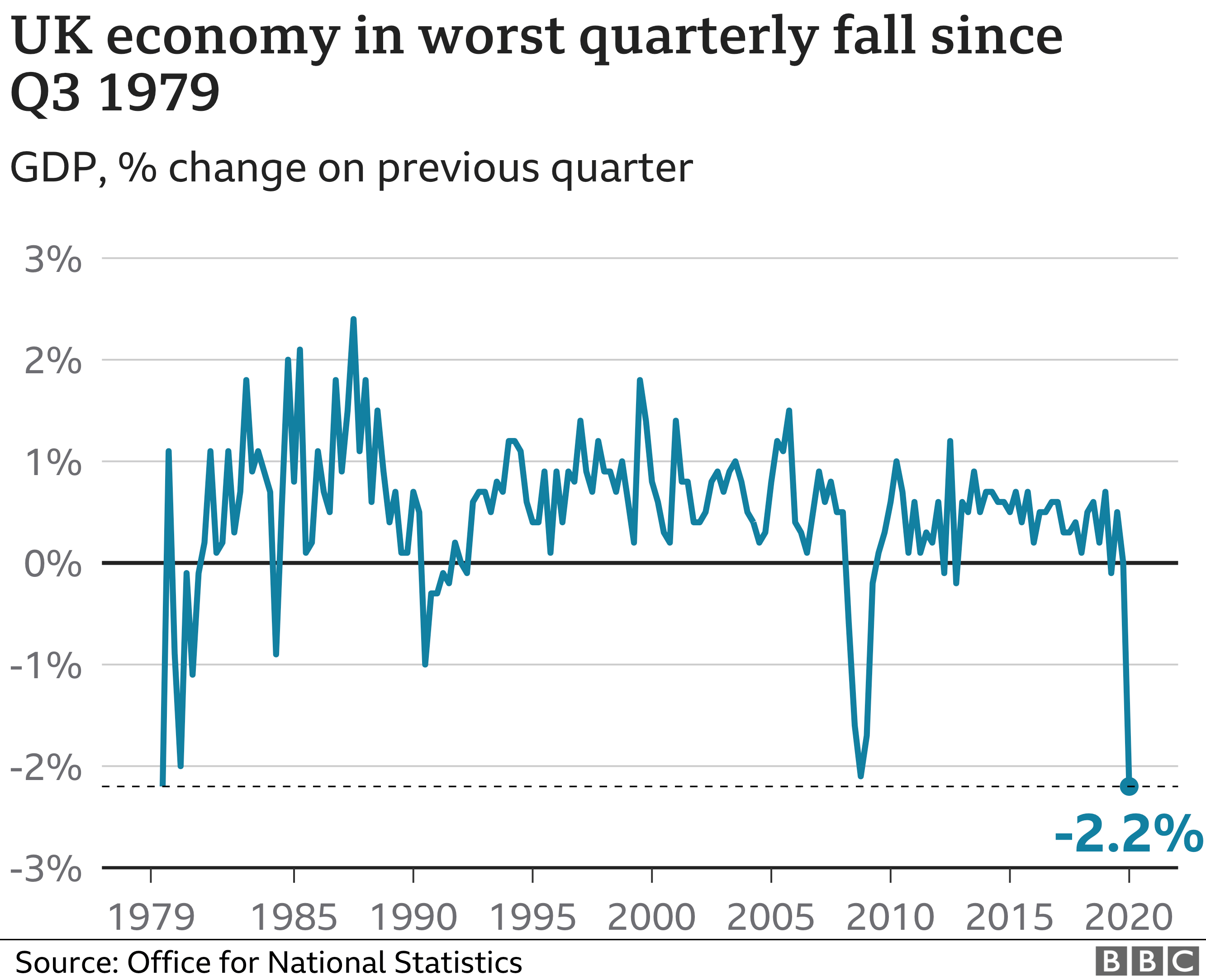
Mr Haldane's speech came as new figures showed the UK economy shrank more than first thought between January and March, contracting 2.2% in the joint largest fall since 1979.
The Office for National Statistics revised down its previous estimate of a 2% contraction.
The three-month period included just nine days of coronavirus lockdown.
The Bank recently added £100bn to its bond-buying programme to help prop up the economy.
The extra monetary stimulus - known as quantitative easing (QE) - will raise the total size of the Bank's asset purchase programme to £745bn.
Mr Haldane voted against the increase. He said the recovery was happening "sooner and materially faster" than the Bank expected in May.
In his speech, Mr Haldane also pointed out just how much of the UK's financial system the Bank owns.
The new purchases "take the Bank's balance sheet to around 45% of 2019 UK GDP by the year-end, more than double its previous high-water mark", he said, outstripping the purchases made during World War Two, the South Sea bubble or the global financial crisis.
He said there was not much more that cheap borrowing could do to help mend the economy.

Global job fears

Fears of long-lasting joblessness are not confined to the UK.
A new assessment from the International Labour Organization - a United Nations agency - points to the damage the pandemic has already done to global employment.
The health crisis has led to a drop of 14% in hours worked globally, equivalent to 400 million full-time jobs. That's a substantially larger impact than the ILO found only a month ago.
The loss of hours worked is largest in the Americas, where the ILO says there are currently the most restrictions on workers and workplaces. The impact has been especially severe in South America, where working hours declined by 20%.
The report said women had been disproportionately affected. The downturn has hit service industries very hard, where many women work. They have also been more affected than men by the increased burden of unpaid care brought by the pandemic.
Looking ahead, the ILO does envisage some recovery in employment in the second half of the year.
The report looks at three scenarios which vary depending on the trajectory of the pandemic and government policy choices. Even the most optimistic of these - what the report calls an exceptionally fast recovery - is not likely to see employment return to pre-pandemic levels.