Thursday, September 10, 2020

BBC News - Brexit: UK to unveil planned changes to Withdrawal Agreement


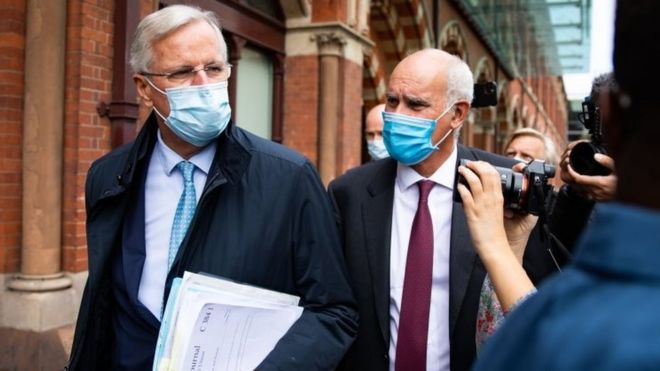
Michel BarnierImage copyrightPA MEDIA
Image captionEU negotiator Michel Barnier arrives in London for talks

The government will later publish plans which could override key elements of its Brexit deal with Brussels, in breach of international law.

The Internal Market Bill will set out how powers currently held by the EU will be shared out after the post-Brexit transition period ends.

But it has faced a backlash from senior Tories and prompted the resignation of a top civil servant.

It comes as the talks over a trade deal with the EU continue in London.

The Internal Market Bill could override parts of the Withdrawal Agreement that secured the UK's exit from the EU in January.

Ministers say it is needed to prevent "damaging" tariffs on goods travelling from the rest of the UK to Northern Ireland if negotiations with the EU on a free trade agreement fail.

'Moral high ground'

But senior Conservatives have warned it risks undermining the UK's reputation as an upholder of international law.

Tobias Ellwood, chairman of the Commons Defence Committee, said the UK would "lose the moral high ground" if the government went through with the changes.

Tom Tugendhat, chairman of the Commons Foreign Affairs Committee said: "Our entire economy is based on the perception that people have of the UK's adherence to the rule of law."

Health Secretary Matt Hancock insisted the changes were necessary to protect the Northern Ireland peace process if the UK failed to get a free trade deal with the EU.

"The decision we've made is to put the peace process first, first and foremost as our absolute top international obligation," he told BBC Radio 4's Today programme.

A former Cabinet minister, involved in putting together the Withdrawal Agreement, reacted furiously to Mr Hancock's claim.

The former minister, who did not want to be named, told the BBC: "I cannot allow anyone to get away with saying the government is doing this to protect the peace process. This does the precise opposite.

"It is about the internal market in the UK and is more likely to lead to a hard border [between Northern Ireland and the Republic of Ireland] which will imperil the peace process."

'Specific and limited'

The permanent secretary to the Government Legal Department, Sir Jonathan Jones, has resigned from his role over concerns about the government breaching its obligations under international law.

In the Commons on Tuesday, Northern Ireland Secretary Brandon Lewis admitted the bill would break international law in a "very specific and limited way".

It would allow the UK government to "dis-apply" the EU legal concept of "direct effect" - which gives EU law supremacy over UK law in areas covered by the Withdrawal Agreement - in "certain, very tightly defined circumstances," he told MPs.

The Scottish government, meanwhile, has said it will not consent to a change in the law along these lines, arguing that it would undermines devolution.

The bill has also been attacked by the Welsh Brexit minister, Labour's Jeremy Miles, who accused the government of "stealing powers from devolved administrations".

"This bill is an attack on democracy and an affront to the people of Wales, Scotland and Northern Ireland," he added.

Cross border trade

The legislation will see Scotland, Wales and Northern Ireland handed powers in areas such as air quality and building efficiency currently regulated at EU level.

It will also set up a new body - the Office for the Internal Market - to make sure standards adopted in different parts of the UK do not undermine cross-border trade.

The new body will be able to issue non-binding recommendations to the UK Parliament and devolved administrations when clashes emerge.

However, plans to hand UK ministers extra powers to ensure the application of customs and trade rules in Northern Ireland have prompted a row over the UK's legal obligations in its exit deal.

'Old arguments'

Under the UK's withdrawal agreement, Northern Ireland is due to stay part of the EU's single market for goods in a bid to avoid creating a hard border with the Irish Republic.

In parallel with talks over a post-Brexit trade deal, the UK and EU are negotiating the precise nature of new customs checks that will be required.

Labour leader Sir Keir Starmer has accused Downing Street of "reopening old arguments that had been settled" and said the government should instead focus on securing a deal with the EU.

Former Conservative PM Theresa May warned the legislation could damage "trust" in the UK over future trade deals with other states.

Irish Foreign Affairs Minister, Simon Coveney, called Mr Lewis's comments "gravely concerning".

And French MEP Nathalie Loiseau said: "The prime minister has promised to put a tiger in the tank in the negotiations. It seems for the time being he is putting an elephant in the china shop."

Wednesday, September 9, 2020

Reuters News - Wall Street ends higher to snap three-day skid as tech rallies

 NEW YORK (Reuters) - Wall Street’s main indexes ended higher on Wednesday to snap a three-session losing skid as investors jumped back in to take advantage of the pullback in technology-related stocks, a day after the Nasdaq confirmed correction territory.

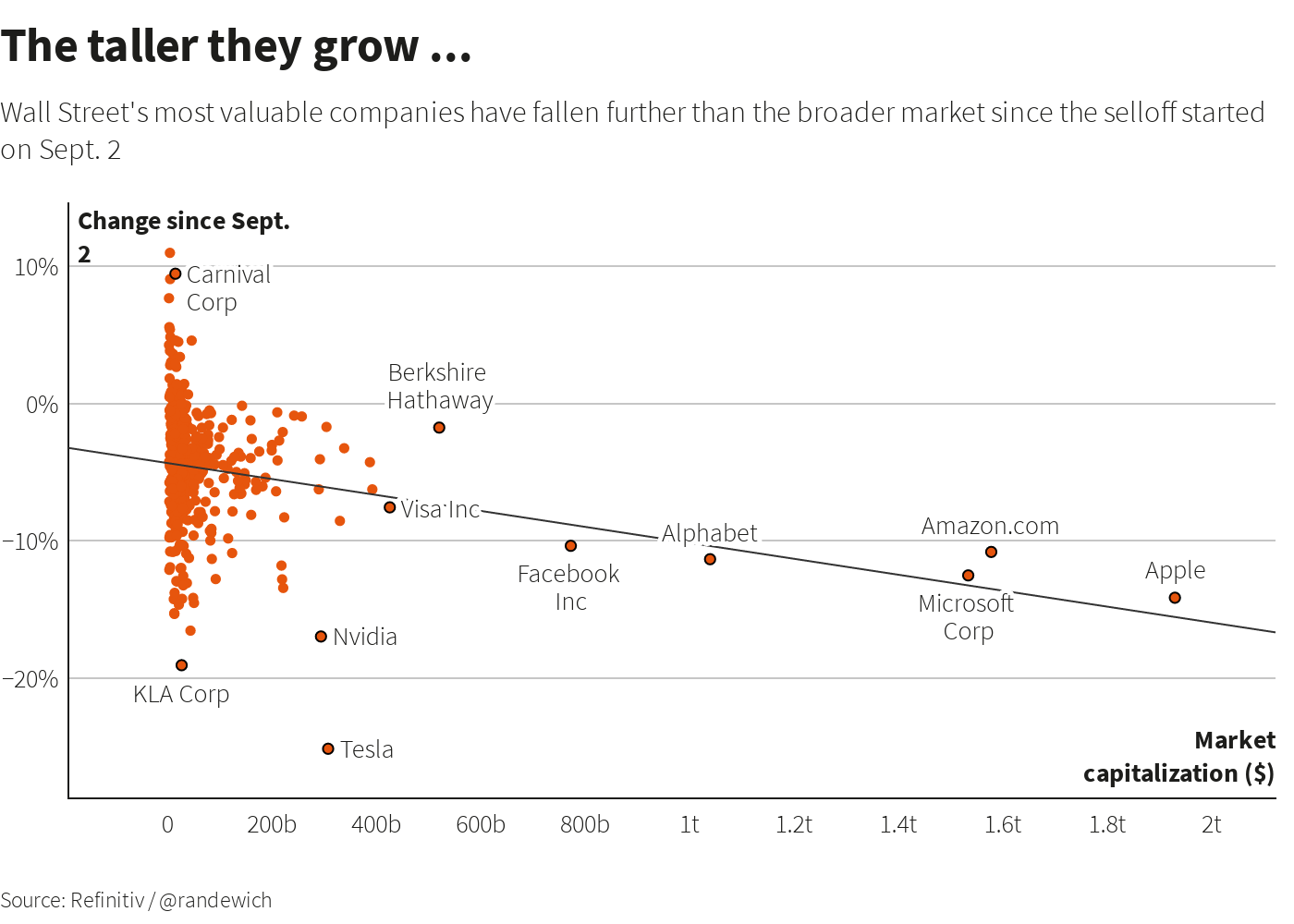
Tesla Inc shares rebounded after suffering their biggest one-day percentage drop in the prior session, while Apple Inc, Microsoft Corp and Amazon.com Inc - the top three U.S. public companies by market capitalization - each rose by at least 3%.

Other stay-at-home winners such as Facebook Inc and Google-parent Alphabet Inc also climbed, a day after the tech-heavy Nasdaq ended 10% below its Sept. 2 record closing high, commonly known as a correction. The S&P tech sector notched its biggest one-day percentage gain since April.

“It’s certainly a massive, surprising rebound,” said Jack Ablin, chief investment officer at Cresset Capital Management in Chicago.

“On one level it looks speculative but on another it is almost defensive because we know these companies will survive no matter what COVID throws at us.”

Analysts also said the Nasdaq’s ability to hold its 50-day moving average, a technical support level, was key in reversing the market’s direction.

Unofficially the Dow Jones Industrial Average rose 439.78 points, or 1.6%, to 27,940.67, the S&P 500 gained 67.22 points, or 2.02%, to 3,399.06 and the Nasdaq Composite added 293.87 points, or 2.71%, to 11,141.56.

U.S. stocks have become susceptible to volatility as market leadership has narrowed during the year to a handful of heavyweight tech-related stocks as traders bid up their shares in a rally that triggered a Nasdaq-led rebound for Wall Street from its pandemic lows in March.

For a graphic on The taller they grow ... The taller they grow ...: here

Reuters Graphic

The recent pullback has also been driven by worries that sellers of call options would unwind massive amounts of stocks they bought as hedges during the rally.

Media reports last week said SoftBank Group Corp has made big bets on equity derivatives tied to tech firms.

In a sign of growing unease about the positioning in tech stocks, skew, a measure of demand for protective put options in relation to call options, has risen sharply.

Market volatility is expected to further increase in the run-up to the U.S. presidential election, with September and October also historically turbulent months of the year.

In a reversal from the prior three sessions, growth stocks jumped to outperform the climb in value stocks on the day.

Market participants were watching for signs of a widening in market breadth, supported by improving economic data.

AstraZeneca Plc could resume trials for its experimental coronavirus vaccine next week, the Financial Times reported, after the British drugmaker paused global trials of its experimental COVID-19 vaccine. Still, its U.S.-listed shares fell.

Tiffany & Co tumbled after French luxury goods giant LVMH warned it was set to walk away from its planned $16 billion takeover of the U.S. jeweler.

Reporting by Chuck Mikolajczak in New York; Editing by Matthew Lewis

Tuesday, September 8, 2020

BBC News - Brexit: The multi-billion pound state aid gamble


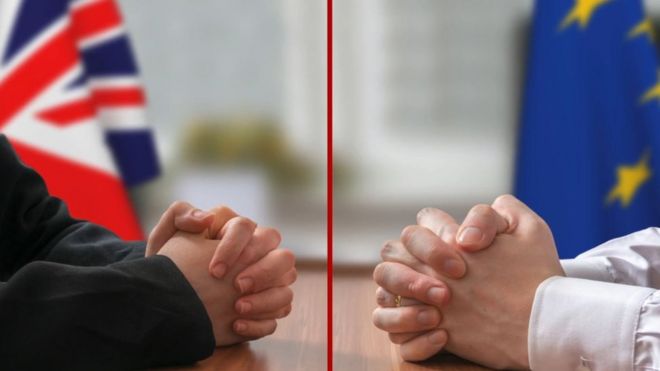
Two men's hands across a negotiating table, in front of UK and EU flags
Image captionThe UK and the EU have competing visions on state aid

Why is the UK seemingly prepared to sacrifice a trade deal with the EU on the altar of state aid?

The UK government spends half as much - 0.38% of GDP - on supporting businesses as France, at 0.76% and roughly a quarter as much as Germany's 1.51%.

Given successive Conservative governments have been instinctively reluctant to intervene in the private sector, preferring to let free-market capitalism take its course, why now is it determined to secure a right to do something it almost never does?

One former Remain-voting cabinet minister told the BBC: "There is no point going through the pain and disruption of Brexit if you are not able to spend money on what you want afterwards. I understand why they are taking this line."

So what does the government want to spend money on? Surely it can't be to prop up struggling primary industries like steel so we can dump cheap subsidised commodities on EU markets - the traditional feared outcome of anti-competitive state intervention.

Rohan Silva, a former adviser to David Cameron and entrepreneur, says it's in new industries, not old, that state aid is really powerful.

In 2010, he says, the Conservative government was keen to foster investment in the companies of the future by offering generous government incentives, but found itself constrained by EU state aid rules.

"We couldn't support companies as they grew as much as we wanted for as long as we wanted. If you are going to leave the EU, you should make the most of it," he says.

To some ears, this sounds suspiciously like politicians picking winners, something Conservative governments are historically suspicious of.

Another former minister, David Gauke, told the Today programme: "When I was at the Treasury, most of us questioned the value for money you get when you allow politicians an enormous amount of discretion on which companies and sectors to support.

"There is plenty you can do to create the right environment for investment without going down that route."

Home-grown technology

As Prof Dieter Helm has said in the past: "Governments aren't good at picking winners, but losers are good at picking governments."

However, the evidence from the US and China is compelling. The US is hardly a stranger to free-market capitalism, but the government is not shy about giving emerging technologies a leg up.

The Defense Advanced Research Projects Agency (Darpa) is a research and development agency of the US Department of Defense credited with inventing the mouse, GPS and, er, the internet.

The Small Business Administration's stated aim is "to maintain and strengthen the nation's economy by enabling the establishment and viability of small businesses". It has an office in every state and spends nearly $1bn a year backing small firms.

EU state aid rules do not allow you to give money to save failing companies - this is defined as companies that made recurrent losses in recent years.

Almost every single start-up in the world makes losses in the early years: it took Amazon over a decade to make a profit. Free of the EU's shackles, the UK government could foster home-grown technology giants.

That's the plan, according to those close to Dominic Cummings. But is it worth scuppering a trade deal with the UK's closest and biggest trading partner?

As Prof Brian Cox tweeted this morning: "The UK can't grow a tech company to rival Apple and Google through state aid, surely? Apple is worth as much as the entire FTSE 100. Are we really going to gamble away our (excellent) existing industries because Dom has a crazy dream?"

Or as former MP David Gauke told the BBC's Today programme: "It's an extraordinary punt: giving up good access to the European market in the hope that we have ministers and officials who are really good at identifying new tech opportunities."

Given that the government's own analysis estimates that a no-deal Brexit will mean the UK economy will be up to 9% smaller in 15 years than it would have been otherwise, it's a gamble with hundreds of billions at stake.

Monday, September 7, 2020

Reuters News - Fed's strategy shift to bind big central banks from Frankfurt to Tokyo

 FRANKFURT (Reuters) - The U.S. Federal Reserve’s landmark shift to a more tolerant stance on inflation will be a drag on the dollar for years and will raise hard questions about the role of central banking, challenging policymakers from Frankfurt to Tokyo.

On the face of it, the Fed’s policy tweak, unveiled on Aug. 27, appears tailored to giving the U.S. economy a shot in the arm. A shift to average inflation targeting lets the Fed overshoot its target after downturns, indicating that rate hikes will come later and the jobs market will be allowed to run hotter, a boon to low-income families.

But this creates two headaches for global central banks.

Such a reinterpretation of the Fed’s mandate could be seen as a foray into social policy, a vital precedent for others as they reexamine their own roles after years of unconventional moves that already impact wealth and income distribution.

The second, more immediate concern will be the dollar's weakness, which hurts exporters from Europe to Asia. This is bound to feature prominently at the European Central Bank's policy meeting on Thursday, as a strong euro EUR= will make it more difficult for exporting nations in the euro zone to climb out of their deepest recession in living memory.

Countries like Germany and France, or Japan, traditionally generate growth from net exports, which take a hit when their currencies firm. And this firming merely compounds their problem as trade wars between the United States and some of its key trade partners are already weighing on exports.

The dollar .DXY= has already weakened by over 10% against a basket of currencies since mid-March to a more than two-year low, prompting ECB chief economist Philip Lane to warn last week that the exchange rate mattered, even if the ECB didn’t target it.

“If there are forces moving the euro/dollar rate around, that feeds into our global and European forecasts and our monetary policy setting,” Lane said.

Indeed, some economists say that the current exchange rate could already deduct 0.2%-0.4% from euro zone growth and analysts polled by Reuters see more dollar weakness.

Normally this would not be too difficult to counter but the ECB and the Bank of Japan are both close to the limits of ultra easy policy.

Both have cut rates into negative territory and yields are already negative for much of the curve. Both banks also face some domestic opposition to more easing, making further moves politically complicated,

“If the Fed is going to be late in raising interest rates, that would put upward pressure on the yen against the dollar,” said Hideo Kumano, a former BOJ official who is currently chief economist at Dai-ichi Life Research Institute.

“As long as Fed policy makes it harder for the dollar to rise, the BOJ will have to worry about potential yen rises that needs a policy response including a deepening of negative interest rates,” he said.

Some economists argue that the ECB should simply shift to a similarly flexible target as part of its own ongoing policy review. But markets price no rate hike at all during Christine Lagarde’s eight-year term atop the bank, so a suggestion that policy tightening would be even further pushed out raises credibility issues.

“Emerging market economies, which are largely dollar funded, will benefit, at least initially,” former ECB board member Benoit Coeure said. “Europe may need to find new ways to support its economy in the face of permanently lower U.S. rates.”

SOCIAL POLICY?

The Fed’s now explicit aim to help low-income families is another complication as it elevates the role of the bank in social policy and could be seen as a sort of reinterpretation of its mandate.

“Personally, I feel there is room to consider the idea, voiced by some people, that monetary policy should focus more on job and income conditions,” BOJ Deputy Governor Masazumi Wakatabe said.

The ECB also appears keen to reinterpret its mandate with Lagarde arguing that risks created by climate change are so big, the bank could not ignore them.

But central bankers are unelected bureaucrats and fighting climate change or inequality is a foray into politics, which risks opening their banks to the sort of political attacks that could undermine independence.

The ECB argues that its mandate already requires it to support the “general economic policies” of the European Union, but such an interpretation would still represent a shift given its current focus that is entirely inflation focused.

Still, some argue that the Fed’s shift will prove to be benign.

Lower dollar rates will cut funding costs in emerging markets, accelerating growth and providing a bigger market for exports. And letting U.S. inflation run higher now, will raise both long term rates and inflation expectations, making it easier to normalize policy after years of extraordinary accommodation.

These may prove to be true, but that will not be evident for years to come. And until then, central banks must deal with a weaker dollar.

Additional reporting by Simon Johnson and Julie Gordon; Editing by Susan Fenton

Thursday, September 3, 2020

BBC News - Coronavirus: UK worst hit among major economies


ShopperImage copyrightGETTY IMAGES

The UK was the hardest hit by Covid-19 among major economies from April to June, the Organisation for Economic Co-operation and Development has said.

Its economy suffered its biggest slump on record over the three-month period as coronavirus lockdown measures pushed the country officially into recession.

Its 20.4% contraction was well above the 9.8% drop for the 37 OECD nations as a whole, the think tank said.

Spain was the next worst hit, with a decline of 18.5%.

The decline for the OECD area was its largest on record, far outstripping the 2.3% drop recorded in the first three months of 2009, at the height of the financial crisis.

At the same time, the G7 group of industrialised nations suffered a contraction of 10.9%, while the eurozone saw a 12.1% fall.

Among other G7 nations, second-quarter GDP declined by 13.8% in France, while Italy, Canada and Germany suffered falls of 12.4%, 12% and 9.7% respectively.

When the UK published its second-quarter GDP figures earlier this month, Chancellor Rishi Sunak told the BBC that the government was "grappling with something that is unprecedented" and that it was "a very difficult and uncertain time".

He said the UK economy had performed worse than its EU counterparts because it was focused on services, hospitality and consumer spending.

But shadow chancellor Anneliese Dodds blamed Prime Minister Boris Johnson for the scale of the economic decline, saying: "A downturn was inevitable after lockdown - but Johnson's jobs crisis wasn't."

Presentational grey line
Analysis box by Dharshini David, global trade correspondent

From Madrid to Manchester, the empty streets at the height of spring laid bare the economic impact of measures to halt the spread of the virus.

And now the OECD has put numbers to the bigger picture; it thinks the wealthiest nations, those accounting for the bulk of global trade, shrank four times faster between April and June than during the darkest period of the financial crisis.

And with its reliance on the worst hit sectors - shopping, services and hospitality - the UK suffered one the biggest drops.

But that was then. As restrictions have been eased, shutters lifted, attention has turned to the strength of the recovery.

In the UK, the evidence is mixed: retail spending is back to pre-crisis levels (albeit with some winners and losers) but other sectors continue to struggle. Economists expect it may take a couple of years for the economy to get fully back on track, some fear unemployment could spike to 10% , or even higher, in the meantime.

And we may not be alone: the OECD reckons the convalescence of many other nations could be just as drawn out.

Wednesday, September 2, 2020

Reuters News - Steroids cut death rates among critically ill COVID-19 patients, major study finds

 LONDON (Reuters) - Treating critically ill COVID-19 patients with corticosteroid drugs reduces the risk of death by 20%, an analysis of seven international trials found on Wednesday, prompting the World Health Organisation to update its advice on treatment.

The analysis - which pooled data from separate trials of low dose hydrocortisone, dexamethasone and methylprednisolone - found that steroids improve survival rates of COVID-19 patients sick enough to be in intensive care in hospital.

“This is equivalent to around 68% of (the sickest COVID-19) patients surviving after treatment with corticosteroids, compared to around 60% surviving in the absence of corticosteroids,” the researchers said in a statement.

The WHO’s clinical care lead, Janet Diaz, said the agency had updated its advice to include a “strong recommendation” for use of steroids in patients with severe and critical COVID-19.

“The evidence shows that if you give corticosteroids ...(there are) 87 fewer deaths per 1,000 patients,” she told a WHO social media live event. “Those are lives ... saved.”

“Steroids are a cheap and readily available medication, and our analysis has confirmed that they are effective in reducing deaths amongst the people most severely affected by COVID-19,” Jonathan Sterne, a professor of medical statistics and epidemiology at Britain’s Bristol University who worked on the analysis, told the briefing.

He said the trials - conducted by researchers in Britain, Brazil, Canada, China, France, Spain, and the United States - gave a consistent message throughout, showing the drugs were beneficial in the sickest patients regardless of age or sex or how long patients had been ill.

The findings, published in the Journal of the American Medical Association, reinforce results that were hailed as a major breakthrough and announced in June, when dexamethasone became the first drug shown to be able to reduce death rates among severely sick COVID-19 patients.

Dexamethasone has been in widespread use in intensive care wards treating COVID-19 patients in some countries since then.

Martin Landray, a professor of medicine and epidemiology at the University of Oxford who worked on the dexamethasone trial that was a key part of the pooled analysis published on Wednesday, said the results mean doctors in hospitals across the world can safely switch to using the drugs to save lives.

CLEAR BENEFITS

“These results are clear, and instantly usable in clinical practice,” he told reporters. “Among critically ill patients with COVID-19, low-dose corticosteroids ... significantly reduce the risk of death.”

Researchers said the benefit was shown regardless of whether patients were on ventilation at the time they started treatment. They said the WHO would update its guidelines immediately to reflect the fresh results.

Until the June findings on dexamethasone, no effective treatment had been shown to reduce death rates in patients with COVID-19, the respiratory disease caused by the new coronavirus.

More than 25 million people have been infected with COVID-19 and 856,876​ have died, according to a Reuters tally.

Gilead Sciences Inc’s (GILD.O) remdesivir was authorised by United States regulators in May for use in patients with severe COVID-19 after trial data showed the antiviral drug helped shorten hospital recovery time.

Anthony Gordon, an Imperial College London professor who also worked on the analysis, said its results were good news for patients who become critically ill with COVID-19, but would not be enough to end outbreaks or ease infection control measures.

“Impressive as these results are, this is not a cure. We now have something that will help, but it is not a cure, so it’s vital that we keep up all the prevention strategies.”

Reporting by Kate Kelland; Additional reporting by Stephanie Nebehay in Geneva; Editing by Mark Heinrich and Catherine Evans

Tuesday, September 1, 2020

BBC News - Fed relaxes inflation target in policy shift


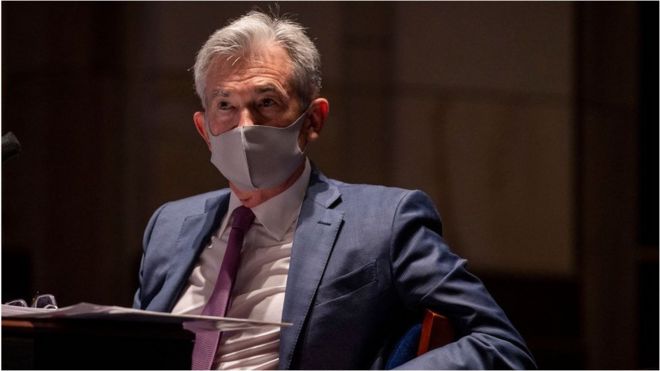
PowellImage copyrightGETTY IMAGES

The Federal Reserve has signalled a major shift in its approach to managing inflation, as it tries to do more to aid the US economy's recovery.

The central bank will now target an "average" of 2% inflation, rather than making 2% a fixed goal, giving it more flexibility, boss Jerome Powell said.

It will allow the bank to keep interest rates lower for longer, stimulating growth to help tackle unemployment.

It comes as millions are out of work due to the economic hit of coronavirus.

"It is hard to overstate the benefits of sustaining a strong labour market, a key national goal that will require a range of policies in addition to supportive monetary policy," Mr Powell said.

The Federal Reserve has for years seen 2% as an optimal level of inflation to maintain a healthy economy.

If it feels inflation could go above that level, it can raise interest rates - however this makes borrowing money more expensive for consumers and businesses.

With the US in a sharp recession due to the pandemic, the Fed has cut rates to almost zero and launched a $700bn stimulus programme to help revive growth.

But speaking at Jackson Hole, the Fed's annual economic symposium, Mr Powell said the bank needed to go further in order to tackle unemployment, which is currently above 10%.

"There is a particular part of the economy which involves getting people together and feeding them, flying them around the country, having them sleep in hotels, entertaining them," Mr Powell said.

"That part of the economy will find it very difficult to recover... That is millions of people who are going to struggle to find work. We need to stay with those people... We are looking at long tail of probably a couple of years at least."

Presentational grey line
Analysis box by Andrew Walker, Economics correspondent

Many central banks have held interest rates at very low levels since the financial crisis more than a decade ago. That has raised concerns about them running out of effective tools to combat another downturn.

Central banks have innovated, notably with quantitative easing, buying financial assets with newly created money, and some have experimented with interest rates below zero.

Jerome Powell's speech doesn't create new tools. It proposes adapting an existing one - the inflation target - in a way that could combat what Mr Powell calls the persistent undershoot of inflation. If inflation were a bit higher then interest rates would tend to be too. So there would be a bit more scope to cut rates when the economy hits a bad patch.

Of course the US is in one now due to the pandemic. The approach announced by Mr Powell couldn't offset a downturn of that magnitude. But it might give the Fed a little more scope in the future.

Presentational grey line

Neil Williams, senior economic adviser at Federated Hermes, said that by pursuing an average, rather than fixed, inflation target, the bank could allow inflation "to travel beyond its preferred 2% destination before tightening rates".

"This should give the recovery extra room to breathe. The challenge, though, will be getting the inflation train to get that far."