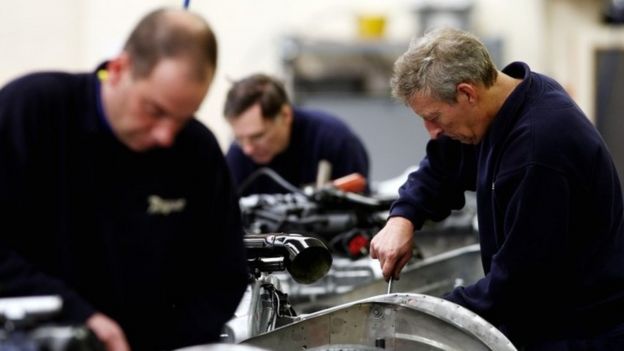
A leading international economic organisation has warned that risks to the global outlook have increased.
The Organisation for Economic Cooperation and Development - the OECD - says in a new report that prospects have steadily deteriorated.
It forecasts continued growth of around 3% but warns that the risks have increased.
The report says a lack of direction on climate policy is holding back business investment.
Although the OECD is not forecasting a recession, it is a decidedly downbeat report.
There are calls for action from governments to address challenges, some of which have both long term and more immediate consequences.
Climate change is perhaps the most striking example.
The OECD says extreme weather events could lead to disruption of economic activity and could inflict long lasting damage on capital and land. They could also lead to what the report calls disorderly migration flows.
Insufficient policy action could increase the frequency of such events.
There is clearly a long term challenge for governments in addressing these issues, but the OECD says that there is already an impact on business investment.
In many countries it is investment and trade that has been at the centre of weakening economic performance.
Image copyrightGETTY IMAGES
It says governments must act quickly.
"Without a clear sense of direction on carbon prices, standards and regulation, and without the necessary public investment, businesses will put off investment decisions, with dire consequences for growth and employment," the OECD says.
The report argues that more clarity on climate policy - and also on digitalisation - would trigger a marked acceleration of investment by business.
It suggests the creation of national funds to make public investments in these areas.
Among the other challenges that the OECD mentions is the change in the Chinese economy, it is becoming a more services-oriented economy which means the country's demand for imported goods for its industries to process is unlikely to grow as strongly in the future.
Along with the shift in the shape of the Chinese economy, there has also been a gradual slowdown in the rate of growth since the start of the decade. For the previous thirty years, the economy had grown at a rate that the Chinese government accepted could no longer be sustained.
China is trying to ensure it is not too abrupt a slowdown. The possibility that it might not succeed is something the OECD identifies as a risk to the global economy.
(Reuters) - U.S. stocks opened flat on Thursday after mixed signals on trade and a row between Washington and Beijing over the Hong Kong protests cast doubts on the timing of a deal to end the prolonged tariff dispute.
The Dow Jones Industrial Average .DJI fell 0.81 points, or 0.00%, at the open to 27,820.28.
The S&P 500 .SPX opened higher by 0.03 points, or 0.00%, at 3,108.49. The Nasdaq Composite .IXIC gained 1.14 points, or 0.01%, to 8,527.87 at the opening bell.
Reporting by Shreyashi Sanyal in Bengaluru; Editing by Shounak Dasgupta
Planned cuts to corporation tax next April are to be put on hold, Boris Johnson has said, with the money being spent on the NHS and other services.
The rate paid by firms on their profits was due to fall from 19% to 17%.
But the PM told business leaders it may cost the Treasury £6bn and this was better spent on "national priorities", including the health service.
Labour said business "handouts" had done real damage and the Tories would "revert to type" after the election.
The announcement does not mean any new money for the NHS, on top of the £20bn extra a year the Conservatives are promising to give it up to 2023. The BBC understands the cash will be used, in part, to fund existing pledges on GP training.
With just over three weeks to go before the 12 December election, the leaders of the three largest parties in England have been parading their business credentials at the CBI conference.
Jeremy Corbyn said business had "so much to gain" from a Labour victory in terms of investment while Jo Swinson said the Liberal Democrats were the "natural party of business" because they wanted to cancel Brexit.
Addressing the audience of top executives and entrepreneurs, Mr Johnson said they had "created the wealth that actually pays for the NHS".
Stressing his party's "emphatic belief in fiscal prudence", he said he had decided against going ahead with a further cut in corporation tax, a step first proposed by Chancellor George Osborne in 2016 to boost business in the wake of the Brexit referendum.
Mr Johnson said the UK already had the lowest rate of corporation tax of "any major economy" and further cuts would be "postponed". "Before you storm the stage, let me remind you that this saves £6bn that we can put into the priorities of the British people including the NHS," he told the audience.
Corporation tax is an important revenue-raiser, making up approximately 9% of the UK government's total tax take. The amount raised by the tax has risen by two-thirds in the past decade, as the rate has fallen from 28% to 19% and economic conditions have improved.
But many economists said the latest cut would be potentially counter-productive in terms of tax yields, with a study based on HMRC data last year suggesting it could mean £6bn a year in lost government revenues.
In response, CBI director Carolyn Fairbairn said the move could "work for the country if it is backed by further efforts to the costs of doing business and promote growth".
Clear blue water?
Image copyrightPA MEDIA
Blink and you might have missed it, but the PM has just announced the single biggest tax-raising measure of the campaign so far.
The overnight headlines about Boris Johnson's CBI speech were about a £1bn cut to business taxes. It pays to read the small print.
All together, this leaves an extra £5bn a year for the Conservative manifesto to deploy in extra spending or, as seems likely, some crowd-pleasing pre-election personal tax cuts.
I'm told the corporation tax move was Chancellor Sajid Javid's idea, and was discussed during plans for his aborted Budget earlier this month. The PM also confirmed Mr Javid would remain in post if he wins the election next month.
Cancelling the cut still leaves the UK with the lowest corporation tax rate in the G20, although not as low as Switzerland or Singapore.
Given the government's argument has long been that cuts to corporation tax raise revenue, it is interesting to see the PM now say that cancelling cuts will also raise revenue.
It is meant to show clear blue water between the Conservatives and Labour on fiscal credibility. In the event, there was barely a squeak out of the CBI audience about a significant multi-billion pound tax change.
Shadow Chancellor John McDonnell said Monday's freeze marked a "temporary pause in the Tories' race to the bottom" on business taxes.
Labour's plan has been to raise corporation tax to 26% - the 2011 level - which it says will generate billions to be spent on its priorities, including health and education.
Turning to Brexit, the Conservative leader told the conference that while big business did not want the UK to leave the EU, his withdrawal deal would provide the certainty "that you want now and have wanted for some time".
If elected with a Commons majority, Mr Johnson is hoping to get the agreement on the terms of the UK's exit into law by 31 January, and begin talks with Brussels on a permanent trading relationship.
He also announced a review of business rates in England, with the aim of reducing the overall burden of the tax, as well as a cut in National Insurance contributions for employers, which already benefit from a reduction known as the employment allowance.
'No apologies'
In his address, Mr Corbyn said business had nothing to fear from a Labour government, arguing that while the richest would pay more, there would also be "more investment than you have ever dreamt of".
He said he would "make no apologies" for the party's plan to take rail, mail, water and broadband delivery into public ownership, saying it was "not an attack" on the free market and would bring the UK in line with the continent.
"It is sometimes claimed I am anti-business," he said. "This is nonsense. It is not nonsense to be against poverty pay. It is not nonsense to say the largest corporations should pay their taxes, just as small companies do.
"It is not anti-business to want prosperity in every part of the country."
The Labour leader also set out plans to train about 320,000 apprentices in jobs such as construction, manufacturing and design within the renewable energy, transport and forestry sectors.
Ms Fairbairn said the business community shared Labour's desire to increased investment but warned the opposition's "massive instincts towards state intervention and ownership" put that at risk.
In her first address to the CBI as leader of her party, Ms Swinson said no-one claiming to want to "get Brexit sorted" was on the side of business, due to the negative impact she said it would have on investment and access to labour.
"With Boris Johnson in the pocket of Nigel Farage and Jeremy Corbyn stuck in the 1970s, we are the only one standing up for you," she said.
She said her party would go further than the others and replace "crippling" business rates with a levy paid by commercial landlords based on land value, which she suggested would help "rescue the High Street".
Brexit Party leader Nigel Farage, who is not attending the CBI event, said politicians' focus should be on helping small business and promoting what he claimed were the advantages of a no-deal Brexit.
TOKYO (Reuters) - Japan’s lower house of parliament approved on Tuesday a limited trade deal Prime Minister Shinzo Abe agreed with the United States, clearing the way for tariff cuts next year on items including U.S. farm goods and Japanese machine tools.
But there is uncertainty over how much progress Japan can make in negotiating the elimination of U.S. tariffs on its cars and car parts, casting doubt on Abe’s assurances the deal he signed with U.S. President Donald Trump was “win-win”.
Japan and the United States last month formally signed the limited trade deal to cut tariffs on U.S. farm goods, Japanese machine tools and other products while staving off the threat of higher U.S. car duties.
The government’s proposal to ratify the trade deal will next be brought to the upper house for a vote but its passage in the powerful lower house increases the chances it will come into force in January.
The deal will give Trump a success he can trumpet to voters but Abe has said it will bring as much benefit to Japan as to the United States.
Japan has estimated the initial deal will boost its economy by about 0.8% over the next 10-20 years, when the benefits fully kick in. It also estimated 212.8 billion yen of overall tariffs on Japan’s exports to the United States will be reduced.
But the figures were based on the assumption the United States would eliminate its tariffs on Japanese autos and auto parts - a major sticking point.
Without those tariff cuts, the reduction in overall U.S. tariffs on Japanese goods would be a little over 10% of the government’s projection, according to an estimate by Japan’s Asahi newspaper and Mitsubishi UFJ Research and Consulting.
After the deal is ratified, Japan and the United States have four months to consult on further talks, and Trump has said he wants more trade talks with Japan after the initial deal.
But Japanese government sources familiar with the talks say the momentum to negotiate a deeper deal appears to have waned for now with Washington preoccupied with talks with Beijing.
“It’s unclear whether Washington seriously wants to continue trade talks,” one of the sources said.
“The question is how much time the United States can allocate for talks with Japan, even if we start negotiations. There’s limited time to conclude talks before the presidential elections.”
VAGUE
Japan and the United States already appear to have different interpretations of what was agreed on car tariffs.
Japan has said it has received U.S. assurance that it would scrap tariffs on Japanese cars and car parts, and that the only remaining issue was the timing.
But Washington has not confirmed that.
U.S. Trade Representative Robert Lighthizer has said cars were not included in the agreement, and that it was only Japan’s ambition to discuss car tariffs in the future.
A U.S. document only said customs duties on autos and auto parts “will be subject to further negotiations with respect to the elimination of customs duties”.
“The deal was left vague on the issue of tariff cuts on Japanese auto and auto parts. Otherwise, we couldn’t have reached the agreement,” another source said.
There is also uncertainty on whether Trump will drop threats to impose steep tariffs on Japanese car imports under “Section 232” that gives him authority to do so on national security grounds.
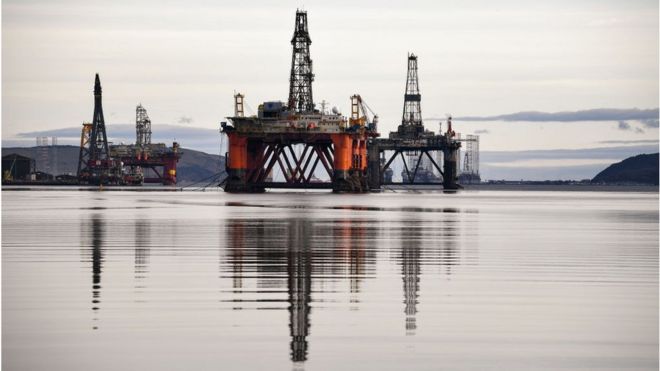
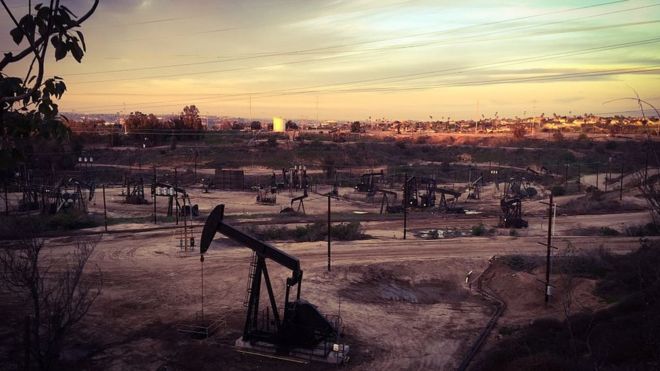
The European Union is to stop funding oil, gas and coal projects at the end of 2021, cutting €2bn (£1.7bn) of yearly investments.
The European Investment Bank (EIB), the EU's financing department, will bar funding for most fossil fuel projects.
The ban will come into effect a year later than originally proposed after lobbying by EU member states.
Since 2013, the EIB has funded €13.4bn of fossil fuel projects.
Last year it funded about €2bn worth of projects.
Under the new policy, energy projects applying for EIB funding will need to show they can produce one kilowatt hour of energy while emitting less than 250 grams of carbon dioxide, a move which excludes traditional gas-burning power plants.
Gas projects are still possible, but would have to be based on what the bank called "new technologies" such as carbon capture and storage, combining heat and power generation, or mixing in renewable gases with the fossil natural gas.
Andrew McDowell, the EIB's vice-president responsible for energy, said: "This is an important first step - this is not the last step."
Gas projects are fairly common in EU member states as they are seen as a cleaner alternative to coal and oil as countries transition away from using fossil fuels.
Environmental organisations welcomed the EIB decision, but said they were disappointed at the one-year delay.
"Hats off to the European Investment Bank and those countries who fought hard to help it set a global benchmark today," said Sebastien Godinot, an economist at the World Wildlife Fund.
Lobbying
The EIB's decision comes after EU finance ministers last week unanimously backed the phasing out of funding of fossil fuel projects to help combat climate change.
A decision on funding was planned last month, but was postponed due to divisions within the bloc as some countries wanted gas funding to continue.
This prompted Mr McDowell to write a letter to the bank's current 28 shareholders, the EU member states, on 5 November, suggesting pushing back the originally proposed end of fossil fuel lending from the end of 2020 to end of 2021, something the European Commission has lobbied for.
The EIB has ambitious goals on sustainable finance. Mr McDowell said the bank wants to "set the standard" for what it meant for banks to be aligned with the Paris climate agreement.
Protests against fossil fuels have intensified in recent years, with activists from groups such as Extinction Rebellion demanding governments take urgent action to slash carbon emissions and halt biodiversity loss.
Until recently, today's German GDP figures had been widely expected to show that the country had fallen into recession.
However, Claus Vistesenm, chief eurozone economist at Pantheon Macroeconomics, says he had "a sense that a small upside surprise was coming in today’s report given the solid September trade data, and upward revisions to the manufacturing numbers towards the end of Q3".
However, while there is no technical recession, he says Germany is "most definitely a very weak economy".
"In some sense, this is the 'worst' of both worlds for markets," he adds.
"Today’s data confirm that the German economy has now stalled, but the headlines are probably not dire enough to prompt an immediate and aggressive fiscal response from Berlin."
LONDON (Reuters) - World stocks nudged down on Thursday as Chinese economic data slowed in October and Germany only narrowly avoided a recession in the third quarter, adding to worries about the global growth fallout from the U.S.-China trade war.
MSCI’S All-Country World index, which tracks shares in 47 countries, was down 0.14% after start of trading in Europe.
European shares fell after data showing the German economy grew just 0.1% in the third quarter, avoiding edging into a mild contraction thanks to consumer spending, but remaining weak nevertheless.
The pan-European STOXX 600 index was down 0.2%, while Germany’s DAX fell 0.4%. [.EU]
“Obviously it’s better than expected, but actually I would argue is that it’s a hollow victory because in effect it makes a fiscal response less likely,” said Michael Hewson, chief markets analyst at CMC Markets in London.
“I think if they’d gone into a technical recession, the pressure to loosen the purse strings so to speak would have been much much greater.”
Bond markets also appeared to largely shrug off the growth reading, with most 10-year euro zone bond yields were down around 2 basis point in early trade, with Germany’s 10-year benchmark at -0.32%. [GVD/EUR]
In Asia, stocks fell after soft economic data in China and Japan showed the trade war between Beijing and Washington was hitting growth in some of the world’s biggest economies.
MSCI’s broadest index of Asia-Pacific shares outside Japan fell 0.3%. Japan’s Nikkei stock index fell further, dropping 0.8%.
Australia’s S&P/ASX200 wiped earlier gains to close 0.5% higher, while Shanghai blue chips were up 0.15%, supported by expectations that the gloomy figures would add to the case for stimulus.
China’s factory output growth slowed significantly more than expected in October, as weakness in global and domestic demand and the drawn-out Sino-U.S. trade war weighed on broad segments of the world’s second-largest economy.
Fixed asset investment, a key driver of economic growth, rose just 5.2% from January to October, against expected growth of 5.4% and the weakest pace since Reuters record began in 1996.
China and the United States are holding in-depth discussions on a “phase one” trade agreement, and cancelling tariffs is an important condition to reach such a deal, the Chinese commerce ministry said on Thursday.
China’s industrial production growth slowed sharply in October, with the 4.7% year-on-year rise well below forecasts for 5.4%. Investment growth hit a record low and retail sales also missed expectations.
The weak figures also come as market confidence about a resolution being reached weakens, with a new Reuters poll showing most economists do not expect Washington and Beijing to strike a permanent truce over the coming year.
Trump offered no update on the progress of negotiations in a policy speech on Tuesday. The Wall Street Journal reported on Wednesday that talks had snagged on farm purchases.
U.S. futures were down 0.14%, following a record-high close on the S&P 500 on Wednesday. [.N]
Worries about spiraling violence as anti-government protests intensify in Hong Kong have also soured investor sentiment.
Protesters paralyzed parts of Hong Kong for a fourth day, forcing school closures and blocking highways and other transport links in a marked escalation of unrest in the financial hub.
Hong Kong’s Hang Seng fell 0.8% to a fresh one-month low.
RISK-OFF ‘ALIVE AND WELL’
In currency markets, safe havens such as the Japanese yen and Swiss franc gained.
The yen was quoted at 108.70 per dollar, close to a one-week high. The Swiss franc traded at 0.9875 versus the greenback, near the highest in more than a week.
“Increasing signs of unrest in Hong Kong and Latin America coupled with the uncertainty around the trade talks is keeping the risk-off sentiment well and alive in FX markets,” said Lee Hardman, a London-based currency strategist at MUFG.
The dollar was 0.1% lower against a basket of peers.
The Australian dollar skidded to a one-month low after a worryingly weak reading on employment re-ignited speculation about another cut in interest rates.
Oil rose after industry data showed a surprise drop in U.S. crude inventories, while comments from an OPEC official about lower-than-expected U.S. shale production growth in 2020 also provided some support. [O/R]
Brent crude futures rose 0.74% to $62.83 a barrel while U.S. West Texas Intermediate (WTI) crude gained 0.77% to $57.56 per barrel.
The yield on benchmark 10-year Treasury notes fell to 1.8514% compared with its U.S. close of 1.869% on Wednesday.
Reporting by Ritvik Carvalho; Additional reporting by Saikat Chatterjee; Editing by Hugh Lawson
 GETTY IMAGES
 GETTY IMAGES