Thursday, February 20, 2020

Reuters News - China tests its soft power with neighbours over coronavirus outbreak

VIENTIANE (Reuters) - China called for solidarity on Thursday in a special meeting called to discuss the coronavirus outbreak with Southeast Asian nations, as Beijing faces criticism for its handling of the epidemic.
The hastily called gathering in Laos suggested China is seeking support from its smaller neighbours, which have received billions of dollars in Chinese investment and infrastructure in recent years as a key part of its Belt and Road Initiative.
ASEAN foreign ministers joined hands with their Chinese counterpart Wang Yi during the meeting and shouted “Stay strong, Wuhan! Stay strong, China! Stay strong, ASEAN!”. Wuhan is the Chinese city at the epicentre of the outbreak.
“Fear is more threatening than the virus and confidence is more precious than gold,” Wang told a news conference after the meeting, which started with the playing of a video clip of Southeast Asian leaders expressing their support for China.
In remarks during a welcome dinner on Wednesday evening, Wang was quoted by the Chinese Foreign Ministry as saying support from ASEAN countries and others “made us feel that this winter is not that cold and spring is coming”.
Analysts said Beijing was seeking expressions of support after it was taken to task for its handling of the outbreak of the new coronavirus, SARS-CoV-2, which has killed more than 2,100 people.
“China is promoting a message of friendships in ASEAN to counter the attack from the West that it has been handling the outbreak poorly,” said Alfred M. Wu, associate professor in the Lee Kuan Yew School of Public Policy at the National University of Singapore.

“LITMUS TEST”

ASEAN and China, its largest trading partner, have an annual travel flow of more than 65 million visits, and many ASEAN economies are reliant on Chinese tourist receipts. ASEAN nations collectively are also China’s second-largest trading partner.
But travel restrictions to prevent the spread of the disease have idled much of the world’s No. 2 economy and choked key elements of President Xi Jinping’s signature Belt and Road Initiative (BRI) of railways, ports and highways..
“Countries’ responses to the coronavirus have become somewhat of a litmus test for friendship,” said Tom Baxter, an independent researcher on China’s BRI.
“In ASEAN, responses seem quite divided between countries. The two that seem to have most obviously come out with a display of friendship are Cambodia and Laos,” he said, noting the open-door practices of China’s known allies.
In contrast, Singapore has imposed an outright ban, and the Philippines has barred all foreign nationals coming from China, Hong Kong and Macau. Malaysia has imposed a temporary travel ban on arrivals from all Chinese provinces that have been placed under lockdown by the Chinese government.
Even as the meeting kicked off, Thailand on Thursday issued a travel advisory urging citizens to avoid non-essential travel to China and advised those already there to leave, hinting that flights to China could be further restricted.
Easing travel restrictions was one of the main issues Wang discussed with his counterparts during private bilateral meetings late into Wednesday, according to press statements from the Chinese foreign ministry.
In a Wednesday night meeting with Singapore’s foreign minister, Vivian Balakrishnan, Wang said Beijing was worried about Singapore’s “restrictive measures” and hoped “normal exchanges between the two countries can be resumed as soon as possible.”
Additional reporting by Panu Wongcha-um in Bangkok, Neil Jerome Morales in Manila and Joseph Sipalan in Kuala Lumpur; Editing by Gerry Doyle and Helen Popper

Wednesday, February 19, 2020

BBC News - UK's cash system 'will collapse without new laws'

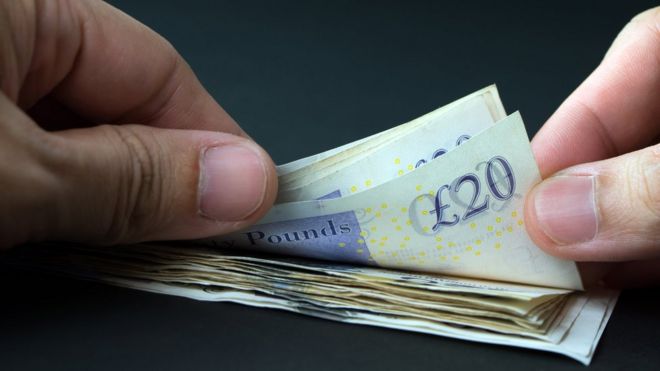
CashImage copyrightGETTY IMAGES
Campaigners have called for Chancellor Rishi Sunak to save banknotes and coins, saying without urgent new laws the cash system could collapse within a decade.
They want Mr Sunak to take action in his first Budget on 11 March.
"We must ensure the shift to digital doesn't leave millions behind or put our economy at risk," said Natalie Ceeney, of the Access to Cash Review.
The Treasury said it wanted "to ensure everyone who needs cash can access it."
Cash is important to millions of people, who still use it for paying for vital goods and services, such as utility and council bills.
According to the Financial Inclusion Commission, nearly two million people in Britain don't have a bank account, meaning they need notes and coins to pay their way.
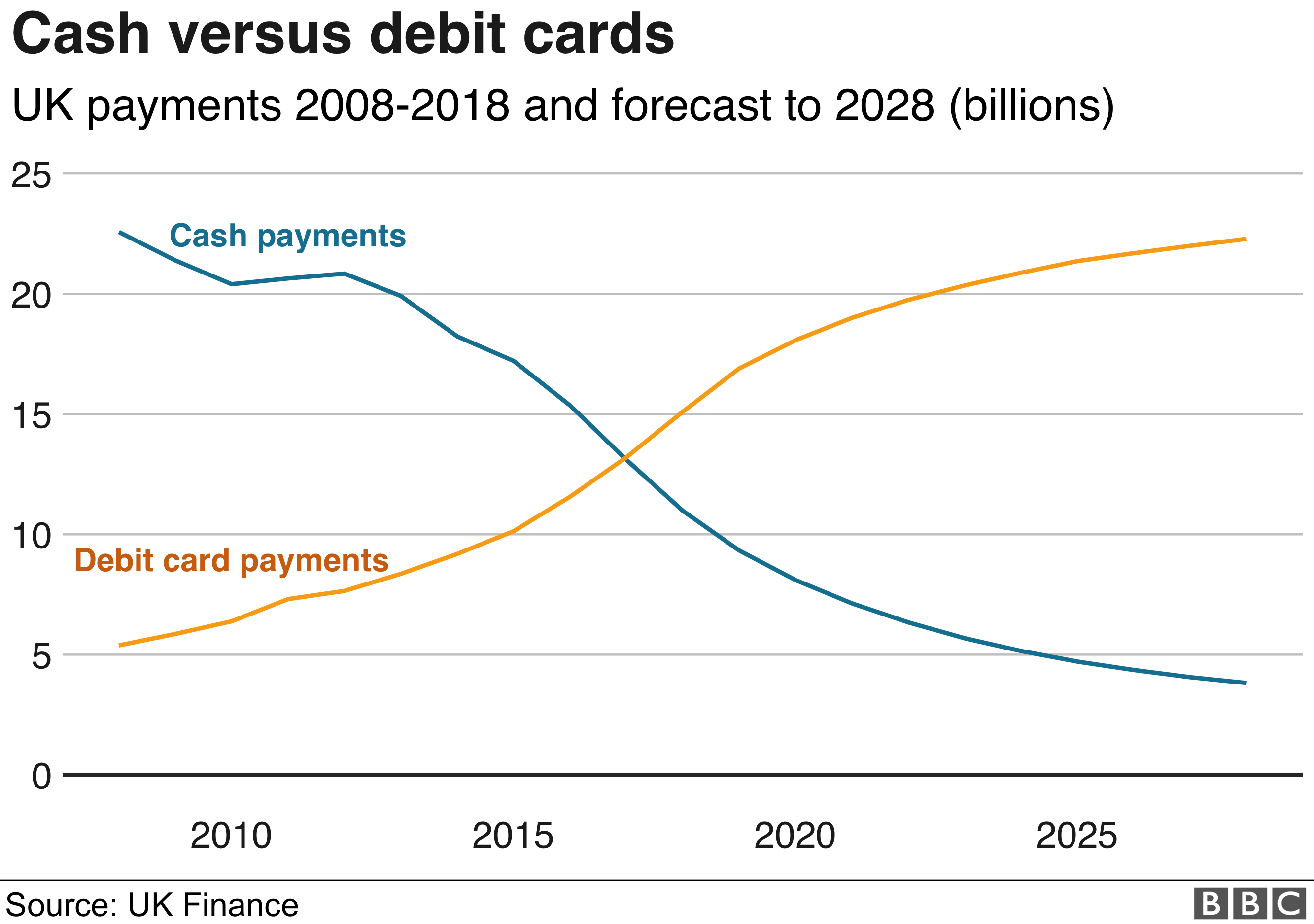
There were 11 billion cash payments in the UK in 2018, but they are forecast to fall to 3.8 billion in 2028, accounting for fewer than one in 10 (9%) of all payments.

A cashless society

Chart showing rising payments by debit card and declining cash useImage copyrightAFP
"The UK is fast becoming a cashless society - without knowing what this really means for consumers or for the UK economy," said Ms Ceeney.
Over the past year, 13% of free-to-use UK cash points have closed, as lower levels of cash use have made them economically unviable. A quarter (25%) of the machines now charge people to withdraw their cash.
The Post Office's cash access service has come under threat. Barclays recently reversed plans to stop customers taking cash out from Post Offices after a backlash.

Long-term access to cash

"The cash network has already been dramatically eroded, and unless urgent action is taken in the Budget, it's clear that it will crumble completely," warned Jenny Ross, Which? Money Editor.
"The new Chancellor must seize this opportunity and guarantee long-term access to cash in the Budget, while developing a clear strategy to ensure that the transition to digital payments doesn't leave anyone behind."
Various initiatives have been set up by the industry to help maintain people's access to cash, including cashback initiatives at local shops and a "request an ATM" service.
But the Access to Cash Review believes the only way to manage the cash system is for the government to legislate and give regulators the tools that they need to protect cash access.
Banks should be forced to provide suitable cash access to their customers, they say.
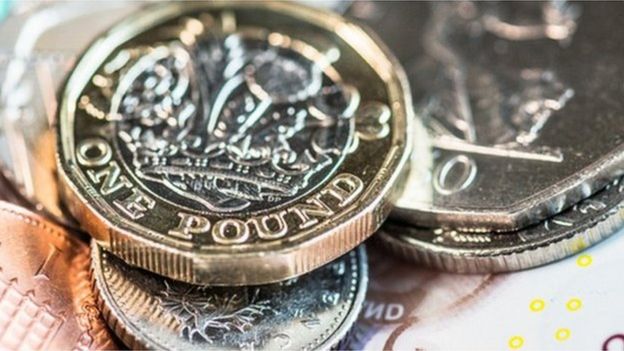
CashImage copyrightGETTY IMAGES
A spokesman for the Treasury said: "Technology has transformed banking for millions of people, but we know that many still rely on cash.
"That's why we've invested £2bn to ensure everyday banking services are available at 11,500 Post Office branches across the UK.
"We're also working closely with industry and regulators to ensure everyone who needs cash can access it."
A UK Finance spokesman said the banking and finance industry recognises the importance of ensuring cash remains free and widely available for those that continue to need it.
It said the industry has introduced a number of measures to achieve help, including "arrangements by Link to protect free-to-use ATMs in more remote and rural areas and to ensure that every High Street in the UK has free access to cash."
The trade body warned that there is no "one size fits all" approach and understanding the needs of local communities is critical.
The Federation of Small Businesses (FSB) called for financial incentives so smaller businesses could offer partial refunds on goods and services.
Martin McTague, FSB national policy and advocacy chairman, said: "We need to look at how we make offering cashback commercially viable for small businesses. The right financial incentives are a must."

Tuesday, February 18, 2020

Reuters News - China to grant tariff exemptions on 696 U.S. goods to support purchases

BEIJING (Reuters) - China will grant exemptions on retaliatory duties imposed against 696 U.S. goods, the most substantial tariff relief to be offered so far, as Beijing seeks to fulfill commitments made in its interim trade deal with the United States.

Tuesday’s announcement comes after the Phase 1 trade deal between the two countries took effect on Feb. 14 and is the third round of tariff exemptions China has offered on U.S. goods.
China has committed to boosting its purchases of goods and services from the United States by $200 billion over two years as part of the agreement, and has already rolled back some additional tariffs on U.S. imports after the deal was signed.
U.S. goods eligible for tariff exemptions include key agricultural and energy products such as pork, beef, soybeans, liquefied natural gas and crude oil, which were subject to extra tariffs imposed during the escalation of the bilateral trade dispute.
The coronavirus epidemic that emerged late last year in China has raised concerns about its ability to meet the purchasing targets, however. Authorities throughout the country imposed major restriction on travel and transportation to curb the spread of the virus, which has killed nearly 1,900 and infected more than 70,000 in the country.
The containment efforts have kept factories shut or operating with drastically reduced staff, hitting production. The public has also been discouraged from leaving their homes or going to public places, also stunting consumption.
White House adviser Larry Kudlow said earlier this month that Chinese President Xi Jinping told U.S. President Donald Trump during a recent call that China will still meet its Phase 1 trade deal purchasing targets.
Beijing’s announcement on Tuesday emphasized that Chinese firms will submit applications for tariff exemptions based on market conditions and commercial considerations.
“Unless the state forcefully asks firms to apply for tariff exemption and buy U.S. soybeans, crushers would still go for Brazilian beans, based on market free will,” said a trader, adding that Brazilian beans are of good quality and price this year.
Other products subject to exemption on additional tariffs imposed include denatured ethanol and wheat, corn and sorghum. Some medical devices and metals including copper ore and concentrates, copper scrap and aluminum scrap are also subject to exemption.
Pharmaceutical products such as recombinant human insulin and some antibiotics are also among U.S. products eligible for tariff exemptions.
Firms can start submitting their applications on March 2, and any exemptions granted will be valid for one year.
Reporting by Stella Qiu, Hallie Gu, Dominique Patton, Tom Daly, Min Zhang, Yawen Chen and Lusha Zhang; Writing by Se Young Lee; Editing by Jacqueline Wong

Monday, February 17, 2020

BBC News - Japan's economy shrinks at fastest rate since 2014

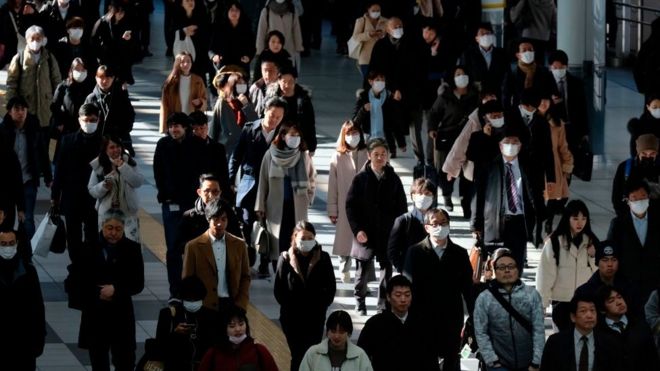
Commuters walk on concourse at a railway's terminal station in Tokyo on January 31, 2020.Image copyrightGETTY IMAGES
Japan's economy shrank at the fastest rate in five years at the end of 2019 as it was hit by a sales tax rise, a major typhoon and weak global demand.
Annualised gross domestic product (GDP) fell by a much steeper than expected 6.3% in October-December.
There are also concerns the coronavirus outbreak will mean the slump continues this quarter.
That has raised fears that the world's third-biggest economy may fall into recession.
During the period Japanese consumer spending fell 2.9% after the country's sales tax was raised in October to 10% from 8%. In the same month Typhoon Hagibis hit large parts of the country.
Last quarter, capital spending dropped by 3.7% and exports slipped 0.1% amid the ongoing US-China trade war.
Investors are now watching to see whether the economy will rebound after the coronavirus forced China to shut down factories and led to a big drop in Chinese tourists visiting Japan.
In response to today's data economy minister Yasutoshi Nishimura said the Japanese government was ready to take all necessary steps to deal with the impact of the coronavirus outbreak on the economy and tourism.
In December Prime Minister Shinzo Abe's government approved $120bn (£90bn) in spending aimed at cushioning the impact of the sales tax rise.
The shrink in GDP was the first in more than a year and the largest since a 7.4% fall in 2014, the last time Japan raised its sales tax.

Friday, February 14, 2020

BBC News - Brexit: Border delays 'could cause fresh food problems'

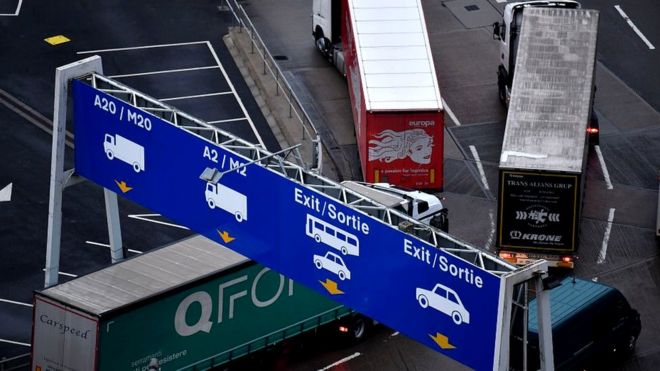
Lorries at Dover portImage copyrightGETTY IMAGES
Post-Brexit transition border checks could cause fresh food supply problems, an industry body has warned.
Shoppers will notice the supply issues next January unless there is a "massive upgrade" in border facilities, the British Retail Consortium said.
The warning came after cabinet minister Michael Gove said that border checks are "inevitable" after the Brexit transition period ends on 31 December.
Officials said firms have enough time to prepare for the changes.

Food availability

Border checks could quickly cause hold-ups at Channel ports of thousands of trucks, including those carrying fresh food, the BRC said.
The government will have to "move fast" to put in place the necessary border infrastructure and staff to cope with those checks by the end of the year, it said.
If it doesn't, "consumers in the UK will see significant disruption, particularly in the availability of fresh fruit and vegetables" the BRC's director of food and sustainability Andrew Opie warned.
"If you think this is going to hit us in January, that's our peak import season for things like fresh fruit and vegetables. Customers are really going to see the problems on supermarket shelves unless we get that infrastructure," he said.
"So, you've got enormous bureaucracy, enormous change, but crucially you've got a problem with the infrastructure at the key ports around the Channel, which currently really act as an extension of the motorway for our supply chain, where you will be holding thousands of vehicles every day."
"I don't know if you've been to Dover recently, but there isn't an enormous amount of room to hold that infrastructure," he added.

'Inevitable' border checks

The warning came after Mr Gove told a Border Delivery Group event on Monday: "The UK will be outside the single market and outside the customs union, so we will have to be ready for the customs procedures and regulatory checks that will inevitably follow."
The Brexit transition period is due to end at 11pm on 31 December this year.
From then, there will be import checks at the UK border, and traders in the EU and UK will have extra paperwork, the government said.
From next January, all traders will have to fill out customs declarations and be liable to customs checks on goods for cross-channel trade.
If no trade deal is reached with the EU, taxes such as tariffs will also need to be charged and collected.
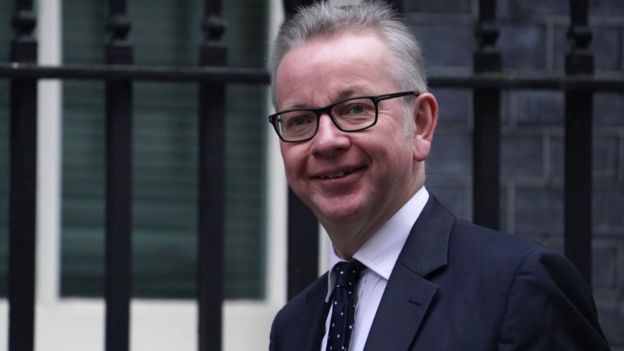
Michael GoveImage copyrightGETTY IMAGES
Image captionMichael Gove said businesses must be ready for 'customs procedures and regulatory checks'
Facilities such as the Channel Tunnel have been designed for minimal border checks.
New customs infrastructure, facilities and systems as well as staff, agents and vets will have to be in place by the end of this year.
But Mr Gove told the conference there would be light touch administration of trade across the Irish Sea.
However, last week it emerged that Stena Line, the biggest operator of ferries in the Irish Sea, is preparing for trade checks between Great Britain and Northern Ireland.
It was quietly confirmed in a speech. Some might argue it has been inevitable since the election.
But the change in the way the UK trade border functions with our biggest trade partner is one of the single biggest changes to the way the UK economy functions.
Put simply, many industries rely on the frictionless free flow of goods between the UK and the continent.
The unequivocal message from Michael Gove is that businesses should prepare for the the end of that as 2020 draws to a close.
Whereas the impact of all this in the Irish Sea has garnered considerable attention, the new trading arrangements between Dover and Calais and along the Channel Tunnel will have a bigger effect on the economy.
By getting businesses to take the prospect seriously, the government's hope is that more will be prepared and so delays and disruption can be limited.
But we are dealing with parts of the border that are designed to run without checks.
There will need to be more customs officers, thousands more customs agents, mass recruitment of vets, and new customs posts.
Almost every independent economic analysis - and the government's own until now - has shown that extra trade friction with what is currently our biggest market will be an overall hit to the economy.
Preparation can help alleviate some of that hit, but not all.

Added costs

Businesses also said they face extra costs from checks. The British Chambers of Commerce (BCC) said that for many businesses, border delays would incur higher costs than tariffs.
Adam Marshall, the BCC director general, said: "Additional friction will equal higher costs for a lot of our business, and while the discussion over the past few months has focussed a lot on tariffs, it's actually these border costs... that really is the biggest source of cost for most."
EU trade will not be waved through with zero checks, which would have been the case under a no-deal Brexit.
Traders will not be able to use special arrangements to lodge new paperwork after a grace period at a later date.
Industries from car manufacturers to food distributors, which rely on the frictionless free flow of goods with the continent, say they face extra costs, delays and red tape from what are known as non-tariff barriers.
Products of animal origin will need export certificates from a registered vet.

Thursday, February 13, 2020

Reuters News - Wall Street eases from record highs on coronavirus concerns, Cisco results

(Reuters) - Wall Street’s main indexes eased from record highs on Thursday, pressured by shares of Cisco after its disappointing quarterly forecast, while a spike in new coronavirus cases in China weighed on the sentiment.

The Chinese province at the center of the coronavirus outbreak reported a record rise in deaths and thousands more infections using a new diagnostic method, casting fresh uncertainty over the scale of the virus outbreak.
A day earlier, investors had bought on signs that the virus spread was slowing, lifting the benchmark S&P 500 .SPX and the Nasdaq .IXIC to their third straight closing highs. Dow Jones Industrials .DJI settled at an all-time high on Wednesday for the first time since Feb 6.
“The virus news coming out of China (is) a bit concerning, especially when investors thought it was all behind them,” said Paul Nolte, portfolio manager at Kingsview Asset Management in Chicago.
“We are also due for at least a little bit of a pullback.”
Cisco Systems Inc (CSCO.O) shares declined more than 6%, the biggest drag on the three indexes, after the network gear maker’s lackluster revenue and profit forecasts.
NetApp Inc (NTAP.O) tumbled about 11% as the data storage equipment maker’s current-quarter profit forecast fell short of expectations.
Technology stocks .SPLRCT, which have surged more than 10% this year, slipped 0.4%. Seven of the 11 major S&P sectors were lower.
At 9:54 a.m. ET, the Dow Jones Industrial Average .DJI was down 95.16 points, or 0.32%, at 29,456.26 and the S&P 500 .SPX was down 7.01 points, or 0.21%, at 3,372.44. The Nasdaq Composite .IXIC was down 28.81 points, or 0.30%, at 9,697.15.
Among other stocks, Kraft Heinz Co (KHC.O) shed 7.6% as it missed quarterly sales estimates and wrote down the value of some businesses - including coffee brand Maxwell House - by $666 million.
Caterpillar Inc (CAT.N) rose 0.4% after Goldman Sachs upgraded the construction and mining equipment maker’s shares to “buy”.
The fourth-quarter earnings season is winding down with 351 S&P 500 companies having reported so far. Of those, 70.9% have topped profit estimates, according to IBES data from Refinitiv.
Declining issues outnumbered advancers for a 1.31-to-1 ratio on the NYSE and for a 1.45-to-1 ratio on the Nasdaq.
The S&P index recorded 24 new 52-week highs and two new lows, while the Nasdaq recorded 46 new highs and 23 new lows.
Reporting by Medha Singh in Bengaluru; Editing by Shounak Dasgupta, Subhranshu Sahu and Saumyadeb Chakrabarty

Wednesday, February 12, 2020

BBC News - UK trade will thrive despite border checks, says chancellor

UK trade will thrive despite the introduction of UK border checks after the Brexit transition period, the chancellor has said.
Sajid Javid admitted frictionless trade with the EU would be "over" but said that Britain would have a "better future".
Earlier, an industry body warned border checks on imports could cause fresh food supply problems.
But Mr Javid said supply chains "would be protected".
"Of course, we are not going to have completely frictionless trade because we have left the [EU] customs union and single market," he told BBC economics editor Faisal Islam.
"That is a deliberate decision, because we have a better future as an independent sovereign nation trading with European friends, but also trading more so with the rest of the world."
He said the government would defend automotive and other industries that rely on frictionless trade, promising "complete equivalence".
"We are working closely with the car sector," he said. "We've been clear there will be some changes but that can be done in a way that the sector... continues to thrive."

Finance sector

Britain left the EU on 31 January but remains subject to its rules until the end of the transition period on 31 December 2020.
The government has vowed to strike a trade deal by then, but some warn it will not have time to reach a comprehensive agreement.
Commenting on Britain's goals, Mr Javid said he had urged the EU to consider Britain's financial sector as "equivalent", in order to protect its access to the bloc.
This was despite the EU's chief negotiator, Michel Barnier, having said earlier on Tuesday that this was not up for discussion.
The chancellor said he was confident the bloc would change its mind: "Look back at withdrawal agreement, there were things that EU would reject... only to change their mind later on."
He added there had been "private discussions" with the EU that made him "very confident about the future".
Earlier, the British Retail Consortium warned that post-Brexit transition border checks could cause fresh food supply problems unless there was a "massive upgrade" in border facilities.
It said thousands of trucks, including those carrying fresh food, could be held up at Channel ports.
The warning came after the government said the checks would mean extra paperwork for both EU and UK firms.
Michael Gove, the minister in charge of Brexit preparations, told an event on Monday that the end of frictionless trade was "inevitable".
"The UK will be outside the single market and outside the customs union, so we will have to be ready for the customs procedures and regulatory checks that will inevitably follow."