Tuesday, May 9, 2017

BBC News - Is work 'fair and decent'? That's not how the voters see it

The head of the government's review into zero-hours contracts and the less secure world of work has said that too many businesses still allow "bad work" to flourish.
Ahead of a speech on Tuesday evening, Matthew Taylor told the BBC that workers should be "engaged" by employers and feel more in control of how they work.
"I think some business leaders understand completely the importance of good work and its link to productivity, but, as always, we have a long tail of businesses where there doesn't seem to be that understanding," he told me.
Mr Taylor said that he was "shocked" at a new poll which suggests only 1-in-10 believe that all work is "fair and decent".

In-work poverty

Mr Taylor argued that it was "unacceptable" that so many people in work were classed as below the official poverty line.
recent report by the Joseph Rowntree Foundation found that the number of people defined as suffering "in-work poverty" had risen by 1.1 million since 2010, to 3.8 million.
Although overall poverty is down, the report said that high housing costs, low wage growth and cuts to benefits meant that more people were officially classed as below the poverty line (an income of 60% of median earnings) despite being in work.
Less secure work in the "gig-economy" is also seen as a challenge to employment standards.

Quality of work

Companies like Deliveroo and Uber have been criticised for controversial workplace practices, though many say that the companies offer good, flexible alternatives to 9-5 work and a better deal for consumers.
"I think bad work is unacceptable when so many people in work are in poverty," Mr Taylor told me.
"Bad work is clearly bad for our health and well-being, it leads to people dropping out of work.
"Bad work is bad for productivity, so it's bad for our economy.
"If we're going to introduce technology - robots, artificial intelligence - we need to do that in a way which thinks about the quality of people's work experience.
"Bad work just doesn't fit 2017. We want a world of engaged citizens, part of our communities.
"How can it be right that those same citizens who go to work for half their lives, don't get listened to, don't get involved, don't get engaged?"

Long journey

Mr Taylor, who is head of the Royal Society for the Encouragements of the Arts (the RSA), said the new poll findings showed that the public were not convinced that all work was of the right quality.
The RSA commissioned Populus to question more than 2,000 people.
Fewer than 1-in-10 thought that "all work was fair and decent".
And nearly 75% said that more should be done to improve the quality of work.
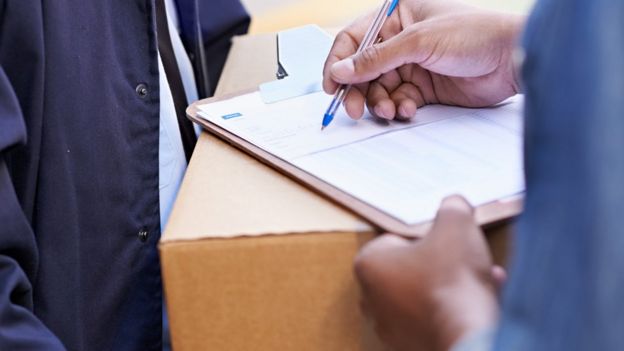
Close up of someone signing for a delivery
"Three quarters of people think that making work better should be a national priority," Mr Taylor said.
"It shows that nearly as many people think it is perfectly possible for all jobs to be fair and to be decent but actually, shockingly, only 1-in-10 think that is currently the state of affairs.
"So the public wants change, believes change is possible, but thinks we have got a long journey to go on."

New norm

As I wrote yesterday, the changing world of work is rising up the political agenda.
Theresa May made "an economy that works for everyone" the cornerstone of her "offer" to the voters after she became Prime Minister.
The government has said that introducing the National Living Wage and lifting tax thresholds (the point at which we start paying tax on our income) has helped many poorer people in work.
Both Labour and the Liberal Democrats have criticised the government for letting the problem of the "quality" of work become so acute.
Labour has suggested it will ban zero-hours contracts and the Lib Dems have said that more transparency around what people are paid will help tackle the gap between higher and lower earners.
Mr Taylor said his review, which will be delivered to Number 10 shortly after the election whoever becomes Prime Minister, will call for a mix of new tax rules and workplace regulations as well as the promotion of a "new norm" around how businesses treat their employees.
"There is an old fashioned view in some parts of business that good work is somehow anti-competitive - it isn't," Mr Taylor said.
"If you get people to work better, then they will be more productive and be better for your business.
"That is an argument we've still got to win."

Monday, May 8, 2017

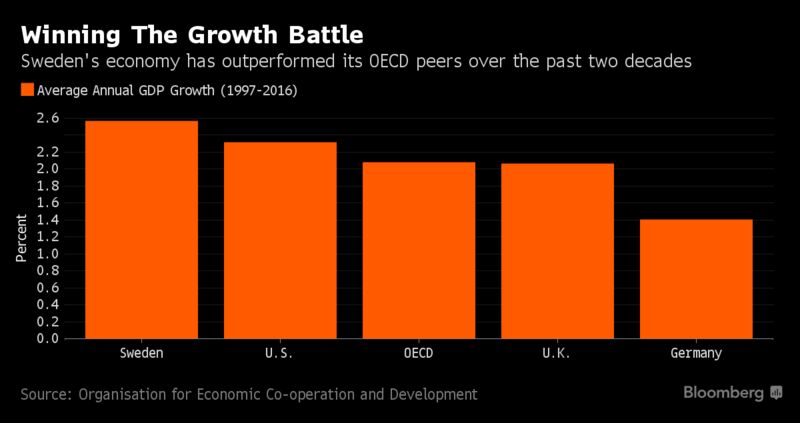
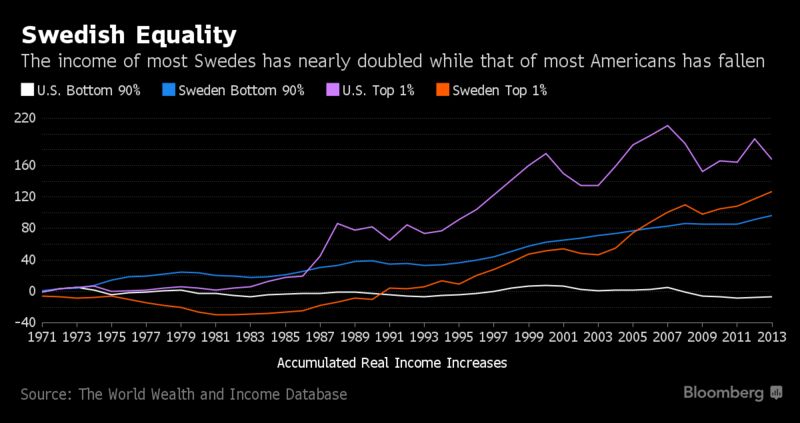
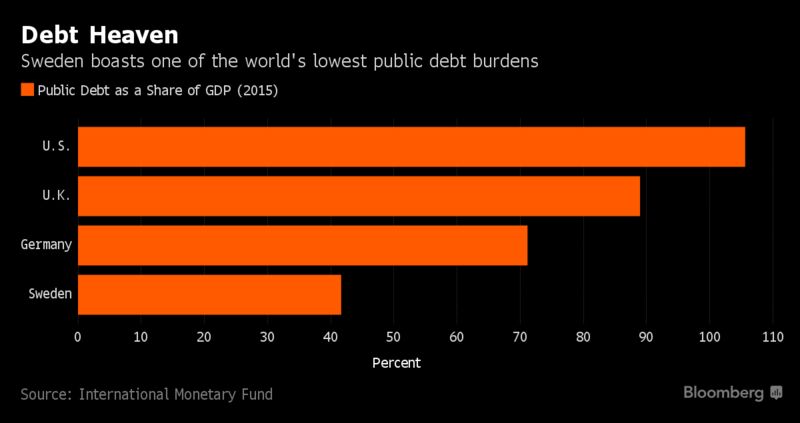
Bloomberg News - A Reverse-Trump Tax Plan Delivers an Economic Miracle in Sweden

BBC News - Greece makes preliminary agreement with creditors

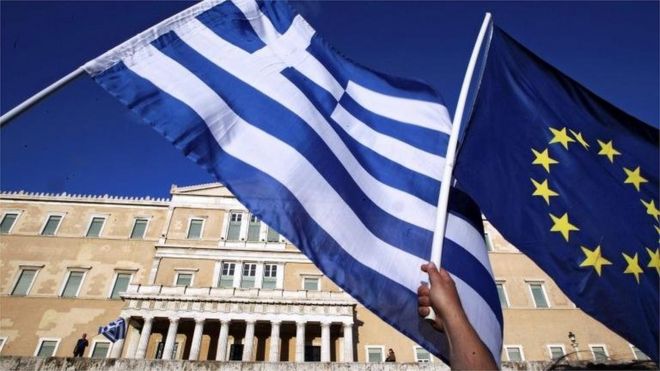
Greece has reached a preliminary agreement with its international creditors on reforms needed to release the next instalment of its multi-billion-dollar bailout.
Greek and eurozone flag outside Greek parliament building
Greece has promised to further cut pensions, by 0.9% on average, and lower the tax threshold to produce savings worth 2% of gross domestic product.
The measures will have to be approved by the Greek parliament.
Creditors have agreed to hold talks on how to make Greece's debts sustainable.
Greece has been pushing for measures on debt relief.
The German finance ministry called the deal an important intermediate step.
Greece has to repay $7.5bn (£5.8bn; 6.9bn euros) to its eurozone lenders and the International Monetary Fund in July.
The next step is a meeting on 22 May of eurozone finance ministers, who are required to sign off on the deal.
Earlier this month, the Greek government agreed to take on another $3.8bn in cuts in 2019 and 2020.

Analysis: Andrew Walker, economics correspondent

It is painfully slow but this agreement is progress towards a bailout instalment that Greece needs if it's to make some debt payments due in July. Many Greeks facing even more austerity - pension cuts and tax rises - might not care much about whether that happens or not. But missing the July deadline would mean more financial turbulence and further delays before the rest of the eurozone would be ready to talk about additional debt relief. The IMF insists that's essential if the debt is to be made sustainable. But it won't be in the form of a reduction of the principal sum that Greece owes. It will be measures that effect the interest payments and the repayment period. Will it finally clear the decks and leave Greece financially self-sufficient? There are plenty of people thinking that this, the third bailout, will not do the trick

Friday, May 5, 2017

BBC News - Federal Reserve: US economic slowdown temporary

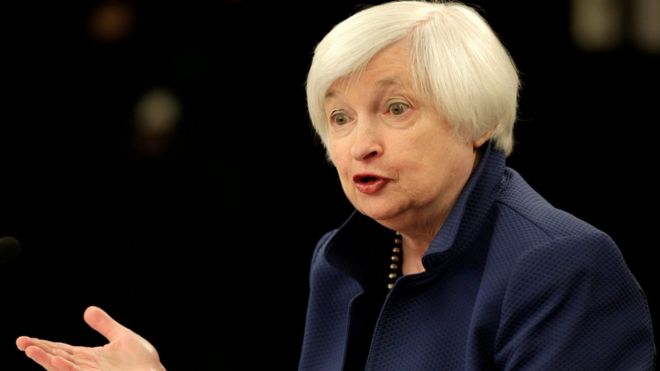
The US Federal Reserve has said it expects a recent slowdown in the US economy to only be temporary.
Janet Yellen
GDP grew at an annual rate of 0.7% in the first quarter - the slowest rate since the first quarter of 2014.
But the US central bank said it expected growth to pick up again, and decided to keep a key interest rate on hold in a range of 0.75% to 1%.
The Fed has only raised interest rates three times in the last decade, most recently in March this year.
Most analysts expected there to be no action on rates this month.
But they were watching to see if policymakers would hint at a possible rate rise in June, despite recent weak economic data.
The central bank said it viewed "the slowing in growth during the first quarter as likely to be transitory" and still expected economic activity to "expand at a moderate pace".

Rate rise in June?

The statement, released after the Fed's May meeting, pointed to stronger business investment and downplayed modest growth in household spending.
Traders reacted by increasing the probability of a rate rise next month.
Ryan Sweet, senior economist at Moody's Analytics, said: "The Fed is communicating its mantra of gradual rate hikes. The next time they will likely raise rates would be June."
Brian Coulton, chief economist at Fitch Ratings, said: "There is nothing in here to change our view of two more rate hikes this year."
The Federal fund interest rate peaked in the early 1980s at nearly 20%.
But it has been at record lows since the financial crisis as central bankers sought to boost the economy.

Thursday, May 4, 2017

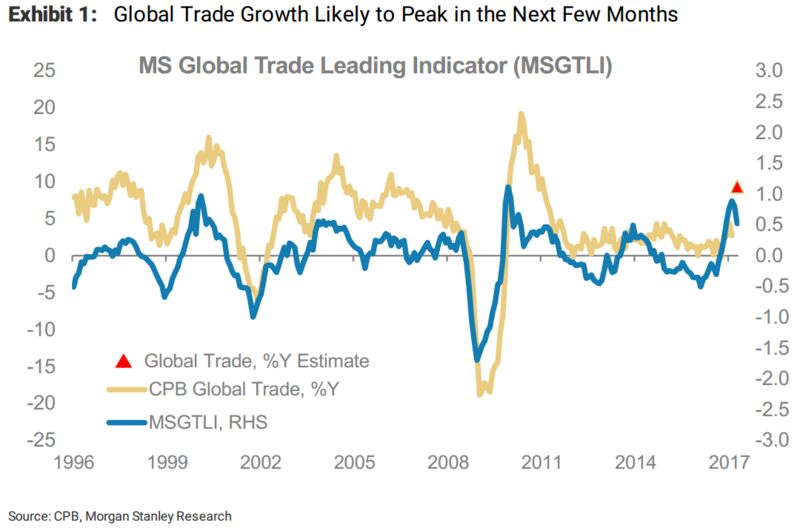
Bloomberg News - Global Trade Growth Is About to Roll Over

Wednesday, May 3, 2017

Reuters News - Consumer demand fears knock global stocks, dollar up before Fed decision


A worker shelters from the rain under a Union Flag umbrella as he passes the 
London Stock Exchange in London, Britain, October 1, 2008. 
REUTERS/Toby Melville/File Photo
By Patrick Graham | LONDON
Falls in iPhone and U.S. car sales helped beat European stock markets back from 20-month highs on Wednesday while the dollar inched up as investors priced in a greater chance of further tightening of U.S. monetary policy next month.
Falls in the price of copper CMCU3 and iron ore DCIOcv1 fed in to a broadly flatter global mood and Wall Street was set to open lower, adding to a run of steady losses since the settling of nerves over French elections a week ago.
The surprise fall in Apple's iPhone sales in the first quarter and drops in units sold by Ford (F.N) and General Motors (GM.N) added to nerves about the durability of U.S. growth after a batch of shakier economic data last month.
"These numbers point to U.S. consumers becoming more cautious and do seem like a source of some of the weakness today," said Andy Sullivan, a portfolio manager with GL Asset Management UK in London. "Autos, tech and basic resources are leading Europe lower."
By 1134 GMT, the STOXX 600 index of leading European shares was down 0.15 percent. France's CAC 40 .FCHI and Germany's DAX .GDAXI fell 0.25 and 0.1 percent respectively while the resource-heavy FTSE 100 .FTSE dipped 0.3 percent.
After a mixed Asian session, with a number of major markets closed, the MSCI global share index was marginally lower on the day. .MIWD00000PUS. U.S. futures dipped by 0.1-0.2 percent 1YMc1 NQc1.
Since December, the U.S. Federal Reserve has finally begun to deliver on long-disappointed expectations of a steady rise in borrowing costs and an increase in official rates in June is now 65 percent priced in by markets, according to Reuters data.
But economic numbers in the past month have been less convincing, and the latest gains for global share prices look as much the product of an improving recovery in Europe as the U.S.-based optimism that dominated the end of last year.
That raises the question, ahead of the Fed's May policy decision later on Wednesday, of how much the world's largest economy is capable of stomaching tighter monetary conditions without a boost from tax cuts or new public spending.

Satoshi Okagawa, senior global markets analyst for Sumitomo Mitsui Banking Corporation in Singapore, said the weak U.S. auto sales could make market participants wary of actively buying the dollar against the yen for now.
"Concerns about geopolitical risks such as North Korea had weighed on the dollar against the yen recently ... But the focus is shifting to whether the (strength) of U.S. economic fundamentals is for real," he said.
"There is more data coming up including the jobs data, so those need to be watched closely," he added, referring to the U.S. nonfarm payrolls report due on Friday.
The dollar index .DXY, which tracks the greenback against a basket of trade-weighted peers, rose 0.1 percent to 99.069.
It gained around 0.2 percent against the yen JPY=D4 and the euro on the day but remained below highs hit over the past week.
(Additional reporting by Nichola Saminather in Singapore; Editing by Catherine Evans)

Tuesday, May 2, 2017

BBC News -Trump is considering new Glass-Steagall-style bank rules

President Donald Trump on Monday said he is considering breaking up big Wall Street banks, by splitting their consumer business from their investment operations.
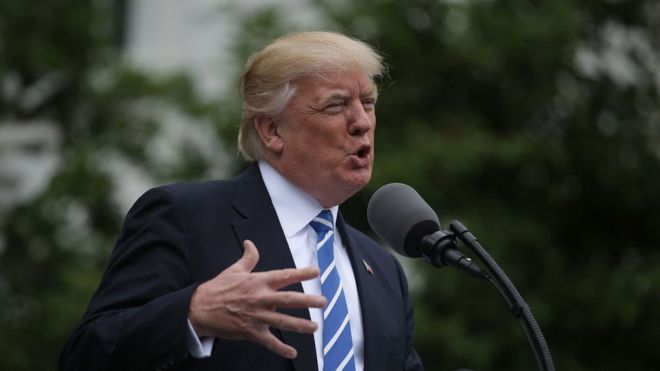
Donald TrumpImage copyrightALEX WONG/GETTY
Image captionDonald Trump spoke to community bankers in Washington on Monday.
"I'm looking at that right now," he told Bloomberg News.
White House spokesman Sean Spicer said there were no further details and no announcement was planned.
Shares in banks initially fell after President Trump's comments before recovering ground.
US banks were permitted to own both High Street banks and investment banking operations in 1999, when the Glass-Steagall Act was repealed.
Some argue the repeal set the groundwork for the financial crisis in 2007-8.
During the campaign, President Trump expressed support for a "21st-century" Glass-Steagall Act.
"There's some people that want to go back to the old system, right? So we're going to look at that," the president told Bloomberg, in response to a question about breaking up the banks.
But the odds of anything happening this year are low, according to Larry McDonald the author of A Colossal Failure of Common Sense, a book about the collapse of Lehman Brothers.
While keeping consumer deposits and riskier banking practices separate makes sense, Mr McDonald said the Trump administration has more pressing priorities, such as tax reform.
"With all the lobbyists and everything they have to do... this is way down the list," he said.

'Score points'

Mr McDonald said there are good political reasons why the president might want to take a tough line on the banking industry.
"The average little guy loves to hear this, so he's going to score points with his base and it may not hurt him politically at all because it may not get done," he said.
The idea has support from some key US congressional figures, such as Democrat Elizabeth Warren and Republican John McCain.
But any change is likely to face stiff resistance from the banking industry, making approval in Congress difficult.
The American Bankers Association said on Monday it opposes reintroduction of Glass-Steagall.
"There is broad agreement, including among all our bank regulatory agencies, that Glass-Steagall would not have prevented the crisis or the housing market collapse," association president Rob Nichols said in a statement.

Regulation pledge

President Trump has also promised to roll back legislation covering the banking sector, including the Dodd-Frank regulations introduced following the financial crisis.
Dodd-Frank was designed in part to protect consumer banking operations from riskier investment banking business.
Among other provisions, it required banks keep money in reserve at levels the president has said he thinks are onerous on smaller operations.
Earlier, US Treasury Secretary, Steve Mnuchin said he believed the American economy could be growing at a rate of three percent within two years, thanks to the administrations proposed tax reforms.
On the campaign trail Trump promised growth of 4% a year. The economy is currently growing at a rate of 0.7%.