Friday, June 9, 2017

Reuters News - May to try to form government after UK election debacle, uncertainty over Brexit talks

By Costas Pitas and Kylie MacLellan | LONDON
British Prime Minister Theresa May will ask Queen Elizabeth for permission to form a government on Friday after an election debacle that saw her Conservative Party lose its parliamentary majority days before talks on Britain's EU departure are due to begin.
Confident of securing a sweeping victory, May had called the snap election to strengthen her hand in the European Union divorce talks. But in one of the most sensational nights in British electoral history, a resurgent Labour Party denied her an outright win, throwing the country into political turmoil as no clear winner emerged.
May's Labour rival Jeremy Corbyn, once written off by his opponents as a no-hoper, said May should step down and he wanted to form a minority government.
But May, facing scorn for running a lackluster campaign, was determined to hang on. A spokesman for her office said she would go to Buckingham Palace to ask Queen Elizabeth for permission to form a government - a formality under the British system.
Sky News reported that Northern Ireland's Democratic Unionist Party (DUP) would back her, allowing the Conservatives to reach the 326 seats needed for a parliamentary majority. The DUP declined to comment.
With 649 of 650 seats declared, the Conservatives had won 318 seats and Labour 261.
The DUP, which took 10 seats, was considering an arrangement which would involve it supporting a Conservative minority government on key votes in parliament but not forming a formal coalition, Sky said.
"If ... the Conservative Party has won the most seats and probably the most votes then it will be incumbent on us to ensure that we have that period of stability and that is exactly what we will do," a grim-faced May said after winning her own parliamentary seat of Maidenhead, near London.
But with complex talks on Britain's divorce from the EU due to start in 10 days, it was unclear what their direction would now be and if the so-called "Hard Brexit" taking Britain out of a single market could still be pursued.
After winning his own seat in north London, Corbyn said May's attempt to win a bigger mandate had backfired.
"The mandate she's got is lost Conservative seats, lost votes, lost support and lost confidence," he said.
"I would have thought that's enough to go, actually, and make way for a government that will be truly representative of all of the people of this country."
Asked whether Brexit negotiations should be delayed, Corbyn told Sky News: "They're going to have to go ahead because Article 50 has been invoked."

"Our position is very clear, we want a jobs-first Brexit, therefore the most important thing is the trade deal with Europe," he said.
Corbyn said Labour was ready to lead a minority government. Chief among its potential allies would be the Scottish National Party (SNP), which suffered major setbacks but still won a majority of Scottish seats.
BREXIT RISKS
From the EU's perspective, the upset meant a possible delay in the start of Brexit talks and an increased risk that negotiations would fail.
"We need a government that can act," EU Budget Commissioner Guenther Oettinger told German broadcaster Deutschlandfunk. "With a weak negotiating partner, there's a danger that the negotiations will turn out badly for both sides."
The EU's chief negotiator said the bloc's stance on Brexit and the timetable for the talks were clear, but the divorce negotiations should only start when Britain is ready.
"Let's put our minds together on striking a deal," Michel Barnier said.
Sterling tumbled as much as 2.5 percent on the result while the FTSE share index opened higher. The pound hit an eight-week low against the dollar and its lowest levels in seven months versus the euro.
Britain's Prime Minister Theresa May waits for the result of the vote in her constituency at the count centre for the general election in Maidenhead, June 9, 2017. REUTERS/Toby Melville
"A working government is needed as soon as possible to avoid a further drop in the pound." said ING currency strategist Viraj Patel in London.
Craig Erlam, an analyst with brokerage Oanda in London, said a hung parliament was the worst outcome from a markets perspective.
"It creates another layer of uncertainty ahead of the Brexit negotiations and chips away at what is already a short timeline to secure a deal for Britain," he said.
"DREADFUL CAMPAIGN"
Conservative member of parliament Anna Soubry was the first in the party to disavow May in public, calling on the prime minister to "consider her position".
"I'm afraid we ran a pretty dreadful campaign," Soubry said.
May had unexpectedly called the snap election seven weeks ago, even though no vote was due until 2020. At that point, polls predicted she would massively increase the slim majority she had inherited from predecessor David Cameron.
May had spent the campaign denouncing Corbyn as the weak leader of a spendthrift party that would crash Britain's economy and flounder in Brexit talks, while she would provide "strong and stable leadership" to clinch a good deal for Britain.
But her campaign unraveled after a policy u-turn on care for the elderly, while Corbyn's old-school socialist platform and more impassioned campaigning style won wider support than anyone had foreseen.
In the late stages of the campaign, Britain was hit by two Islamist militant attacks that killed 30 people in Manchester and London, temporarily shifting the focus onto security issues.
That did not help May, who in her previous role as interior minister for six years had overseen cuts in the number of police officers. She sought to deflect pressure onto Corbyn, arguing he had a weak record on security matters.
With the smaller parties more closely aligned with Labour than with the Conservatives, the prospect of Corbyn becoming prime minister no longer seems fanciful.
That would make the course of Brexit even harder to predict. During his three decades on Labour's leftist fringe, Corbyn consistently opposed European integration and denounced the EU as a corporate, capitalist body.
As party leader, Corbyn unenthusiastically campaigned for Britain to remain in the bloc, but has said Labour would deliver Brexit if in power, albeit with very different priorities from those stated by May.
"What tonight is about is the rejection of Theresa May's version of extreme Brexit," said Keir Starmer, Labour's policy chief on Brexit, saying his party wanted to retain the benefits of the European single market and customs union.
Analysis suggested Labour had benefited from a strong turnout among young voters.
The campaign had played out differently in Scotland, the main faultline being the SNP's drive for a second referendum on independence from Britain, having lost a plebiscite in 2014.
SNP leader and First Minister Nicola Sturgeon said it had been a disappointing night for her party, which lost seats to the Conservatives, Labour and the Liberal Democrats.
Scottish Conservative leader Ruth Davidson said Sturgeon should take the prospect of a new independence referendum off the table.
(Additional reporting by Guy Faulconbridge, Alistair Smout, David Milliken, Paul Sandle, William Schomberg, Andy Bruce, William James, Michael Urquhart and Paddy Graham in London, Padraic Halpin in Dublin, Writing by Estelle Shirbon, Editing by Angus MacSwan and Janet Lawrence)

Thursday, June 8, 2017

BBC News - ECB forecasts higher growth but keeps rates on hold

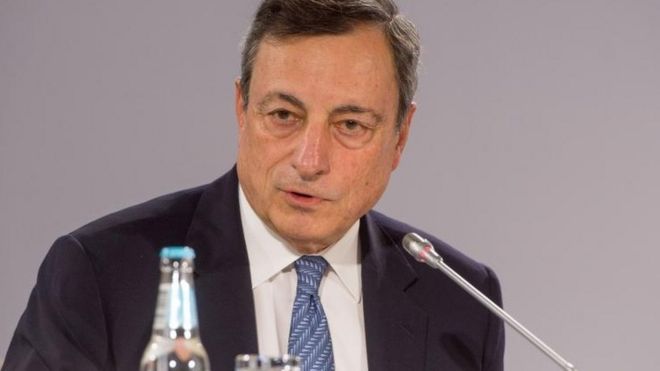
Mario Draghi
The European Central Bank (ECB) has increased its forecasts for economic growth in the eurozone but kept interest rates on hold.
ECB president Mario Draghi also hinted that there was no need to cut rates further.
He told a press conference: "We are now confident that inflation will converge with our objectives."
The ECB now expects growth across the eurozone to be 1.9% in 2017 compared with its March forecast of 1.8%.
It also increased its growth projection for 2018 to 1.8% from 1.7%, and for 2019 to 1.7% from 1.6%.
Earlier on Thursday, the Eurostat statistics agency had said the eurozone economy had grown at its fastest rate in a year during the January-to-March quarter.
At that rate, the 19 countries that use the euro would see growth at 2.3% this year, nearly double the rate of the US, which is on course to grow 1.2%.

Recovery

Mr Draghi said the recovery was due to a pick-up in investment and corporate profitability, gains in employment and the global recovery supporting trade and euro area exports.
However, he added that growth prospects were being dampened by "a sluggish pace of implementation of structural reforms".
He said that the ECB would continue its stimulus programme buying bonds, adding that the "ECB will be in the market for a long time".
The bond buying programme is expected to top 2 trillion euros by the year end, and its current interest rates mean that banks have to pay a deposit rate of 0.4% to park their funds with the ECB.
Aberdeen Asset Management Senior Investment Manager Patrick O'Donnell said:"The ECB is essentially in a holding pattern, waiting for more positive inflation data to come in.
"There's no appetite to risk choking off the growth that the economy has been seeing of late. Doing nothing is probably the right decision at the moment."

Wednesday, June 7, 2017

Reuters News - Trump seeks legislative wins to cast off shadow of Russia probes

U.S. President Donald Trump walks out to annouce proposed reforms to the U.S. air traffic control system during an event at the White House in Washington, DC, U.S. June 5, 2017. REUTERS/Jonathan Ernst
U.S. President Donald Trump walks out to annouce proposed reforms to the U.S. air traffic control system during an event at the White House in Washington, DC, U.S. June 5, 2017. REUTERS/Jonathan Ernst

By Steve Holland and Susan Cornwell | WASHINGTON
President Donald Trump pressed Republican congressional leaders on Tuesday to complete their overhaul of the U.S. healthcare system as lawmakers said they were making progress on a contentious effort that threatens to overwhelm their legislative agenda.
In a White House meeting, Trump welcomed indications by senior Republicans that the Senate might vote on a healthcare bill in July, before it breaks for the summer, after the House of Representatives passed its own version in May.
"Now the Senate I'm sure will follow suit and get a bill across the finish line this summer that will be great healthcare and I'm looking forward to seeing it," Trump said.
The gathering included Senate Majority Leader Mitch McConnell, and his No. 2, Senator John Cornyn, along with House Speaker Paul Ryan and his deputies, Representatives Kevin McCarthy and Steve Scalise.
Buffeted by criticism on many fronts, Trump wants faster action from his fellow Republicans who control Congress, pressing lawmakers to finish the job of dismantling the Obamacare healthcare law and move on quickly to another of his priorities: tax cuts.
McConnell said Senate Republicans are "getting close" to a healthcare plan after he presented an outline at a lunchtime meeting but he declined to say when he might bring it up for a vote. Other senior Republicans say they hope to vote by early July.
"The leader would like to do this soon," Senator Orrin Hatch told reporters.
The Senate requires a 60-vote supermajority to advance most legislation but Republican Mike Enzi, head of the Senate Budget Committee, said the health bill that passed the House qualifies for an expedited process that would require only 51 votes.
Still, Republicans have little margin for error because they only control 52 seats in the 100-seat chamber and remain divided over key questions such as how quickly to scale back the Medicaid health plan for the poor.
"You have to get 50 people - that means they have to get me and a lot of people who are concerned about Medicaid," said Senator Shelly Moore Capito of West Virginia, a state that depends heavily on the program.
Medicaid was expanded under Obamacare but the House bill would phase that expansion out in 2020. The Senate bill might keep the expansion in place beyond that date, said Republican Senator John Barrasso.
COMEY TESTIMONY
Whatever the White House's efforts to push ahead with policy plans, there will be a spotlight on testimony by James Comey, the FBI director fired by Trump last month, to the Senate Intelligence Committee on Thursday.
Senators will question Comey on whether Trump tried to get him to back off an FBI investigation into ties between the president's 2016 campaign and Russia, an attempt that critics have said could constitute obstruction of justice. Trump denies any collusion with Russia and has called the investigation a "witch hunt."
The Justice Department has appointed a special counsel to oversee its probe into the Russia issue and several congressional panels also are investigating the matter.
Elected on pledges to overhaul the healthcare system and slash taxes, Trump has yet to achieve a major legislative win, and time is running out before lawmakers leave Washington for the August break.
There has been little progress on healthcare since the House passed its bill. McConnell told Reuters late last month he did not yet know how to amass the votes needed to pass a bill on healthcare.

He appeared to make some progress on Tuesday. Some Republican lawmakers praised an outline that McConnell presented at a lunchtime meeting, although they cautioned that much work remained to be done.
Senator Bill Cassidy said the plan offered more protections than the House bill for people who already have pre-existing illnesses when they apply for insurance coverage - a major point of contention.
"I think personally they are moving in the right direction," he said.
The House healthcare bill could result in 23 million people losing insurance, according to the nonpartisan Congressional Budget Office. The bill also would reduce federal deficits by $119 billion between 2017 and 2026, according to the analysis.
Congress might then turn its focus to overhauling the tax code in September. While the administration would prefer that such changes not add to the national debt, Marc Short, Trump's top aide on Capitol Hill, told reporters on Monday that the top priority would be cutting taxes.
The Trump administration has outlined a broad plan that would cut tax rates for businesses and streamline the tax system for individuals. The proposal has been short on details, including how much the tax cuts would cost and what loopholes would be closed.
Others are eager to move past healthcare as well.
"We need to bring this to an end and move to taxes," said Republican Senator Lindsey Graham.
(Additional reporting by Ayesha Rascoe, Richard Cowan, Mohammed Zargham, Roberta Rampton, Amanda Becker and Susan Heavey; Writing by Andy Sullivan and Alistair Bell; Editing by Frances Kerry and Bill Trott)

Tuesday, June 6, 2017

Reuters News - Port bans choke Qatar's commodity trade as gas supply worries grow


Buildings are seen on a coast line in Doha, Qatar June 5, 2017. REUTERS/Stringer -


By Roslan Khasawneh and Oleg Vukmanovic | SINGAPORE/LONDON
A campaign by leading Arab powers to isolate Qatar is disrupting trade in commodities from crude oil to metals and food, and deepening fears of a possible jolt to the global gas market, where the tiny Gulf state is a major player.
Just a day after Saudi Arabia and its Arab allies severed transport links with Qatar over a diplomatic row, bans on Doha's fleet using regional ports and anchorages threatened to halt some of its exports and disrupt those of liquefied natural gas (LNG).
Traders worried that Riyadh's allies would refuse to accept LNG shipments from the Gulf state, and that Egypt might even bar tankers carrying Qatari cargoes from using the Suez Canal as they head to Europe and beyond - although Cairo is bound by an international agreement to let them use the waterway.
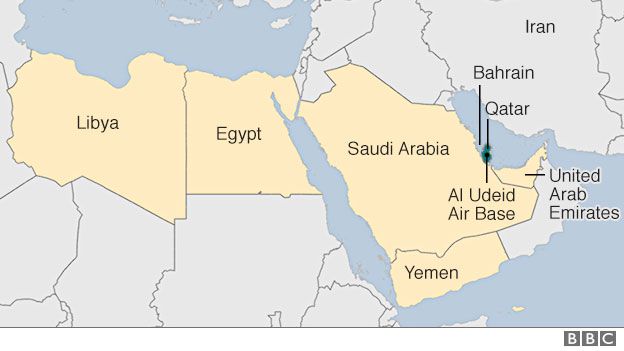
Saudi Arabia, Egypt, the United Arab Emirates (UAE) and Bahrain severed relations with Qatar and closed their airspace to commercial flights on Monday, in the worst split between powerful Arab states in decades.
U.S. President Donald Trump joined in the dispute on Tuesday, saying leaders he met on a Middle East trip had warned him that Doha was funding "radical ideology". Qatar vehemently denies the accusations made against it.
Qatar is now unable to load crude oil onto supertankers together with other Gulf-based grades, and price agency S&P Global Platts said it would not automatically include the country in its Middle East price benchmark.
The agency noted that tankers usually combine Qatari shipments with crude from Kuwait, Saudi Arabia, the UAE and Oman before heading from the Gulf. "Restrictions on vessels calling into Qatar and associated uncertainty could impact the inherent value of crude loading from Qatar," it said.
More worryingly, food imports are affected as Saudi Arabia closed its land border with Qatar, stranding thousands of trucks carrying supplies. Sources said the UAE and Saudi Arabia have already cut exports of white sugar to Qatar. Consumption is traditionally higher during the Muslim holy month of Ramadan, which is currently being observed.
Qatar, which largely depends on food imports for its population of 2.5 million, has assured residents it has taken measures to assure that normal life continues.
However, Maersk (MAERSKb.CO), the world's biggest container shipping line, said it can no longer transport goods in or out of Qatar.
Containers carrying food and other consumer goods are usually shipped to Qatar via the UAE port of Jebel Ali. A Maersk Line spokesman said: "We have confirmation that we will not be able to move Qatar cargo in and out of Jebel Ali."
Shoppers packed stores in Doha on Monday to stock up. On Tuesday, fresh poultry and some types of milk were in short supply at two supermarkets visited by a Reuters reporter. However, plenty of fruit and vegetables remained on the shelves.

EXCLUSION ZONES
With exclusion zones sweeping into effect, vessels from Qatar are no longer able to dock in the UAE or Saudi Arabia as planned. According to shipping data on Thomson Reuters Eikon, around half a dozen oil, chemical and LNG tankers have had to leave UAE waters or have halted in the open ocean.
Bans on Qatar-linked oil and LNG vessels refueling at the UAE's port of Fujairah have added to chaos, pushing shippers to find new refueling points at extra cost, industry sources said.
Lying near the Strait of Hormuz, through which ships pass on their way to customers in Asia, the United States or Europe, Fujairah is one of the world's most important ports for the global energy market.
Qatar, the world's biggest LNG seller, is moving to send a first batch of LNG tankers as far afield as Singapore and Gibraltar to refuel with Fujairah now off limits. Some trade sources said this could increase costs and delay deliveries to its clients globally.
The UAE's ban also effectively halts deliveries of LNG produced in Qatar to the Gulf state, trade sources said. Royal Dutch Shell has a deal with the Dubai Supply Authority to deliver up to three LNG cargoes per month, typically sourced from Qatar.

"This shouldn't affect the spot market though. Shell will simply need to go into its global portfolio and find LNG from elsewhere to send to Dubai. It's a minor inconvenience," one LNG trader said.
LNG traders are on high alert for signs of disruption through the Suez Canal. They are tracking the Al Ruwais LNG tanker, which is nearing the waterway and plans to become the first Qatari cargo to pass through since the row erupted.
Cairo has made no official statement. However, a Suez Canal Authority official said that under an international agreement, Cairo allows all ships to pass through except for those from countries at war with Egypt. The Suez Canal does not have the power to prevent Qatari ships from passing, the official added, speaking on condition of anonymity.
Any tanker barred from using the canal would have to sail around Africa, adding a month to shipping times. Such disruption could boost demand for Russian gas, just as Europe is trying to reduce its reliance on such supplies due to disputes with Moscow over its role in the Ukraine crisis.
Another test will be a batch of LNG shipments of Qatari origin being brought by commodity trader Trafigura to Egypt. These are due to arrive at the country's Ain Sokhna port over the coming days and weeks, trade sources said.
Any sign that state-run importer Egyptian Natural Gas Holding would bar LNG of Qatari origin would probably push up spot prices sharply as middlemen seek alterative supplies.
Last year Qatar produced 60 percent of all LNG imported by Egypt, all of which was brought in by third-party traders such as Trafigura, Glencore and Vitol.
"The biggest impact will be if Egypt tries to restrict vessels coming through the canal or if they ban Qatari LNG from local ports," a trading source said.
The rift has also hit aluminum exports from a Qatari plant part-owned by Norway's Norsk Hydro (NHY.OL) as it has lost access to the Jebel Ali port, through which it typically runs exports operations.
Circumventing barriers to customers in Asia, Europe and the United States will take some time, the company said, showing how the diplomatic face-off is inflicting havoc on global supply chains.
(Additional reporting by Jessica Jaganathan, Mark Tay, Yousri Ahmed, Jonathan Saul and Eman Kamel; Editing by Christian Schmollinger and David Stamp)

Monday, June 5, 2017

BBC News - Qatar row: Saudi and Egypt among countries to cut Doha links

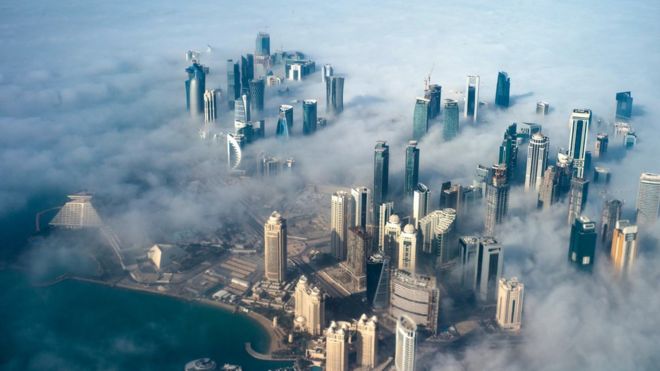
An aerial view of high-rise buildings emerging through fog covering the skyline of DohaImage copyrightEPA
Image captionQatar's government said it believed the move was "unjustified"
A number of Arab countries including Saudi Arabia and Egypt have cut diplomatic ties with Qatar, accusing it of destabilising the region.
They say Qatar backs militant groups including so-called Islamic State (IS) and al-Qaeda, which Qatar denies.
The Saudi state news agency SPA said Riyadh had closed its borders, severing land, sea and air contact with the tiny peninsula of oil-rich Qatar.
Qatar called the decision "unjustified" and with "no basis in fact".
The unprecedented move is seen as a major split between powerful Gulf countries, who are also close US allies.
It comes amid heightened tensions between Gulf countries and their near-neighbour, Iran. The Saudi statement accused Qatar of collaborating with "Iranian-backed terrorist groups" in its restive eastern region of Qatif and in Bahrain.

What has happened?

The diplomatic withdrawal was first put into motion by Bahrain, then Saudi Arabia, the United Arab Emirates (UAE), Egypt, Yemen, Libya's eastern-based government and the Maldives all followed suit.
SPA cited officials as saying the decision was taken to "protect its national security from the dangers of terrorism and extremism".
Saudi Arabia, the UAE and Bahrain have given all Qatari visitors and residents two weeks to leave their territory. The three countries have also banned their citizens from travelling to Qatar.
However, Saudi Arabia says it will still allow Qataris to take part in the annual Hajj pilgrimage to Mecca.
So far, there has been no sign of reciprocal moves by Qatar.
In the latest developments:
  • The UAE and Egypt have given Qatari diplomats 48 hours to leave both countries
  • Airlines from many of the affected countries, including EgyptAir, Etihad Airways and Emirates, said they are to cancel flights to and from the Qatari capital Doha
  • The Gulf allies said they had closed their airspace to Qatar Airways, which has suspended all its flights to Saudi Arabia
  • Bahrain's state news agency said it was cutting its ties because Qatar was "shaking the security and stability of Bahrain and meddling in its affairs"
  • The Saudi-led Arab coalition fighting Yemen's Houthi rebels also expelled Qatar from its alliance because of its "practices that strengthen terrorism" and its support of extremist groups.

Why has this happened?

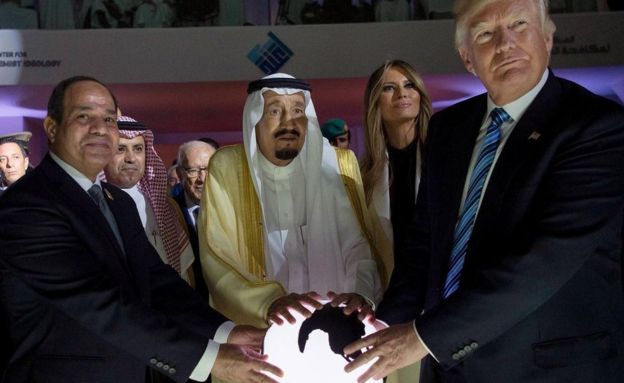
US President Donald J. Trump (R), US First Lady Melania Trump (R-2), King Salman bin Abdulaziz al-Saud of Saudi Arabia (C) and Egyptian President Abdel Fattah al-Sisi (L) opening the World Center for Countering Extremist Thought in Riyadh, Saudi Arabia
US President Trump met Egyptian President Sisi and Saudi King Salman in Saudi Arabia two weeks ago
While the severing of ties was sudden, it has not come out of the blue, as tensions have been building for years, and particularly in recent weeks.
Two weeks ago, Egypt, Saudi Arabia, Bahrain and the UAE blocked Qatari news sites, including Al Jazeera. Comments purportedly by Qatari Emir Sheikh Tamim bin Hamad al-Thani criticising Saudi Arabia had appeared on Qatari state media.
The government in Doha dismissed the comments as fake, attributing the report to a "shameful cybercrime".
Back in 2014, Saudi Arabia, Bahrain and the UAE withdrew their ambassadors from Qatar for several months in protest over alleged interference in their affairs.
More broadly, two key factors drove Monday's decision: Qatar's ties to Islamist groups, and the role of Iran, Saudi Arabia's regional rival.
While Qatar has joined the US coalition against IS, the Qatari government has repeatedly denied accusations from Iraq's Shia leaders that it provided financial support to IS.
Map showing Qatar and other Gulf states
Wealthy individuals in the emirate are believed to have made donations and the government has given money and weapons to hardline Islamist groups in Syria. Qatar is also accused of having links to a group formerly known as the Nusra Front, an al-Qaeda affiliate.
The SPA statement accused Qatar of backing these groups, as well as the Islamist Muslim Brotherhood - banned in Gulf countries as a terrorist organisation - and that it "promotes the message and schemes of these groups through their media constantly".
Saudi Arabia itself is a key backer of Islamist rebels, including hardline jihadist groups, in Syria.

Friday, June 2, 2017

BBC News - Highest rate taxpayers at record level

Coins and HMRC letterhead
A record number of people are paying the highest rate of income tax, but remain a fraction of total taxpayer numbers.
An estimated 364,000 people are paying the 45p rate of tax on income over £150,000, up from 311,000 in 2013-14.
They represent 1.2% of income tax payers in the UK, figures from HM Revenue and Customs (HMRC) show.
The number of people paying at the basic (20%) and higher (40%) rates of tax has fallen slightly.

Pension changes

The latest estimates show that 25.1 million (81.8% of taxpayers) were paying tax at the basic rate.
A further 4.2 million individuals (13.7% of taxpayers) pay tax at the higher 40% rate.
These numbers are likely to have been relatively static, owing in part to the increase in the threshold at which these rates of income tax are paid.
In 2010, the income tax personal allowance - the amount you are allowed to earn before paying any income tax - was £6,475. This year it is £11,500, having risen considerably faster than inflation.
In contrast, the threshold of £150,000 has been frozen, meaning the numbers paying the highest rate of tax may increase even if pay rises at this top end rise no faster than the cost of living. There have also been changes to pension rules for the most well-off.
Tom McPhail, head of policy at Hargreaves Lansdown, said: "More and more low earners are being taken out of the tax system altogether, basic-rate taxpayers are paying a lower overall average rate of tax and whilst top earners' share of income is declining, their contribution to the income tax system is increasing.
"A significant contributory factor are the cuts to the reliefs and allowances on pensions."

Million incomes

The figures also show that the top 1% of taxpayers had a 12% share of total income, and were liable for 27.7% of all income tax.
It is estimated that 15,000 UK taxpayers have incomes above £1m, of which 4,000 have incomes above £2m, the figures show.
In total, there are now an estimated 30.3 million taxpayers in the UK.
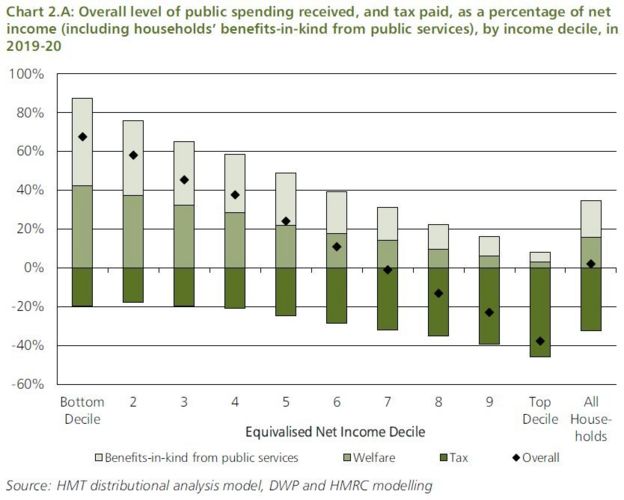
The Treasury published analysis at the time of the Budget predicting what proportion of incomes people would be spending on all taxes by 2019-20.
Chart showing proportion of income paid in tax by income decile

Thursday, June 1, 2017

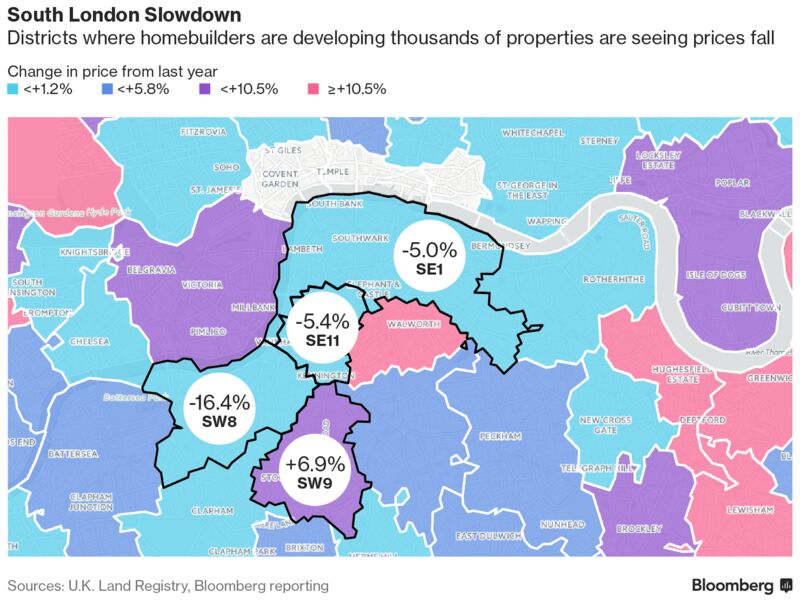
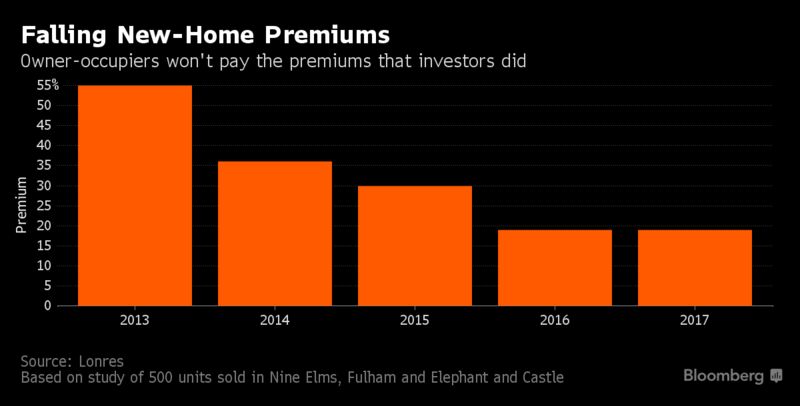
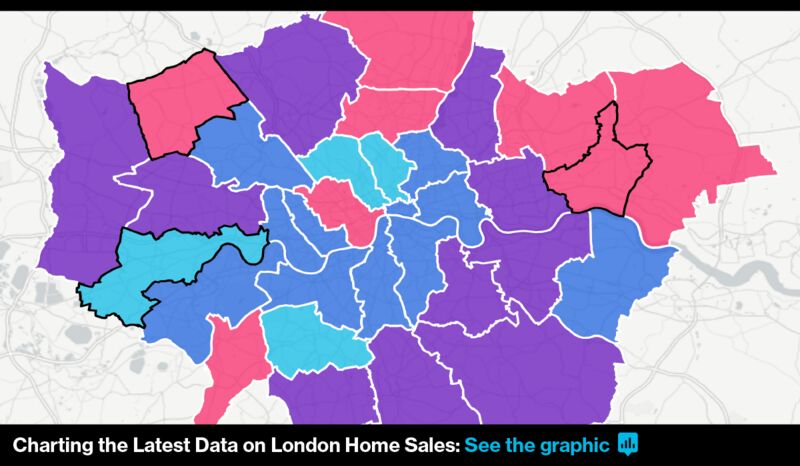
Bloomberg News - Glitzy South-London Homes Face Tough Resales as Values Fall